

Note for teachers using this lesson plan
This lesson focuses on the meaning, properties, and states of water, including the conditions that cause changes in its state. Prepare the instructional materials such as water, a stove, a metal cup, and ice beforehand. Emphasise safety precautions, especially when demonstrating heating water to observe steam. By the end of the lesson, pupils should be able to explain what water is, identify pure water by its properties, and recognise its different states and how it changes from one state to another.
Class: Primary Four
Term: First Term
Week: 8
Age: 9 years
Duration: 45 minutes
Subject: Basic Science and Technology
Curriculum Theme: Our Environment
Focal competence: Applying scientific methods to interpret environmental processes involving water
Key competencies/values: Research and Problem Solving; Communication; Environmental Literacy; Creativity and Innovation
Skills:
- Identifying pure water with no colour, taste and odour
- Constructing models
- Carrying out simple experiments to determine changes when water is heated
Previous Lesson: Relay Races, Types, 4 × 100 m and 4 × 400 m
Topic: Water
Subject Matter: Meaning of water, Properties of pure water and states of water
Specific Objectives
By the end of the lesson, pupils/students should be able to:
Cognitive Domain
- Explain the meaning of water.
- Identify pure water as a liquid with no colour, taste, and odour.
- State the three common states of water.
- Describe the conditions that cause melting, freezing, evaporation, and condensation.
- Give everyday examples of changes of state in water.
Psychomotor Domain
- Observe the properties of pure water.
- Identify liquid water, ice, and steam as states of water.
- Demonstrate simple heating and cooling observations of water safely.
Reference Materials
The following resources were used in planning this lesson:
- 2025 Revised 9 Years Basic Education Curriculum
- Relevant State Unified Scheme of Work
- Basic Science and Technology for Primary 4
- The HeadTeacher Scheme of work
Instructional Materials
The teacher will teach this lesson with the aid of:
- Water
- Stove
- Metal cup or tin
- Ice/freezer
- Cardboard paper (for drawing/representing states)
Rationale for the Lesson
This lesson helps pupils understand water, a fundamental substance in their environment. Knowing its properties and states allows them to appreciate its importance in daily life and natural processes. It also introduces basic scientific observation and experimentation skills in a practical context.
Prerequisite/Previous Knowledge
Pupils should have a basic understanding of liquids and solids, and common uses of water in their daily lives.
Lesson Content/Board Summary
Water
Meaning of Water
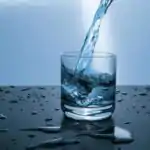
Water is a clear, colourless, tasteless, and odourless liquid that is essential for all known forms of life. It covers about 71% of the Earth’s surface.
Properties of Pure Water
Pure water has specific properties that make it unique:
- It has no colour (it is colourless).
- It has no taste (it is tasteless).
- It has no smell (it is odourless).
- It is a liquid at room temperature.
- It boils at 100°C and freezes at 0°C.
States of Water
Water can exist in three common states:
- Solid: When water is very cold, it turns into ice. Ice has a fixed shape and volume.
- Liquid: This is the most common state of water, found in rivers, lakes, and oceans. Liquid water takes the shape of its container but has a fixed volume.
- Gas: When water is heated, it turns into water vapour or steam. Water vapour has no fixed shape or volume and spreads out to fill any space.
Changes of State
Water can change from one state to another due to heating or cooling:
- Melting: This is the process where a solid (ice) changes into a liquid (water) when heated.
Everyday Example: Ice cubes turning into water when left out of the freezer.
- Freezing: This is the process where a liquid (water) changes into a solid (ice) when cooled.
Everyday Example: Water turning into ice in a freezer.
- Evaporation: This is the process where a liquid (water) changes into a gas (water vapour) when heated.
Everyday Example: Wet clothes drying in the sun, puddles disappearing after rainfall.
- Condensation: This is the process where a gas (water vapour) changes into a liquid (water) when cooled.
Everyday Example: Water droplets forming on the outside of a cold glass, clouds forming in the sky.
Teaching Methods/Instructional Techniques
Discussion, Demonstration, Guided Practice, Question and Answer, Explanation, Observation, Practical Activity.
Instructional Procedures
Step 1: Introduction
Time: 5 minutes
Teaching Skill: Engaging/Questioning
Teacher’s Activity: The teacher greets the pupils and asks them to mention some things they drink every day. The teacher then guides them to identify water as a common drink and asks what they know about water.
Pupils’ Activity: Pupils respond to the teacher’s questions and mention water as a drink.
Learning Point: Importance of water
Step 2: Meaning of Water
Time: 7 minutes
Teaching Skill: Explanation/Definition
Teacher’s Activity: The teacher explains the meaning of water as a clear, colourless, tasteless, and odourless liquid essential for life. The teacher asks pupils to repeat the definition.
Pupils’ Activity: Pupils listen attentively and repeat the meaning of water.
Learning Point: Meaning of water
Step 3: Properties of Pure Water
Time: 8 minutes
Teaching Skill: Demonstration/Observation
Teacher’s Activity: The teacher presents a glass of pure water and other liquids (e.g., coloured juice, scented liquid) for pupils to observe. The teacher guides pupils to identify that pure water has no colour, taste (by asking them to imagine tasting it, not actually tasting other liquids), or odour, comparing it with other liquids. The teacher emphasizes safety and not tasting unknown liquids.
Pupils’ Activity: Pupils safely observe the pure water and other liquids, identifying the properties of pure water.
Learning Point: Pure water properties
Step 4: States of Water (Solid, Liquid, Gas)
Time: 7 minutes
Teaching Skill: Identification/Illustration
Teacher’s Activity: The teacher displays ice (solid), a glass of water (liquid), and an image or drawing of steam (gas). The teacher explains and names each state, asking pupils to identify them.
Pupils’ Activity: Pupils identify and name the three states of water shown by the teacher.
Learning Point: Three states of water
Step 5: Changes of State (Melting and Freezing)
Time: 6 minutes
Teaching Skill: Explanation/Examples
Teacher’s Activity: The teacher explains melting (solid to liquid by heating) and freezing (liquid to solid by cooling), providing everyday examples like ice cubes melting or water turning to ice in a freezer. The teacher may show the melting ice.
Pupils’ Activity: Pupils listen and contribute everyday examples of melting and freezing.
Learning Point: Melting and freezing
Step 6: Changes of State (Evaporation and Condensation)
Time: 5 minutes
Teaching Skill: Demonstration/Explanation
Teacher’s Activity: The teacher carefully heats a small amount of water in a metal cup on the stove, pointing out the steam (water vapour) rising (evaporation). The teacher then holds a cold metal lid above the steam to show condensation (water droplets forming). The teacher stresses safety during the demonstration.
Pupils’ Activity: Pupils observe the evaporation and condensation processes safely and identify them.
Learning Point: Evaporation and condensation
Step 7: Evaluation/Review
Time: 5 minutes
Teaching Skill: Questioning/Assessment
Teacher’s Activity: The teacher evaluates the learning by asking the following questions:
- What is water?
- Mention two properties of pure water.
- Name the three states of water.
- What is the change of state from liquid to gas called?
Pupils’ Activity: Pupils answer orally and in writing.
Learning Point: Understanding water concepts
Step 8: Note-Taking
Time: 4 minutes
Teaching Skill: Guided Writing
Teacher’s Activity: The teacher guides pupils to copy the essential Board Summary notes on the meaning, properties, and states of water into their notebooks.
Pupils’ Activity: Pupils copy the notes carefully into their notebooks.
Learning Point: Recording lesson notes
Step 9: Conclusion
Time: 3 minutes
Teaching Skill: Consolidation
Teacher’s Activity: The teacher briefly reinforces the main ideas about water, its properties, and its states, reminding pupils of its importance in their lives. The teacher corrects any final misconceptions and closes the lesson.
Pupils’ Activity: Pupils listen and ask any remaining questions.
Learning Point: Water concept reinforcement
Continuous Assessment/Further Study
Type: Homework
Instruction: Answer the following questions in your notebook:
- Draw and label the three states of water.
- Give two examples of where you can find water in its liquid state.
- Explain what happens when water freezes.
Lesson Keywords
- Water – A clear, tasteless, odourless liquid essential for life.
- Properties – Characteristics that describe something.
- Pure water – Water without any impurities, colour, taste, or smell.
- States of water – The forms in which water can exist: solid, liquid, and gas.
- Solid – A state of matter with a fixed shape and volume (e.g., ice).
- Liquid – A state of matter that takes the shape of its container but has a fixed volume (e.g., water).
- Gas – A state of matter with no fixed shape or volume (e.g., water vapour/steam).
- Melting – Change from solid to liquid by heating.
- Freezing – Change from liquid to solid by cooling.
- Evaporation – Change from liquid to gas by heating.
- Condensation – Change from gas to liquid by cooling.
Differentiation
For weaker learners, the teacher will provide simplified explanations and more visual aids for the states of water. Faster learners can be challenged to research and explain the water cycle or identify more complex everyday examples of changes of state.
Suggested Lesson Videos
Search on YouTube for: “States of Water for Kids Primary 4” or “Properties of Water Basic Science”
Teacher Guide for Using This Lesson Plan
Before the lesson, ensure all instructional materials, especially the stove, metal cup, and ice, are ready. Prioritise safety during the demonstration of heating water and observing steam; ensure pupils maintain a safe distance. Begin by engaging pupils with questions about water to activate their prior knowledge. Guide them through observing the properties of pure water and identifying the three states using the prepared materials. Explain the processes of melting, freezing, evaporation, and condensation with clear, simple examples. Allow pupils to ask questions and provide their own examples. The Board Summary should be copied after the main concepts have been taught and understood. Check for understanding throughout the lesson and provide additional support or challenges as needed.


Community Join the conversation Open discussion +