

Class: Primary 4
Term: 3rd Term
Subject: Basic Science And Technology
Curriculum Theme: Basic Technology
Previous Lesson: Potential And Kinetic Forms Of Energy
Topic: NUCLEAR AND WIND FORMS OF ENERGY
Content/learning Area: Nuclear energy,Wind Energy
Time Allocation: 40 minutes
Performance Objectives
By the end of the lesson,pupils should be able to:
- cognitive Domain:
– define nuclear energy and wind energy.
– Identify the sources of nuclear and wind energy.
- Affective Domain:
– Appreciate the importance of renewable energy sources in the surroundings.
- Psychomotor Domain:
– Demonstrate how wind energy is harnessed using simple models (e.g., windmill).
- Social domain:
– Discuss in groups the advantages of using wind and nuclear energy.
Reference Materials
The following resources were used in planning this lesson:
- 9 Years Basic Education Curriculum
- abuja Educational Resource Center Scheme of work
- NAPPS National Unified Scheme of Work
- Online Information from: National Geographic Society – Nuclear Energy
Instructional Materials
To deliver this lesson, the teacher will use the following materials:
- A model of a windmill.
- A diagram of nuclear power plants.
- Flashcards showing sources of energy.
- A video on nuclear and wind energy.
Rationale for the Lesson
Understanding nuclear and wind energy helps pupils appreciate the various energy sources used in the world today.This knowledge is essential for them to understand how energy impacts our daily lives and how lasting energy sources can help protect the environment.
Prerequisite/Previous Knowledge
Pupils should have basic knowledge of energy, its importance, and common sources like sunlight and electricity.
Lesson Content
NUCLEAR AND WIND FORMS OF ENERGY
Nuclear and wind energy are two vital sources of power that help to meet the energy needs of the world. Each type has unique characteristics and uses.
Nuclear Energy
Nuclear energy is the energy released from the nucleus of atoms.it is generated through a process called nuclear fission, where the nucleus of a large atom, like uranium, is split into smaller parts, releasing a large amount of energy. Nuclear power plants use this process to generate electricity.How nuclear energy works involves splitting uranium atoms, releasing energy to heat water, produce steam, and drive turbines to generate electricity.
The following are advantages and challenges of nuclear energy:
- How Nuclear Energy Works:
In a nuclear power plant, uranium atoms are split, and the energy released heats water to produce steam. The steam drives turbines that generate electricity.
- Advantages of Nuclear Energy: It produces a lot of energy with little pollution, but it requires careful handling due to radiation risks.
- Challenges: The waste from nuclear energy is risky and can remain radioactive for thousands of years.
Wind Energy
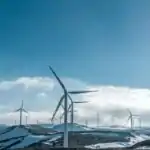
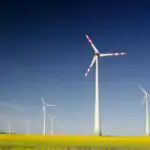
Wind energy is harnessed from the movement of air. When wind blows, it turns the blades of wind turbines, which are connected to generators that convert the mechanical energy into electrical energy. Wind energy is one of the cleanest forms of renewable energy.
Wind energy harnesses the movement of air to turn turbine blades, which then generate electricity.
The following are advantages and challenges of wind energy:
- How Wind Energy Works:
Wind turbines are often placed in areas where winds are strong and consistent, such as coastal areas or open plains. the movement of the turbine blades generates electricity.
- Advantages of Wind Energy: It is indeed renewable, does not pollute the air, and has low operational costs.
- Challenges: Wind energy can only be harnessed when there is wind, and the construction of wind farms can be expensive.
Teaching methods
To deliver this lesson, the teacher will adopt the following methods: Discussion, description, Visual Aids, Group Work, Exhibition
Instructional Procedures
To deliver this lesson, the teacher will adopt the following steps:
Step 1: Introduction
Time: 5 mins
Teaching Skill: Set Induction
Teacher’s Activity: The teacher will ask the pupils what thay know about energy.
Pupils’ Activity: Pupils will share what they know about energy.
Step 2: Nuclear energy
Time: 10 mins
Teaching Skill: Explanation
Teacher’s Activity: The teacher will explain what nuclear energy is, its sources, and its uses.
Pupils’ Activity: Pupils will listen and ask questions.
Step 3: Wind Energy
Time: 10 mins
Teaching Skill: Explanation
Teacher’s Activity: The teacher will explain how wind energy is harnessed and its benefits.
Pupils’ Activity: Pupils will listen and engage with a model of a windmill.
Step 4: Comparison of Energy Forms
Time: 5 mins
Teaching Skill: Group Work
Teacher’s Activity: The teacher will guide pupils in comparing the two energy types in groups.
Pupils’ Activity: Pupils will work in groups to compare nuclear and wind energy.
Step 5: Note-Taking
Time: 5 mins
Teaching Skill: Note Taking
Teacher’s Activity: The teacher will direct pupils to write key points on nuclear and wind energy.
Pupils’ Activity: Pupils will write their notes.
Step 6: Evaluation/Review
Time: 3 mins
Teaching Skill: Evaluation
Teacher’s Activity: The teacher will ask questions to evaluate pupils’ understanding of the lesson.
Pupils’ Activity: Pupils will answer questions about nuclear and wind energy.
Step 7: Conclusion
Time: 2 mins
Teaching Skill: Cognitive Closure
teacher’s Activity: The teacher will summarize the lesson and ask pupils to share what they found most interesting.
Pupils’ Activity: Pupils will share their thoughts.
Home Task: Record two correct examples of NUCLEAR AND WIND FORMS OF ENERGY from the lesson or home environment and explain each in your own words.
Lesson Keywords
- Nuclear Energy – Energy from the nucleus of atoms.
- Wind Energy – Energy generated from the movement of air.
- Fission – The splitting of an atom’s nucleus to release energy.
- Turbine – A machine that converts wind or water into mechanical energy.
- Renewable Energy – Energy from sources that are naturally replenished, like wind and sunlight.
Lesson evaluation
To evaluate the learning, the teacher asks pupils to:
- What is nuclear energy?
- How is wind energy harnessed?
- Compare the advantages and challenges of nuclear and wind energy.
- Draw a diagram of
Community Join the conversation Open discussion +