

Class: Primary Four
Term: Second Term
Subject: Basic Science and Technology
Curriculum Theme: Physical & Health Education
Previous Lesson: Table Tennis as a Ball Game
Topic: Introduction to Basketball and Core Ball Skills
Content/Learning area: Meaning of basketball; dribbling, passing and shooting; teamwork and simple game play
Time Allocation: 40 minutes
Performance Objectives
By the end of the lesson, pupils should be able to:
- Cognitive Domain:
– Define basketball and identify at least two key skills required in basketball.
- Affective domain:
– Develop an gratitude for basketball as a team sport.
– Show respect for teammates and opponents.
- Psychomotor Domain:
– Demonstrate basic basketball skills (dribbling, passing).
- Social Domain:
– Collaborate effectively in group discussions and activities related to basketball.
Reference Materials
- 9 – Years Basic Education Curriculum
- abuja Educational Resource Centre Scheme of Work
- NAPPS National Unified scheme of Work
- Relevant Textbooks
Instructional materials
to deliver this lesson, the teacher will use the following materials:
- Basketball
- whiteboard or chart paper
- Markers
- Pictures or videos of basketball games
Rationale for the Lesson
This lesson introduces pupils to basketball, a popular team sport that promotes physical activity, teamwork, and sportsmanship. Understanding basketball lays a foundation for future physical education lessons and encourages a healthy lifestyle.
Prerequisite/Previous Knowledge
The teacher will start by asking pupils what they know about ball games. A brief discussion will follow, leading into the introduction of basketball. The teacher will show a short video clip of a basketball game to generate excitement and interest.
Lesson Content
Basketball
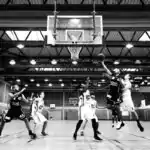
Basketball is a team sport where two teams try to score points by throwing a ball through a hoop. It’s a fast-paced game needing skill, strategy, and teamwork.
Skills in Basketball
Basketball involves various skills that players need to master to excel in the game. These include:
Dribbling
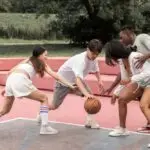
Dribbling means bouncing the ball continuously with one hand while moving. It helps players control the ball and move it towards the basket.
Passing
Passing is throwing the ball to a teammate. There are different types of passes:
- Chest passes
- Bounce passes
- Overhead passes
- Baseball pass
- behind-the-back pass
Shooting
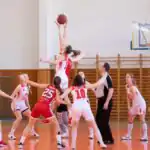
Shooting is throwing the ball at the basket to score. Players shoot from different distances and angles.
Rebounding
Rebounding is grabbing the ball after a missed shot. Players need strength and speed to get rebounds.
Defense
Defense is stopping the other team from scoring. players watch opponents and try to block shots or steal the ball. Defensive strategies include:
- Man-to-man defense
- zone defense
- Press defense
Teaching Methods
To deliver this lesson, the teacher will adopt the following methods: Discussion, Exhibition, Group Activity
Instructional Procedures
To deliver this lesson, the teacher will adopt the following steps:
Step 1: Introduction (Set Induction)
Time: 5 minutes
Teaching Skill: Questioning, explaining
Teacher’s Activity: briefly introduce the topic of basketball. Show a short video clip of a basketball game.Pupils’ Activity: Watch the video and listen attentively.
Step 2: Explanation of Key concepts
Time: 10 minutes
Teaching Skill: Explaining, demonstrating
Teacher’s Activity: Explain the basic rules of basketball and demonstrate key skills like dribbling and passing.
Pupils’ Activity: Listen attentively and observe the demonstration.
Step 3: Demonstration/Guided Practice
Time: 10 minutes
Teaching Skill: Guiding, monitoring
Teacher’s activity: Guide pupils in practicing basic dribbling and passing skills.
Pupils’ Activity: Practice dribbling and passing under the teacher’s guidance.
Step 4: Autonomous Practice
Time: 5 minutes
Teaching Skill: Monitoring, assessing
Teacher’s Activity: supervise pupils as they practice independently.
Pupils’ Activity: Practice dribbling and passing independently.
Step 5: Note-Taking
Time: 5 minutes
Teaching Skill: Guiding, summarizing
Teacher’s Activity: Guide pupils in taking notes on key concepts and skills.
Pupils’ Activity: Take notes on key concepts and skills.
Step 6: Evaluation/Review
Time: 5 minutes
Teaching Skill: Questioning, summarizing
Teacher’s Activity: Ask review questions to assess understanding.
Pupils’ Activity: Answer review questions.
Step 7: Conclusion
Time: 2 minutes
Teaching Skill: Summarizing, reinforcing
Teacher’s Activity: Summarize the key concepts and skills learned, emphasizing the importance of teamwork and sportsmanship in basketball. Encourage pupils to continue practicing their skills and to enjoy playing basketball.
Pupils’ Activity: Listen attentively and ask any remaining questions.
Lesson keywords
- Basketball – A team sport played with a ball and hoop.
- Dribbling – Bouncing the ball while moving.
- Passing – Throwing the ball to a teammate.
- Shooting – Throwing the ball at the basket to score.
- rebounding – Grabbing the ball after a missed shot.
- Defense – Preventing the other team from scoring.
Lesson Evaluation
To evaluate the learning,the teacher asks pupils to:
- What is basketball?
- Name two skills used in basketball.
- How does basketball show teamwork?
- What are some good things about playing basketball?
- Can you tell me about different player positions in a basketball team?
Assignment/Homework
- Practice dribbling and passing at home.
- Watch a basketball game on TV and write a short summary.
- Research the history of basketball and write a paragraph about it.
Differentiation
- For slower learners: Provide one-on-one assistance and simplify instructions.
- For advanced learners: Introduce more advanced skills and strategies.
- For visual/auditory/kinesthetic learners: Use visual aids, verbal explanations, and hands-on activities to cater to different learning styles.
Note for Teachers
ensure to provide clear demonstrations and hands-on practice opportunities for pupils to grasp the basic skills of basketball effectively. Emphasize the importance of teamwork and sportsmanship throughout the lesson.

Community 1 comment Open discussion +