

Class: Primary Four
Term: Second Term
Subject: Basic science and Technology
Curriculum Theme: basic Science
previous lesson: Meaning Of Water, Qualities Of Good Water, Difference Between Water and Other Liquids
topic: Evaporation of Water
Content/Learning Area: Understanding the concept of evaporation of water,importance of evaporation in the water cycle,Demonstrating understanding through practical examples,Discussing the social impacts and applications of water evaporation
Time Allocation: 40 minutes
Performance Objectives
By the end of the lesson,pupils should be able to:
- Cognitive Domain:
1. Define evaporation.
2. Explain the process of evaporation.
3. Identify the importance of evaporation in the water cycle.
- Psychomotor Domain:
1. Give practical examples of evaporation.
2. Illustrate the water cycle.
- Affective Domain:
1. Appreciate the role of evaporation in regulating climate.
2. Value the importance of evaporation in agriculture.
- Social Domain:
1. Discuss the social impacts of evaporation.
2. Work collaboratively in group activities.
Reference Materials
- 9 – Years Basic Education curriculum
- Abuja Educational Resource Center scheme of Work
- NAPPS National Unified Scheme of Work
- Relevant Textbooks
Instructional Materials
To deliver this lesson, the teacher will use the following materials:
- Whiteboard or chart paper
- Markers or pens
- Pictures or diagrams illustrating evaporation
- Optional: A small container of water and a heat source (for exhibition)
Rationale for the Lesson
understanding evaporation is crucial for comprehending the water cycle and its impact on our surroundings and daily lives. This knowledge forms a foundation for future science lessons and promotes environmental awareness.
Prerequisite/Previous Knowledge
The teacher will start by asking pupils what they know about water and its different forms. A brief discussion about the water cycle will be initiated, leading into the topic of evaporation.
Lesson Content
Evaporation of Water
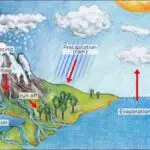
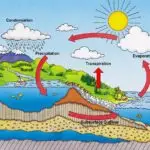
Evaporation is when liquid water turns into a gas called water vapor because of heat.The sun’s heat causes this to happen in rivers, lakes, and oceans.
Importance Of Evaporation In Water Cycle
Evaporation plays a crucial role in the water cycle and the surroundings.
These include:
Regulation of Climate
Evaporation helps keep the Earth cool by taking heat away when water changes to vapor.
Formation of Rain
Evaporation is how clouds form. water vapor goes up, makes clouds, and then falls as rain or snow.
Water purification
Evaporation cleans water. When water evaporates, it leaves dirt and salt behind, making the vapor cleaner.
Supporting Ecosystems
Many places where animals and plants live need evaporation and rain to keep going. this keeps water levels good for animals and plants that live in or near water.
Agricultural Benefits
Evaporation is vital for farming.Rain, which comes from evaporated water, waters crops and keeps the soil moist. It also helps in irrigation processes.
Maintaining Water Balance
Evaporation helps maintain the balance of water in different parts of the environment, such as rivers, lakes, and the atmosphere.
Nutrient cycling
evaporation influences the movement of nutrients in ecosystems, affecting plant growth and overall ecosystem health.
Teaching Methods
To deliver this lesson, the teacher will adopt the following methods: Discussion, Demonstration, Question and answer.
Instructional Procedures
To deliver this lesson, the teacher will adopt the following steps:
Step 1: Introduction
Time: 5 minutes
Teaching Skill: Set Induction
Teacher’s Activity: Briefly review the water cycle and introduce the concept of evaporation.
Pupils’ activity: Participate in the discussion and listen attentively.
Step 2: Description of Key concepts
Time: 10 minutes
Teaching Skill: Explaining
Teacher’s Activity: Explain the process of evaporation using simple language and visuals.
Pupils’ Activity: Listen, ask questions, and take notes.
Step 3: Demonstration/guided Practice
Time: 10 minutes
Teaching skill: Demonstrating
Teacher’s Activity: (Optional) Demonstrate evaporation using a container of water and a heat source. guide pupils through examples of evaporation in daily life.
Pupils’ activity: Observe the demonstration and participate in the guided practice.
Step 4: autonomous Practice
Time: 5 minutes
Teaching Skill: Monitoring
teacher’s Activity: Provide pupils with simple questions to answer individually.
Pupils’ Activity: Answer the questions independently.
Step 5: Note-Taking
Time: 5 minutes
Teaching Skill: Summarizing
Teacher’s Activity: Summarize the key points of the lesson.
Pupils’ Activity: Take notes and review the key points.
Step 6: Evaluation/Review
Time: 5 minutes
Teaching Skill: assessing
Teacher’s Activity: Ask review questions to assess understanding.
Pupils’ Activity: Answer the review questions.
Objective-aligned checks:
- Define evaporation.
- Explain the process of evaporation.
- Identify the importance of evaporation in the water cycle.
Step 7: Conclusion
Time: 5 minutes
Teaching Skill: Summarizing
Teacher’s Activity: Conclude the lesson by reviewing the key concepts of evaporation and its importance in the water cycle,emphasizing its role in our environment and daily lives. Answer any remaining questions from the pupils.
Pupils’ Activity: Listen attentively and ask any remaining questions.
Lesson Keywords
- Evaporation – The process by which a liquid turns into a gas.
- Water Vapor – Water in its gaseous form.
- Water Cycle – The continuous movement of water on, above, and below the surface of the Earth.
- Climate – The average weather conditions in an area over a long period.
- Ecosystem – A community of living organisms and their physical environment interacting as a unit.
Lesson evaluation
to evaluate the learning, the teacher asks pupils to:
- What is evaporation?
- Give an example of evaporation you see every day.
- How does evaporation help make rain?
- How does evaporation affect the weather?
- Why is evaporation critically significant for growing food?
Assignment/Homework
- Draw a diagram of the water cycle and label the process of evaporation.
- List three ways evaporation is important in your daily life.
- Explain how evaporation helps to keep the Earth cool.
Differentiation
- For slower learners: Provide one-on-one assistance and use simpler language.
- For advanced learners: Encourage them to research further applications of evaporation.
- For visual/auditory/kinesthetic learners: Use visual aids, demonstrations, and hands-on activities to explain the concept of evaporation.
Note for Teachers
Ensure to use real-life examples and demonstrations to make the concept of evaporation more relatable and understandable for the pupils. Encourage active participation and questioning to enhance their learning experience.


Community Join the conversation Open discussion +