

Class: Primary Four
Term: First Term
Subject: basic Science and Technology
Curriculum Theme: Basic Science
Previous Lesson: Changes In Non Living Things
Topic: Weather
Content/Learning Area: Meaning of weather, Factors affecting weather, Weather instruments
Time Allocation: 40 minutes
Performance Objectives
By the end of the lesson, pupils should be able to:
- Cognitive Domain:
1. Explain the meaning of weather.
2. State two factors affecting weather.3. List three weather instruments.
- Psychomotor Domain:
1. Identify weather instruments in pictures.
- Affective Domain:
1. Show interest in learning about weather.
- Social Domain:
1. Participate actively in class discussions.
Reference Materials
- 9 – Years Basic Education Curriculum
- abuja Educational Resource Centre Scheme of Work
- NAPPS National Unified Scheme of Work
- Relevant textbooks
Instructional Materials
To deliver this lesson, the teacher will use the following materials:
- Whiteboard or chart
- Markers or chalk
- Pictures of weather instruments
Rationale for the Lesson
Understanding weather is crucial for daily life.This lesson provides a foundation for future learning in geography and environmental science, helping pupils understand thier surroundings better.
Prerequisite/Previous Knowledge
The teacher will start by asking pupils what they experienced outside that day (e.g., sunshine, rain, wind). This will lead into a discussion about weather and its different aspects.
Lesson Content
Weather
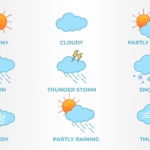
Weather describes the state of the atmosphere at a specific time and place. It includes things like sunshine, clouds, rain, wind, and temperature. Weather changes frequently.
Factors Affecting Weather
Factors affecting weather are elements that influence atmospheric conditions, leading to changes in temperature, humidity, wind, and precipitation.
These include:
1. Clouds: Clouds are made of tiny water droplets or ice. They can block sunlight, making it cooler, and produce rain or snow.
2. Moisture: Moisture (humidity) in the air is significant for weather. It affects cloud formation, rain, and temperature.
3. Temperature: Temperature is how hot or cold the air is. It affects evaporation, cloud formation, and rain.
4. Wind: Wind is moving air. It affects temperature, cloud movement, and rain.
5.Air Pressure: Air pressure influences wind patterns and the stability of weather systems. High pressure often brings clear skies, while low pressure can lead to storms.
6. Latitude: The latitude of a location affects the angle at which sunlight strikes the Earth, influencing temperature and weather patterns.
Weather Instruments
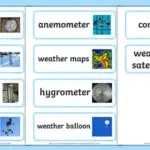
Weather instruments are tools used to measure different aspects of the weather, providing data for forecasting and analysis.
Examples are:
1. Thermometer: A thermometer measures temperature, showing how hot or cold it is.
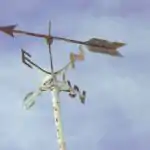
2. Wind vane: A wind vane shows the direction of the wind.
3. Barometer: A barometer measures air pressure, which helps predict weather changes.
4. Rain gauge: A rain gauge measures how much rain has fallen.
5. Hygrometer: A hygrometer measures the amount of moisture or humidity in the air.
6. Anemometer: An anemometer measures wind speed, indicating how fast the wind is blowing.
Teaching Methods
To deliver this lesson, the teacher will adopt the following methods: Discussion, Question and answer, Use of pictures
Instructional Procedures
To deliver this lesson, the teacher will adopt the following steps:
Step 1: Introduction (Set Induction)
Time: 5 minutes
Teaching Skill: questioning
Teacher’s Activity: Ask pupils about their experiences with different weather conditions.
Pupils’ Activity: Share their experiences and observations.
Step 2: Clarification of Key Concepts
Time: 10 minutes
Teaching Skill: Explanation
Teacher’s Activity: Explain the meaning of weather and its various aspects.
Pupils’ Activity: Listen attentively and ask clarifying questions.
Step 3: Demonstration/Guided Practice
Time: 10 minutes
Teaching Skill: Demonstration
Teacher’s Activity: Show pictures of weather instruments and explain their functions.
Pupils’ Activity: Observe and identify the instruments.
Step 4: Independent Practice
Time: 5 minutes
teaching Skill: Guided Practice
Teacher’s Activity: Ask pupils to name weather instruments and explain their uses.
pupils’ Activity: Answer the questions individually.
Step 5: Note-Taking
Time: 5 minutes
Teaching Skill: Note-Taking
Teacher’s Activity: Guide pupils in taking notes on key concepts.
Pupils’ Activity: Write down significant points.
Step 6: Evaluation/review
Time: 5 minutes
Teaching Skill: Questioning
Teacher’s Activity: Ask review questions to assess understanding.
Pupils’ Activity: Answer the questions.
Objective-aligned checks:
- Explain the meaning of weather.
- State two factors affecting weather.
- List three weather instruments.
step 7: Conclusion
Time: 2 minutes
Teaching Skill: Summarizing
Teacher’s Activity: Summarize the key concepts learned.
Pupils’ Activity: Listen to the summary and ask any remaining questions.
Lesson Keywords
- Weather – The state of the atmosphere at a specific time and place.
- Temperature – How hot or cold the air is.
- Wind vane – An instrument that shows the direction of the wind.
- Barometer – An instrument that measures air pressure.
- Rain gauge – An instrument that measures how much rain has fallen.
Lesson Evaluation
To evaluate the learning, the teacher asks pupils to:
1. What is weather?
2.name two things that affect weather.
3.List three weather instruments.
4. How does temperature affect weather?
5.What does a wind vane show?
Observation: Teacher will observe pupils’ participation in discussions, their ability to identify weather instruments, and their answers to evaluation questions.
Assignment/Homework
1. research and write about the weather forecast for tomorrow in your local area.
2. Draw and label three different weather instruments.
3. Explain how clouds affect the weather.
Differentiation
- For slower learners: The teacher will provide one-on-one assistance and use simpler language.
- For advanced learners: The teacher will encourage them to research more about weather and present their findings to the class.
- For visual/auditory/kinesthetic learners: Use visual aids,verbal explanations,and hands-on activities to cater to different learning styles.
Note for Teachers
Ensure to use real-life examples and relatable scenarios to explain weather concepts. Encourage pupils to share their personal experiences with different weather conditions to make the lesson more engaging.

Community Join the conversation Open discussion +