

Note for teachers using this lesson plan
This lesson focuses on introducing and practicing non-locomotor movements. Ensure adequate space is provided for pupils to perform the movements safely without colliding. Emphasise correct posture and controlled movements. By the end of the lesson, pupils should be able to practically demonstrate various non-locomotor movements like stretching, bending, twisting, swinging, pulling, and pushing.
Class: Primary 4
Term: First Term
Week: 4
Age: 9 years
Duration: 45 minutes
Subject: Physical and Health Education
Curriculum Theme: Motor skills development
Focal competence: Performing non-locomotor movements such as stretching, swinging, bending, etc
Key competencies/values: Collaboration; ICT and Digital Competencies
Skills:
- Performing non-locomotor movements like stretching, swinging and bending
Previous Lesson: Non-Locomotor Movement, Meaning and Features
Topic: Moving Our Body Parts Ii: Non-Locomotor Movements
Subject Matter: Stretching, bending, twisting, swinging, pulling and pushing
Specific Objectives
By the end of the lesson, pupils/students should be able to:
Cognitive Domain
- Identify different non-locomotor movements.
- Explain the meaning of non-locomotor movements.
Affective Domain
- Appreciate the importance of non-locomotor movements for body flexibility.
- Participate actively in practical demonstrations.
Psychomotor Domain
- Perform non-locomotor movements like stretching, swinging, bending, twisting, pulling, and pushing.
Social Domain
- Collaborate with peers during group practice of movements.
Reference Materials
The following resources were used in planning this lesson:
- 2025 Revised 9 Years Basic Education Curriculum
- Relevant State Unified Scheme of Work
- Physical and Health Education for Primary 4
- The HeadTeacher Scheme of work
Instructional Materials
The teacher will teach this lesson with the aid of:
- Video clips showing non-locomotor movements
- Playground (or open classroom space)
- Bucks (for pushing/pulling demonstration)
- Sports wear
- Shuttles (for swinging demonstration)
- Charts illustrating different body movements
Rationale for the Lesson
This lesson is important because it introduces pupils to fundamental non-locomotor movements, which are essential for developing body control, flexibility, and strength. Mastering these movements helps pupils improve their physical coordination and prepares them for more complex physical activities and daily tasks.
Prerequisite/Previous Knowledge
Pupils have basic knowledge of body parts and have previously learned about locomotor movements where the body moves from one place to another.
Lesson Content/Board Summary
Moving Our Body Parts II: Non-Locomotor Movements
Non-locomotor movements are movements performed by the body while staying in one place. These movements help to improve flexibility, balance, and strength without travelling from one point to another.
Types of Non-Locomotor Movements
Some common non-locomotor movements include:
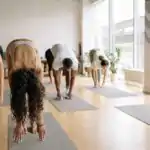
- Stretching: This involves extending or lengthening a body part, like reaching for the sky or touching your toes. It helps to make muscles more flexible.
- Bending: This is the act of curving or flexing a body part, such as bending your knees or bending your waist.
- Twisting: This movement involves rotating a part of the body around its axis, like twisting your upper body from side to side while your feet stay still.
- Swinging: This is moving a body part back and forth freely from a fixed point, such as swinging your arms or legs.
- Pulling: This involves exerting force to draw something towards oneself or to move a body part inwards, like pulling a rope or pulling your arm towards your chest.
- Pushing: This involves exerting force to move something away from oneself or to extend a body part outwards, like pushing a door or pushing your arms forward.
Teaching Methods/Instructional Techniques
Discussion, Demonstration, Guided Practice, Question and Answer, Explanation, Observation, Practical Activity
Instructional Procedures
Step 1: Introduction
Time: 5 minutes
Teaching Skill: Review/Engagement
Teacher’s Activity: The teacher greets the pupils and reviews the previous lesson on locomotor movements by asking pupils to mention examples. The teacher then introduces the new topic, “Non-Locomotor Movements,” explaining that these are movements done in one spot.
Pupils’ Activity: Pupils respond to questions about locomotor movements and listen attentively to the introduction of the new topic.
Learning Point: Introduction to non-locomotor movements
Step 2: Explanation of Non-Locomotor Movements
Time: 7 minutes
Teaching Skill: Explanation/Definition
Teacher’s Activity: The teacher explains what non-locomotor movements are, emphasizing that the body stays in one place. The teacher provides examples like stretching, bending, and twisting, and shows short video clips if available.
Pupils’ Activity: Pupils listen, watch the video clips, and ask questions for clarification.
Learning Point: Meaning of non-locomotor movements
Step 3: Demonstration of Stretching and Bending
Time: 7 minutes
Teaching Skill: Demonstration/Modelling
Teacher’s Activity: The teacher demonstrates safe stretching movements (e.g., reaching up, touching toes) and bending movements (e.g., knee bends, waist bends), ensuring correct posture and adequate spacing. The teacher guides pupils to observe carefully.
Pupils’ Activity: Pupils observe the teacher’s demonstrations and identify the movements.
Learning Point: Observing stretching and bending
Step 4: Practice of Stretching and Bending
Time: 7 minutes
Teaching Skill: Guided Practice
Teacher’s Activity: The teacher guides pupils to perform stretching and bending movements, providing feedback on posture and technique. The teacher ensures all pupils participate and move safely.
Pupils’ Activity: Pupils practice stretching and bending movements under the teacher’s guidance.
Learning Point: Performing stretching and bending
Step 5: Demonstration of Twisting and Swinging
Time: 5 minutes
Teaching Skill: Demonstration/Modelling
Teacher’s Activity: The teacher demonstrates twisting movements (e.g., torso twists) and swinging movements (e.g., arm swings, leg swings), again emphasizing safety and correct form. The teacher may use shuttles for swinging if available.
Pupils’ Activity: Pupils observe the teacher’s demonstrations of twisting and swinging.
Learning Point: Observing twisting and swinging
Step 6: Practice of Twisting and Swinging, Pulling and Pushing
Time: 5 minutes
Teaching Skill: Guided Practice
Teacher’s Activity: The teacher guides pupils to practice twisting and swinging. The teacher then demonstrates pulling (e.g., imagining pulling a rope or a buck) and pushing (e.g., imagining pushing a wall or a buck) and has pupils practice these movements.
Pupils’ Activity: Pupils practice twisting, swinging, pulling, and pushing movements.
Learning Point: Performing various non-locomotor movements
Step 7: Evaluation/Review
Time: 5 minutes
Teaching Skill: Questioning/Assessment
Teacher’s Activity: The teacher evaluates the learning by asking the following questions:
- What are non-locomotor movements?
- Mention three examples of non-locomotor movements.
- Demonstrate a stretching movement.
- Demonstrate a twisting movement.
Pupils’ Activity: Pupils answer orally and in writing.
Learning Point: Assessment of non-locomotor movements
Step 8: Note-Taking
Time: 4 minutes
Teaching Skill: Guided Writing
Teacher’s Activity: The teacher guides pupils to copy the essential Board Summary notes on non-locomotor movements and their types into their notebooks.
Pupils’ Activity: Pupils copy the notes carefully into their notebooks.
Learning Point: Recording lesson notes
Step 9: Conclusion
Time: 3 minutes
Teaching Skill: Consolidation
Teacher’s Activity: The teacher briefly recaps the various non-locomotor movements learned and encourages pupils to practice them regularly for better flexibility and body control.
Pupils’ Activity: Pupils listen and participate in the final recap.
Learning Point: Reinforcement of non-locomotor movements
Continuous Assessment/Further Study
Type: Practice Exercise
Instruction: Practice these movements at home and be ready to demonstrate them in class next week.
- Stretch your arms up high and then touch your toes.
- Bend your knees five times.
- Twist your upper body gently from left to right.
- Swing your arms forward and backward.
- Imagine pulling a heavy box and show the movement.
Lesson Keywords
- Non-locomotor – Movements done in one place without travelling.
- Stretching – Lengthening a body part.
- Bending – Curving or flexing a body part.
- Twisting – Rotating a body part around its axis.
- Swinging – Moving a body part back and forth freely.
- Pulling – Drawing something towards oneself.
- Pushing – Moving something away from oneself.
Differentiation
For weaker learners: Provide more individual attention during practical sessions, simplify instructions, and demonstrate movements slowly. Encourage them to perform movements at their own pace.
For faster learners: Challenge them to create a short sequence combining different non-locomotor movements or to identify and demonstrate additional non-locomotor movements.
Suggested Lesson Videos
For further visual learning, teachers can search on YouTube for: “Primary 4 non-locomotor movements for kids”
Teacher Guide for Using This Lesson Plan
Before the lesson, ensure the classroom or playground is clear and safe for movement. Prepare any video clips or charts for demonstration. Start by reviewing previous knowledge to connect new learning. During the practical sessions, actively demonstrate each movement, focusing on correct posture and safety. Encourage all pupils to participate and provide immediate, constructive feedback. Observe pupils closely to identify those needing extra support or those who can be challenged further. Ensure pupils understand that non-locomotor movements are performed without changing location. Pupils should copy the Board Summary notes after the practical activities and evaluation. Conclude by reinforcing the importance of these movements for physical development.

Community Join the conversation Open discussion +