

Class: Primary 4
Term: Third Term
Subject: Basic Science And technology
Curriculum Theme: Basic Technology
Previous Lesson: Forms Of Energy, Concept of Energy, Meaning of Energy
Topic: Chemical Forms of Energy
Content/Learning Area: Chemical Energy Sources and Transformations
Time Allocation: 40 minutes
Performance Objectives
By the end of the lesson, pupils should be able to:
- Cognitive domain:
– Identify various sources of chemical energy.- Explain how chemical energy is stored and released.
– Describe the conversion of chemical energy into other forms.
– Differentiate between renewable and non-renewable energy sources.
- Affective Domain:
– Appreciate the importance of chemical energy in daily life.
– Demonstrate responsible energy consumption habits.
– Show concern for environmental sustainability.
- Psychomotor Domain:
– Operate battery-powered devices safely.
– construct a simple model demonstrating energy conversion.
- Social Domain:
– Collaborate effectively in group activities.
– Share ideas and knowledge about energy.
Reference Materials
- 9 Years Basic Education Curriculum
- Abuja Educational Resource Center Scheme of work
- NAPPS National Unified Scheme of Work
- Wikipedia – Chemical energy
- Relevant Textbooks
Instructional Materials
To deliver this lesson, the teacher will use the following materials: Various battery types (AA, AAA, button cell, 9V), battery-operated toys and flashlights, charts showing different energy sources, pictures of solar panels and their applications, simple materials for
Rationale for the Lesson
Understanding chemical energy is crucial for pupils to appreciate its role in everyday life and the importance of responsible energy use and environmental conservation.
Prerequisite/Previous Knowledge
Pupils have basic knowledge of energy and its different forms.
Lesson Content
Chemical Energy Sources and Transformations
chemical energy is a form of potential energy stored in the bonds of chemical compounds. This energy is released during chemical reactions and can be converted into other forms of energy.
Chemical Energy Sources:
Chemical energy is stored in various sources that can be harnessed for different purposes. These include:
- Batteries: These store chemical energy and convert it into electrical energy to power devices.Examples include AA, AAA, button cell, and 9V batteries.
- Fossil fuels: Coal, petroleum, and natural gas are examples of fossil fuels that store chemical energy. They are burned to produce heat,which can be converted into other forms of energy.
- Biomass: Organic matter such as wood, crops, and waste can be burned or converted into biofuels. These biofuels store chemical energy that can be released through combustion.
- Food: The food we eat contains chemical energy that our bodies convert into mechanical energy for movement, thermal energy for warmth, and other forms of energy to sustain life.
- Propane: Used in gas grills and portable stoves, propane stores chemical energy that is released when it is burned, providing heat for cooking.
- Natural Gas: Used for heating homes and powering appliances, natural gas stores chemical energy that is converted into thermal energy through combustion.
- Fireworks: Fireworks contain chemical compounds that release energy in the form of light, heat, and sound when ignited, creating colorful displays.
How Chemical Energy is Stored and Released:
chemical energy is stored in the bonds between atoms in molecules. When a chemical reaction occurs, these bonds are broken, and new bonds are formed, releasing energy in the process.
Conversion of Chemical Energy into Other Forms:
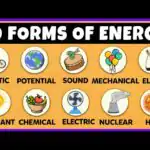
Chemical energy can be converted into various other forms of energy, making it a versatile energy source. These include:
- Electrical Energy: Batteries convert chemical energy into electrical energy to power devices like flashlights and toys.
- Thermal Energy: Burning fossil fuels or wood converts chemical energy into heat, which can be used for heating or generating electricity.
- Mechanical Energy: Our bodies convert the chemical energy in food into mechanical energy for movement and physical activities.
- Light Energy: Fireworks convert chemical energy into light,heat,and sound,creating notable displays.
- Sound Energy: Explosions convert chemical energy into sound energy, producing loud noises.
- Nuclear energy: Nuclear reactions convert chemical energy into nuclear energy, which is used in nuclear power plants to generate electricity.
- Radiant Energy: Chemical reactions in glow sticks convert chemical energy into radiant energy, producing light without heat.
Renewable and Non-Renewable Energy Sources:
Energy sources can be classified as either renewable or non-renewable, based on their availability and sustainability.
- Renewable Energy Sources: These are naturally replenished and sustainable. Examples include:
1. Solar energy
2. Wind energy
3. Hydropower
4. Biomass
5. Geothermal energy
- Non-Renewable Energy Sources: These are finite and cannot be easily replenished.Examples include:
1. Fossil fuels (coal,petroleum,natural gas)
2. Nuclear fuels (uranium)
Teaching Methods
To deliver this lesson, the teacher will adopt the following methods: Discussion, Clarification, Demonstration, Visual Aids, question and answer.
Instructional Procedures
To deliver this lesson, the teacher will adopt the following steps:
Step 1: introduction (Set Induction)
Time: 5 minutes
Teaching skill: Set Induction
Teacher’s Activity: The teacher asks pupils about the different forms of energy they know and where they get energy to play and study.
Pupils’ activity: Pupils respond by mentioning forms of energy like light, heat, and electricity, and sources like food and the sun.
Step 2: Chemical Energy Sources
Time: 10 minutes
Teaching Skill: Explanation, Demonstration
Teacher’s Activity: The teacher explains chemical energy and its sources, using examples like batteries, food, and fossil fuels. The teacher shows different types of batteries and explains how they store chemical energy.
Pupils’ Activity: Pupils listen attentively, ask questions, and observe the different types of batteries.
Step 3: Energy Conversion
Time: 10 minutes
Teaching Skill: Explanation, Visual Aids
Teacher’s Activity: the teacher explains how chemical energy is converted into other forms of energy, such as electrical, thermal, and mechanical energy. The teacher uses charts and diagrams to illustrate the conversion process.
Pupils’ Activity: Pupils participate by asking questions and discussing examples of energy conversion in their daily lives.
Step 4: Renewable vs. Non-Renewable Sources
Time: 10 minutes
Teaching Skill: Discussion,Explanation
Teacher’s Activity: The teacher leads a discussion on renewable and non-renewable energy sources,emphasizing the importance of sustainable energy consumption.
Pupils’ Activity: Pupils contribute to the discussion by sharing their understanding of renewable and non-renewable energy sources.
Step 5: Note-taking
Time: 3 minutes
Teaching Skill: Summarization
Teacher’s Activity: The teacher summarizes the main points of the lesson on the board.
Pupils’ Activity: Pupils copy the notes into their notebooks.
Step 6: Evaluation/Review
Time: 2 minutes
Teaching Skill: Assessment
Teacher’s Activity: The teacher asks questions to assess pupils’ understanding of the lesson.
Pupils’ Activity: Pupils answer the questions to demonstrate their understanding.
Step 7: Conclusion
Time: 2 minutes
Teaching Skill: Closure
Teacher’s Activity: The teacher summarizes the lesson and assigns homework.
Pupils’ Activity: Pupils listen to the summary and note the homework assignment.
Lesson Keywords
- Chemical Energy – Energy stored in the bonds of chemical compounds.
- Batteries – Devices that store chemical energy and convert it into electrical energy.
- Fossil fuels – Non-renewable energy sources like coal, petroleum, and natural gas.
- Renewable Energy – Energy sources that are naturally replenished, such as solar and wind.
- Non-Renewable Energy – Energy sources that are finite and cannot be easily replenished.
- Energy Conversion – The process of changing energy from one form to another.
Lesson Evaluation
To evaluate the learning, the teacher asks pupils to:
- List three sources of chemical energy.
- Explain how a battery converts chemical energy into electrical energy.
- Differentiate between renewable and non-renewable energy sources, giving two examples of each.
Assignment/Homework
- Research and write a short paragraph on the importance of using renewable energy sources.
- List five devices in your home that use chemical energy and explain what type of energy they produce.
Differentiation
- For slower learners: Provide simplified explanations and visual aids, and pair them with more advanced learners for assistance.
- For advanced learners: Encourage them to research and present on alternative energy sources and their benefits.
- For visual/auditory/kinesthetic learners: Use colorful charts,videos,and hands-on activities to cater to different learning styles.
Note for Teachers
Ensure to use real-life examples and demonstrations to make the lesson engaging and relatable for the pupils. Emphasize the importance of energy conservation and environmental sustainability throughout the lesson.

Community Join the conversation Open discussion +