

Class: Primary 4
Term: Third Term
subject: Basic Science And Technology
Curriculum Theme: Basic Science
Previous Lesson: Measuring Volume Of Irregular Solids
Topic: Units of Measurement of Volume
Content/Learning Area: Understanding and applying different units of volume measurement.
Time Allocation: 40 minutes
Performance Objectives
By the end of the lesson, pupils should be able to:
- Cognitive Domain: Define volume and its units; convert between units; identify appropriate units for measuring different objects.
- Affective Domain: Appreciate the importance of standard units; show interest in comparing volumes; develop patience in accurate measurement.
- Psychomotor Domain: Accurately measure volume using instruments; compare volumes using tools; demonstrate proper handling of instruments.
- Social Domain: Collaborate effectively with peers; communicate findings clearly; respect others’ observations.
reference Materials
9 years Basic Education Curriculum
Abuja Educational Resource center Scheme of work
NAPPS National Unified Scheme of Work
Online Details from: Wikipedia – unit of volume
Relevant Textbooks
Instructional Materials
To deliver this lesson,the teacher will employ the help of the following materials: measuring cylinders,beakers,water,sand,small containers of different shapes,rulers,and charts showing units of volume.
Rationale for the Lesson
Understanding volume measurement is crucial for daily tasks like cooking, construction, and medicine. This lesson equips pupils with practical skills for accurate measurement and problem-solving.
Prerequisite/Previous Knowledge
Pupils have prior knowledge of basic measurement concepts and can identify different shapes and objects.
Lesson Content
Volume: Volume is the amount of space that a substance or object occupies. It is a essential concept in science and everyday life.
Units of Volume: Volume is measured in different units depending on the size of the object or substance being measured.
The following are common units of volume:
- Cubic Centimeters (cm³): Used for measuring small volumes.
- Milliliters (mL): Commonly used for liquids.
- Liters (L): Used for larger volumes of liquids.
- Cubic Meters (m³): Used for very large volumes, such as rooms or buildings.
- gallons (gal): Used in some countries for measuring liquids, especially fuel and water.
How to Measure Volume: Measuring volume involves using appropriate tools and techniques to determine the amount of space an object or substance occupies.
The following are steps to measure volume:
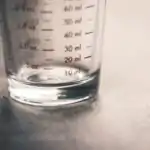
- Liquids: use a measuring cylinder or beaker. Pour the liquid into the cylinder and read the volume at the meniscus (the lowest point of the curved surface of the liquid).
- Regular Solids: For regular shapes like cubes or cuboids, measure the length, width, and height, then multiply them together (Volume = Length x Width x height).
- Irregular Solids: Use the displacement method. Place the object in a container of water and measure the volume of water displaced by the object.
Examples of Objects and Their Volumes: Different objects have different volumes, and it’s critically important to use appropriate units to measure them.
Examples are:
- A small bottle of water (500 mL)
- A bucket of sand (10 L)
- A room in a house (30 m³)
- A dose of medicine (5 mL)
- A can of soda (355 mL)
Teaching Methods
To deliver this lesson, the teacher will adopt the following methods: Discussion, exhibition, practical activities, description, and questioning.
Instructional Procedures
To deliver this lesson, the teacher will adopt the following steps:
Step 1: Introduction
Time: 5 minutes
Teaching Skill: Set Induction
Teacher’s Activity: Begins by asking pupils what they know about measurement and introduces the concept of volume.
Pupils’ Activity: Respond to the teacher’s questions and share their prior knowledge about measurement.
Step 2: Defining Volume
Time: 5 minutes
Teaching Skill: Explanation
Teacher’s Activity: Explains what volume is and why it is important in everyday life.
Pupils’ Activity: Listen attentively and ask questions to clarify their understanding.
Step 3: Units of Volume
Time: 10 minutes
Teaching Skill: Discussion and Explanation
Teacher’s Activity: Introduces different units of volume (cm³, mL, L, m³) and explains when to use each unit.
Pupils’ Activity: Take notes on the different units and participate in discussions.
Step 4: Measuring Volume
Time: 10 minutes
Teaching Skill: Demonstration and Practical Activity
Teacher’s Activity: Demonstrates how to measure the volume of liquids and regular/irregular solids using appropriate tools.
pupils’ Activity: Observe the demonstration and practice measuring the volume of different objects.
Step 5: Note-Taking
Time: 5 minutes
Teaching Skill: Summarization
Teacher’s Activity: Guides pupils to summarize the main points of the lesson in their notebooks.
Pupils’ Activity: Write down the key concepts and definitions in their notebooks.
Step 6: Evaluation/Review
Time: 3 minutes
Teaching Skill: Assessment
Teacher’s Activity: Asks questions to assess pupils’ understanding of the lesson.
Pupils’ Activity: Answer the questions to demonstrate their understanding.
Objective-aligned checks:
- Define volume and its units; convert between units; identify appropriate units for measuring different objects.
- Accurately measure volume using instruments; compare volumes using tools; demonstrate proper handling of instruments.
Step 7: Conclusion
Time: 2 minutes
Teaching Skill: Closure
Teacher’s Activity: Summarizes the lesson and assigns homework.
Pupils’ Activity: Listen to the summary and note down the homework assignment.
Lesson Keywords
Volume – The amount of space a substance or object occupies.
Milliliter (mL) – A unit of volume commonly used for liquids.
Liter (L) – A larger unit of volume, equal to 1000 milliliters.
Cubic Centimeter (cm³) – A unit of volume used for small objects.
Measuring Cylinder – A tool used to measure the volume of liquids.
Lesson Evaluation
To evaluate the learning, the teacher asks pupils to:
- Define volume in their own words.
- Name three different units of volume.
- Explain how to measure the volume of a liquid using a measuring cylinder.
- Describe how to measure the volume of an irregular solid.
- Convert 2 liters to milliliters.
Assignment/Homework
- Find three different objects at home and measure their volumes using appropriate units.
- Write a short paragraph explaining why it is important to use standard units of volume.
- Research and list five different containers and their approximate volumes in liters or milliliters.
Differentiation
For slower learners: Provide one-on-one assistance and use simpler examples.
For advanced learners: Challenge them with more complex conversion problems and ask them to research different methods of measuring volume.
* For visual/auditory/kinesthetic learners: Use visual aids, verbal explanations, and hands-on activities to cater to their learning styles.
Note for Teachers
Ensure that pupils have access to the necessary measuring tools and materials for the practical activities. Emphasize the importance of accurate measurement and proper handling of instruments.Encourage pupils to ask questions and participate actively in discussions.

Community Join the conversation Open discussion +