

Class: Primary 4
Term: 3rd Term
Subject: Physical and Health Education
Previous Lesson: Safety Education And Road Accident Prevention
Topic: Road Safety Guidelines For Pedestrians – Safety Education
content/Learning Area: Road safety guidelines for pedestrians, cyclists, drivers, etc., Consequences and Penalties of not observing road safety guidelines.
Time Allocation: 40 minutes
Performance Objectives
By the end of the lesson, pupils should be able to:
- Cognitive Domain: Identify various road safety rules for pedestrians, cyclists, and drivers.
- Affective Domain: Show an understanding of the importance of following road safety rules for personal and community safety.
- Psychomotor Domain: Demonstrate basic safety actions, such as looking both ways before crossing the road.
- Social Domain: Understand the role of cooperation in ensuring safety on the roads.
Reference Materials
The following resources were used in planning this lesson:
- 9 years Basic Education Curriculum
- Abuja educational Resource Center Scheme of Work
- NAPPS National Unified Scheme of Work
- Online Facts from: Chassis.ng – 10 Road Traffic Rules and Regulations in Nigeria
- Relevant Textbooks
Instructional Materials
To deliver this lesson, the teacher will use the following materials:
- Flashcards showing road signs
- A toy model of a pedestrian crosswalk
- A video on road safety
Rationale for the Lesson
Understanding road safety is essential for the well-being of children. It helps in preventing accidents and ensuring that children move safely within their environment. This lesson provides vital information that children need to stay safe on the roads, both as pedestrians and when using other forms of transport.
Prerequisite/Previous Knowledge
Pupils should already have a basic understanding of roads and traffic signs from prior exposure to their environment. They should know what a road looks like and may have already learned some basic safety rules from their parents.
Lesson Content
Pedestrian Safety
- Use the pavement or footpath. Where none exists, walk facing approaching traffic when it is safe and locally advised.
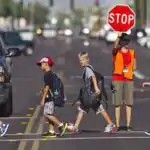
- Choose a crossing, footbridge or clear place. Stop at the edge, look left, right and left again, listen, and cross only when the road is clear.
- Keep watching while crossing; do not run into the road, use a phone or cross between parked vehicles.
- Young children should cross with a responsible adult.
Cyclist and Passenger Safety
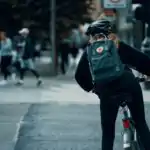
Cyclists should use a suitable helmet, working brakes, visible clothing and lights or reflectors when required; obey signals and avoid carrying unsafe loads. Passengers use seat belts where fitted, remain seated, keep body parts inside the vehicle and enter or leave only at a safe stop.
Driver Responsibilities
Drivers obey speed limits and signs, do not use a handheld phone, yield as required, keep a safe following distance, ensure the vehicle is roadworthy and never drive after alcohol or impairing drugs.
Consequences and Lawful Penalties
Unsafe behaviour can cause injury, disability, death and property damage. Legal penalties depend on the offence and current law and may include a warning, fine, licence penalty, vehicle sanction or court action. Pupils should learn safe behaviour rather than memorise unverified fine amounts.
Teaching Methods
Demonstration, road-layout simulation, discussion, role-play and questioning.
Instructional Procedures
Step 1: Introduction
Time: 5 minutes
Teacher’s Activity: Shows a road scene and asks pupils to identify hazards.
Pupils’ Activity: Point out safe and unsafe actions.
Step 2: Explanation
Time: 8 minutes
Teacher’s Activity: Explains duties of pedestrians, cyclists, passengers and drivers.
Step 3: Crossing Demonstration
Time: 10 minutes
Pupils’ Activity: Practise stop, look, listen and cross on a classroom road model.
Step 4: Scenario Practice
Time: 7 minutes
Pupils’ Activity: Choose the safe response in short road scenarios.
Step 5: Note-Taking
Time: 4 minutes
Pupils’ Activity: Copy key guidelines.
Step 6: Evaluation/Review
Time: 4 minutes
Teacher’s Activity: Checks actions and reasons.
Objective-aligned checks:
- Identify various road safety rules for pedestrians, cyclists, and drivers.
- Show an understanding of the importance of following road safety rules for personal and community safety.
- Demonstrate basic safety actions, such as looking both ways before crossing the road.
Step 7: Conclusion
Time: 2 minutes
Teacher’s Activity: Emphasises visibility, attention and obedience to road signs.
Lesson Keywords
- pedestrian — a person travelling on foot
- cyclist — a person riding a bicycle
- crossing — designated or chosen safe place to cross
- roadworthy — safe and fit for road use
Lesson Evaluation
- State four pedestrian rules.
- Why is crossing between parked vehicles dangerous?
- Name three safety items or checks for a cyclist.
- State two responsibilities of a passenger.
- Give two possible consequences of unsafe road behaviour.
Assignment/Homework
Draw a safe road-crossing scene and label the footpath, road edge, crossing and direction of approaching traffic.
Differentiation
- Support: Use picture cards and model each action slowly.
- Extension: Ask pupils to explain why visibility changes at night or in rain.
- Mobility needs: Discuss safe crossing support for wheelchair users and other pedestrians.
Note for Teachers
Practise only in a protected school space, never in live traffic. Adapt “left-right-left” teaching to the actual traffic direction and road layout pupils face. Verify current local road rules before quoting penalties.

Community Join the conversation Open discussion +