

Class: primary Four
Term: Third Term
Subject: Basic Science and Technology
Curriculum Theme: Basic Science
Previous Lesson: Liquids Used As Sources Of Energy
Topic: Measuring Volume of Liquids
Content/Learning Area: Volume Measurement
Time Allocation: 60 minutes
Performance Objectives
By the end of the lesson, pupils should be able to:
- Cognitive Domain:
– Define volume.
– Explain how to measure liquid volume.
– Identify units for measuring volume (cm³,ml,mm³).
– Convert between cm³, ml, and mm³.
- Affective Domain:
– Appreciate the importance of accurate measurement.
– show interest in measuring liquids.
– value precision in measurement.
- Psychomotor Domain:
– Use measuring tools correctly.
– Read volume measurements accurately.
– Record measurements correctly.
- Social domain:
– work well with others.
– Share findings clearly.
– Respect different approaches.
Reference Materials
- 9 Years Basic Education Curriculum
- Abuja Educational Resource Center Scheme of work
- NAPPS National Unified Scheme of Work
- physicsmax.com – Volume of liquids
- Relevant Textbooks
Instructional Materials
To deliver this lesson, the teacher will use the following materials: measuring cylinders, graduated beakers, transparent cups with markings, various liquid containers (bottles, juice packs), water, sand, small stones.
Rationale for the Lesson
Understanding volume is crucial for everyday life and further science studies. This lesson helps pupils develop essential measurement skills.
Prerequisite/Previous Knowledge
pupils should have basic knowledge of measurement and units.
Lesson Content
Measuring volume of Liquids
Volume is the amount of space something takes up.We measure the volume of liquids to know how much liquid we have.
Units of Volume
We measure liquid volume using different units.
These include:
- Cubic centimeters (cm³)
- Milliliters (ml)
- Cubic millimeters (mm³)
- Liters (l)
- Kiloliters (kl)
Measuring Liquids
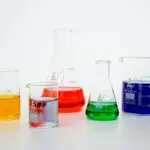
We use tools like measuring cylinders and beakers to measure liquid volume accurately. Always read the measurement at eye level.
Examples of Measuring Volume
Measuring liquid volume is vital in various situations.
The following are examples of situations where measuring liquid volume is important:
- Cooking
- Baking
- Medicine
- Science experiments
- Watering plants
- Filling fuel tanks
- making drinks
- Mixing chemicals
- Dosing medication
Importance of Accurate Measurement
Accurate measurement is important because it ensures we use the correct amount of liquid, preventing waste or errors.
Teaching Methods
To deliver this lesson, the teacher will adopt the following methods: Discussion, Demonstration, Practical Activity, question and Answer.
instructional Procedures
To deliver this lesson, the teacher will adopt the following steps:
Step 1: introduction
Time: 5 minutes
Teaching Skill: set induction
Teacher’s Activity: Begin with a captivating story about measuring liquids in everyday life. Ask questions about their experiences with measuring liquids.Pupils’ Activity: Listen attentively,share their experiences,and answer questions.
Step 2: Defining Volume
Time: 10 minutes
Teaching Skill: Description
Teacher’s Activity: Explain the concept of volume using simple language and real-life examples.
Pupils’ Activity: Listen attentively and take notes.
Step 3: Units of Volume
Time: 10 minutes
Teaching Skill: Demonstration
Teacher’s Activity: Show different measuring tools and explain the units (cm³, ml, mm³).
Pupils’ Activity: Observe the demonstration and take notes.
Step 4: Measuring Practice
Time: 10 minutes
Teaching Skill: Practical Activity
Teacher’s activity: Guide pupils in measuring different volumes of liquids using the provided materials.
Pupils’ Activity: Participate actively in the practical activity, measuring liquids and recording their observations.
Step 5: Note-Taking
Time: 2 minutes
Teaching Skill: Note-Taking
Teacher’s Activity: Review key concepts and encourage pupils to summarize their notes.
Pupils’ Activity: review their notes and make necessary corrections.
Step 6: Evaluation/Review
Time: 2 minutes
Teaching Skill: Questioning
Teacher’s Activity: Ask questions to assess understanding.
Pupils’ activity: Answer questions to demonstrate their understanding.
Step 7: Conclusion
Time: 1 minute
Teaching Skill: Summary
Teacher’s Activity: Summarize the key concepts learned.
Pupils’ Activity: Listen attentively.
Lesson Keywords
- Volume – The amount of space something takes up.
- Cubic centimeter (cm³) – A unit of volume.
- Milliliter (ml) – A unit of volume.
- Measuring cylinder – A tool for measuring liquid volume.
- Liter (l) – A unit of volume commonly used for larger quantities of liquids.
Lesson Evaluation
To evaluate the learning,the teacher asks pupils to:
- Define volume in their own words.
- Name three units used to measure liquid volume.
- explain how to accurately measure liquid volume using a measuring cylinder.
- Provide examples of situations where measuring liquid volume is important.
assignment/Homework
- Measure the volume of different liquids at home and record their findings.
- Convert 500 ml to cm³ and mm³.
- explain why accurate measurement is important in cooking.
Differentiation
- For slower learners: Provide one-on-one assistance and simplified instructions.
- For advanced learners: challenge them with more complex measurement tasks and conversions.
- For visual/auditory/kinesthetic learners: Use a variety of teaching methods to cater to different learning styles.
Note for Teachers
ensure all measuring tools are clean and in good condition. Emphasize the importance of accurate reading and recording of measurements.

Community Join the conversation Open discussion +