

Class: Primary Four
Term: First Term
Subject: Basic Science and Technology
Curriculum Theme: Basic Science
Previous Lesson: Changes in Plant
Topic: Changes in animals
Content/Learning Area: Life Cycle of Insects, Growth in Animals
Time Allocation: 40 minutes
Performance Objectives
By the end of the lesson, pupils should be able to:
- Cognitive Domain:
– Explain the growth in animals.
– Explain the changes in insects.
– Describe the four stages of a butterfly’s life cycle.
– Identify examples of changes animals go through as they grow.
– Explain the importance of understanding animal life cycles.
- Affective Domain:
– Show interest in learning about animal life cycles.
– Appreciate the diversity of life on Earth.
- Psychomotor Domain:
– Draw and label the stages of a butterfly’s life cycle.
- Social Domain:
– Work cooperatively with peers during group activities.
Reference Materials
- 9 – Years Basic Education Curriculum
- Abuja Educational Resource Center Scheme of Work
- NAPPS National Unified Scheme of Work
- Online Details
- Relevant Textbooks
Instructional Materials
To deliver this lesson, the teacher will use the following materials:
- Whiteboard or chart paper
- markers or crayons
- Pictures or diagrams of different animals and their life cycles
- Relevant textbooks
Rationale for the Lesson
Understanding animal life cycles is crucial for appreciating biodiversity and the interconnectedness of life. This lesson provides a foundation for future studies in biology and ecology.
Prerequisite/Previous Knowledge
The teacher will start by asking pupils what they already know about animals and how they change. A brief discussion will follow, leading into the lesson’s topic.
Lesson Content
Changes in Animals
Animals change as they grow and develop. This is part of their life cycle. Let’s explore two key aspects:
Life Cycle of Insects
Metamorphosis is a significant aspect of the life cycle of many insects, involving dramatic transformations.
Metamorphosis
The following are the stages of metamorphosis:
- Many insects, like butterflies, undergo metamorphosis—a dramatic change.
- A butterfly’s life has four stages: egg, larva (caterpillar), pupa (chrysalis), and adult.
- Adult butterflies lay eggs on plants. Caterpillars hatch from these eggs.
- Caterpillars eat and grow quickly.
- A fully grown caterpillar forms a chrysalis (pupa) and transforms inside.
- An adult butterfly emerges, ready to fly, lay eggs, and start the cycle again.
Growth in Animals
Growth in animals involves various changes in size, shape, and behavior as they mature from young ones to adults.The following are characteristics of growth in animals:
- All animals begin as young ones and grow into adults.
- Young animals often look different from adults and have different needs.
- They grow by eating and getting nutrients from food.
- Growth involves changes in size, shape, and behavior.
- Eventually, they become mature adults able to reproduce and care for themselves.
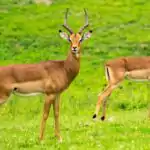
- Some animals undergo significant changes in their body structure, like tadpoles transforming into frogs.
- Animals adapt to their habitat as they grow, developing skills for survival.
Teaching Methods
to deliver this lesson, the teacher will adopt the following methods: Discussion, Question and answer, Visual aids
Instructional Procedures
To deliver this lesson, the teacher will adopt the following steps:
Step 1: Introduction
Time: 5 minutes
Teaching skill: Set Induction
Teacher’s Activity: Ask pupils what they know about animals and how they change.
Pupils’ Activity: Share their prior knowledge and participate in a brief discussion.
Step 2: Description of Key Concepts
Time: 15 minutes
Teaching Skill: Description
Teacher’s Activity: Explain the concepts of animal growth and the life cycle of insects, using visual aids.
Pupils’ Activity: Listen attentively and ask clarifying questions.
Step 3: Presentation/guided Practice
Time: 10 minutes
Teaching Skill: Demonstration
Teacher’s Activity: Show pictures or diagrams of a butterfly’s life cycle and explain each stage.
Pupils’ Activity: Observe the demonstration and participate in a guided discussion.
Step 4: Independent Practice
Time: 5 minutes
Teaching Skill: Guided Practice
Teacher’s Activity: Guide pupils in drawing and labeling the stages of a butterfly’s life cycle.Pupils’ Activity: Draw and label the stages of a butterfly’s life cycle.
step 5: Note-Taking
Time: 2 minutes
Teaching Skill: Note-Taking
Teacher’s Activity: Guide pupils in taking notes on key concepts.
Pupils’ Activity: Take notes on key concepts.
Step 6: Evaluation/Review
Time: 3 minutes
Teaching Skill: Questioning
Teacher’s Activity: Ask review questions to assess understanding.
Pupils’ Activity: Answer review questions.
Step 7: Conclusion
Time: 2 minutes
Teaching Skill: Summarization
Teacher’s Activity: Summarize the key concepts and assign homework.
pupils’ Activity: Listen to the summary and note the homework assignment.
Lesson Keywords
- Metamorphosis – A dramatic transformation in the body structure of an animal.
- Larva – The caterpillar stage of a butterfly’s life cycle.
- Pupa – The chrysalis stage where a caterpillar transforms into a butterfly.
- Life Cycle – The series of changes an animal goes through during it’s life.
- Growth – The process of an animal increasing in size and complexity.
Lesson Evaluation
To evaluate the learning, the teacher asks pupils to:
- Describe the four stages of a butterfly’s life cycle.
- give examples of changes animals go through as they grow.
- Why is it significant to understand animal life cycles?
- How do animals grow and develop?
- What are some differences between young and adult animals?
Assignment/Homework
- Draw another insect’s life cycle (e.g., mosquito, housefly).
- Write a short paragraph explaining the importance of understanding animal growth.
Differentiation
- For slower learners: Provide one-on-one assistance and use simpler language.
- For advanced learners: Encourage them to research other animal life cycles and present their findings.
- For visual/auditory/kinesthetic learners: Use visual aids, discussions, and hands-on activities to cater to different learning styles.
Note for Teachers
Ensure to use real-life examples and visual aids to enhance pupils’ understanding. Encourage active participation and provide constructive feedback.

Community Join the conversation Open discussion +