

Note for teachers using this lesson plan
This lesson plan guides pupils to understand different types of soil through direct observation and practical activities. Ensure all soil samples (sandy, clayey, and loamy) are readily available and clearly labelled for pupils to handle and examine safely. By the end of the lesson, pupils should be able to identify and describe the simple observable differences between these soil types.
Class: Primary 4
Term: First Term
Week: 5
Age: 9 years
Duration: 45 minutes
Subject: Pre-Vocational Studies
Curriculum Theme: Concept of Agriculture
Focal competence: Identifying different soil types in their environment and adding organic matter to improve soil fertility
Key competencies/values: Communication; Collaboration; ICT and Digital Competencies
Skills:
- Identifying types of soil
Previous Lesson: Soil, Its Importance and Role in Plant Growth
Topic: Soil Classification And Enrichment: Types Of Soil
Subject Matter: Types of soil and simple observable differences
Specific Objectives
By the end of the lesson, pupils should be able to:
Cognitive Domain
- Identify different types of soil.
Reference Materials
The following resources were used in planning this lesson:
- 2025 Revised 9 Years Basic Education Curriculum
- Relevant State Unified Scheme of Work
- Pre-Vocational Studies for Primary 4 textbook
- The HeadTeacher Scheme of work
Instructional Materials
The teacher will teach this lesson with the aid of:
- Soil samples (sandy, clayey, and loamy)
- Relevant video clips
- Fertilizer (NPK) sample
- Organic manure sample
Rationale for the Lesson
Understanding different soil types is fundamental to agriculture, as each type has unique properties that affect plant growth. This lesson helps pupils appreciate the diversity of natural resources and lays a foundation for future learning about soil management and crop cultivation.
Prerequisite/Previous Knowledge
Pupils should have a basic understanding of what soil is and its importance for plants.
Lesson Content/Board Summary
Types of Soil
What is Soil?
Soil is the loose top layer of the Earth’s surface where plants grow. It is made up of tiny rock particles, organic matter (dead plants and animals), water, and air.
Main Types of Soil
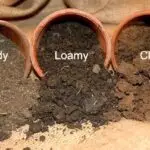
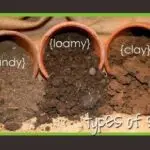
There are three main types of soil based on their particle size and texture:
- Sandy Soil
- Clayey Soil
- Loamy Soil
Sandy Soil
Sandy soil has large, coarse particles. Its observable differences include:
- It feels rough and gritty when rubbed between the fingers.
- It does not hold water well, so water drains through it quickly.
- It is light in weight.
- It is usually light brown or grey in colour.
Clayey Soil
Clayey soil has very small, fine particles. Its observable differences include:
- It feels smooth and sticky when wet, and hard when dry.
- It holds a lot of water and can become waterlogged easily.
- It is heavy in weight.
- It is often reddish-brown or dark in colour.
Loamy Soil
Loamy soil is a mixture of sand, clay, and silt (another type of particle). It is considered the best soil for farming. Its observable differences include:
- It feels soft, smooth, and slightly gritty.
- It holds enough water for plants but also drains well.
- It is moderate in weight.
- It is usually dark brown in colour.
Teaching Methods/Instructional Techniques
Discussion, Demonstration, Guided Practice, Question and Answer, Explanation, Observation, Practical Activity
Instructional Procedures
Step 1: Introduction
Time: 5 minutes
Teaching Skill: Questioning/Engagement
Teacher’s Activity: The teacher greets the pupils and asks them what they know about soil and its importance. The teacher then introduces the topic of “Types of Soil” and explains that they will learn to identify different types.
Pupils’ Activity: Pupils respond to the teacher’s questions and listen attentively to the introduction.
Learning Point: Introduction to soil types
Step 2: Introduction to Soil Types
Time: 5 minutes
Teaching Skill: Demonstration/Explanation
Teacher’s Activity: The teacher displays the three soil samples (sandy, clayey, and loamy) to the class. The teacher briefly explains that these are the main types of soil they will be observing.
Pupils’ Activity: Pupils observe the soil samples displayed by the teacher.
Learning Point: Display of soil samples
Step 3: Observing Sandy Soil
Time: 5 minutes
Teaching Skill: Guided Observation
Teacher’s Activity: The teacher distributes small portions of sandy soil to groups of pupils. The teacher guides them to feel its texture, observe its colour, and note how it feels when rubbed between their fingers.
Pupils’ Activity: Pupils touch, feel, and observe the sandy soil, describing its characteristics.
Learning Point: Characteristics of sandy soil
Step 4: Observing Clayey Soil
Time: 5 minutes
Teaching Skill: Guided Observation
Teacher’s Activity: The teacher distributes small portions of clayey soil to groups of pupils. The teacher guides them to feel its texture, observe its colour, and note how it feels when wet and dry.
Pupils’ Activity: Pupils touch, feel, and observe the clayey soil, describing its characteristics.
Learning Point: Characteristics of clayey soil
Step 5: Observing Loamy Soil
Time: 5 minutes
Teaching Skill: Guided Observation
Teacher’s Activity: The teacher distributes small portions of loamy soil to groups of pupils. The teacher guides them to feel its texture, observe its colour, and note its balance of grittiness and smoothness.
Pupils’ Activity: Pupils touch, feel, and observe the loamy soil, describing its characteristics.
Learning Point: Characteristics of loamy soil
Step 6: Discussing Differences
Time: 8 minutes
Teaching Skill: Discussion/Comparison
Teacher’s Activity: The teacher leads a class discussion, asking pupils to compare and contrast the observable differences between sandy, clayey, and loamy soils based on their observations. The teacher highlights key differences in texture, particle size, and water retention.
Pupils’ Activity: Pupils share their observations and discuss the differences between the soil types.
Learning Point: Observable soil differences
Step 7: Evaluation/Review
Time: 5 minutes
Teaching Skill: Questioning/Assessment
Teacher’s Activity: The teacher evaluates the learning by asking the following questions:
- Mention three types of soil.
- How does sandy soil feel when you rub it?
- Which type of soil feels sticky when wet?
- Which soil type is considered best for farming?
Pupils’ Activity: Pupils answer orally and in writing.
Learning Point: Identification of soil types
Step 8: Note-Taking
Time: 4 minutes
Teaching Skill: Guided Writing
Teacher’s Activity: The teacher guides pupils to copy the essential Board Summary notes on the types of soil and their differences into their notebooks.
Pupils’ Activity: Pupils copy the notes carefully into their notebooks.
Learning Point: Recording lesson notes
Step 9: Conclusion
Time: 3 minutes
Teaching Skill: Reinforcement
Teacher’s Activity: The teacher quickly summarizes the main points of the lesson, reminding pupils about the three types of soil and their unique features. The teacher encourages them to observe soil types in their environment.
Pupils’ Activity: Pupils listen and ask any final questions.
Learning Point: Summary of soil types
Continuous Assessment/Further Study
Type: Homework
Instruction: Observe the soil in your compound or a nearby open field. Try to determine if it is mostly sandy, clayey, or loamy based on what you have learned today. Write down your observations.
- Describe the soil in your compound.
- How does it feel?
- What colour is it?
- Which type of soil do you think it is?
Lesson Keywords
- Soil – The loose top layer of the Earth where plants grow.
- Sandy soil – Soil with large, coarse particles that feels gritty.
- Clayey soil – Soil with very fine particles that feels smooth and sticky when wet.
- Loamy soil – A mixture of sand, clay, and silt, considered ideal for farming.
- Texture – How soil feels to the touch (e.g., gritty, smooth, sticky).
Differentiation
For weaker learners: Provide pre-labelled soil samples and focus on identifying just two main types (sandy and clayey) with clear visual and tactile cues. Use simpler language and repeat key characteristics.
For faster learners: Encourage them to research other properties of soil, such as its ability to hold nutrients, or to draw and label the different soil particles they observed.
Suggested Lesson Videos
Search YouTube for “Types of soil for kids Primary 4” or “What are sandy clay and loamy soils”.
Teacher Guide for Using This Lesson Plan
Before the lesson, gather clear samples of sandy, clayey, and loamy soil. Ensure they are clean and accessible for pupils to handle. You may moisten the clayey soil slightly to demonstrate its stickiness. Begin by engaging pupils with questions about soil to activate prior knowledge. During the observation activities (Steps 3-5), circulate among groups, guiding pupils to describe what they feel and see. Encourage them to use descriptive words for texture and colour. The discussion in Step 6 is crucial for reinforcing the observable differences. Ensure pupils copy the Board Summary notes accurately in Step 8. For evaluation, use the questions provided in Step 7 to check understanding of the different soil types. Support weaker learners by providing more direct guidance during the observation and discussion phases, while challenging faster learners with additional questions or tasks.

Community Join the conversation Open discussion +