

Class: Primary Four
term: First Term
Subject: Pre-vocational Studies
Curriculum Theme: Home Economics
Previous Lesson:
Topic: Uses of Cosmetics and Deodorants
Content/Learning Area: What are Cosmetics?, What are Deodorants?
Time allocation: 40 minutes
Performance Objectives
By the end of the lesson, pupils should be able to:
- Cognitive Domain:
- Mention two uses of cosmetics.
- List two uses of deodorants.
- Affective Domain:
- Appreciate the importance of personal hygiene.
- Psychomotor Domain:
- N/A
- Social Domain:
- N/A
Reference Materials
- 9 – Years Basic education curriculum
- Abuja Educational Resource Center Scheme of Work
- NAPPS National Unified Scheme of Work
- Online Details
- Relevant Textbooks
Instructional materials
To deliver this lesson, the teacher will employ the help of the following materials:
- Whiteboard or chart paper
- Markers or pens
- Pictures of cosmetics and deodorants
Rationale for the Lesson
Understanding the uses of cosmetics and deodorants promotes good hygiene habits and self-esteem. This lesson lays a foundation for future lessons on personal care and health.
Prerequisite/Previous Knowledge
Pupils have a basic understanding of personal hygiene.
Lesson Content
What are Cosmetics?
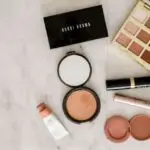
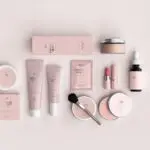
Cosmetics are products applied to the body to improve appearance. They can:
- Highlight facial features (foundation, blush).
- Express personal style (lipstick, eyeliner, eyeshadow).
- Protect skin (sunscreen).
- Conceal imperfections.
- Create special effects (theater,film).
- Enhance natural beauty (lip gloss, mascara).
- Provide therapeutic benefits (medicated creams, lotions).
What are Deodorants?
Deodorants control body odor. They can:
- Control odor by reducing odor-causing bacteria.
- absorb sweat (antiperspirant properties).
- Boost confidence.
- Provide a pleasant scent.
- Prevent sweat stains on clothing.
- Offer long-lasting protection.
Safe Use of Cosmetics and Deodorants
Cosmetics are products used to clean, protect or change appearance. Deodorants reduce body odour; antiperspirants reduce sweating. They do not replace bathing or clean clothes.
Use only age-appropriate, labelled products with adult guidance. Do not share eye or lip products, apply to broken skin or use skin-lightening mixtures with unknown ingredients. Stop and tell an adult if burning, swelling or rash occurs.
Teaching Methods
To deliver this lesson, the teacher will adopt the following methods: Discussion, Question and answer, Visual aids
Instructional Procedures
To deliver this lesson, the teacher will adopt the following steps:
Step 1: Introduction
Time: 5 minutes
Teaching skill: Set Induction
Teacher’s Activity: Ask pupils what they know about cosmetics and deodorants.
Pupils’ Activity: Share their prior knowledge.
Step 2: Description of Key Concepts
Time: 15 minutes
Teaching Skill: Explaining
Teacher’s Activity: Explain the definitions and uses of cosmetics and deodorants using visual aids.Pupils’ Activity: Listen attentively and ask questions.
Step 3: Exhibition/Guided Practice
Time: 10 minutes
Teaching Skill: Demonstrating
teacher’s Activity: Show pictures of different cosmetics and deodorants and discuss their uses.
Pupils’ Activity: Participate in the discussion and identify the uses of each product.
Step 4: Self-Reliant Practice
Time: 5 minutes
Teaching Skill: Monitoring
Teacher’s Activity: ask pupils to list two uses of cosmetics and two uses of deodorants.
Pupils’ Activity: Complete the task individually.
Step 5: Note-Taking
Time: 2 minutes
Teaching Skill: guiding
Teacher’s activity: guide pupils to wriet down key points in their notebooks.
Pupils’ Activity: Take notes.
Step 6: Evaluation/Review
Time: 3 minutes
Teaching Skill: Assessing
Teacher’s Activity: Review the lesson and answer any remaining questions.
Pupils’ Activity: Participate in the review.
Objective-aligned checks:
- Mention two uses of cosmetics.
- List two uses of deodorants.
Step 7: Conclusion
Time: 2 minutes
Teaching Skill: Summarizing
Teacher’s Activity: Summarize the key points of the lesson.
Pupils’ Activity: Listen to the summary.
Lesson Keywords
- Cosmetics – Products used to enhance or alter appearance.
- Deodorants – Substances used to prevent or mask body odor.
- Hygiene – Practices that maintain health and prevent disease.
- Appearance – The way someone or something looks.
- Personal Care – Activities related to maintaining one’s body and appearance.
Lesson Evaluation
To evaluate the learning, the teacher asks pupils to:
- What are the main uses of cosmetics?
- What are the main uses of deodorants?
- List four uses of cosmetics and deodorants.
- Why is it crucial to use deodorants?
- Can you think of any traditional cosmetics used in your community?
Assignment/Homework
- Draw pictures of different cosmetics and deodorants.
- Label the uses of each cosmetic and deodorant you drew.
- Research and write down three benefits of using deodorants.
Differentiation
- For slower learners: Provide one-on-one assistance and simplified explanations.
- For advanced learners: Encourage them to research traditional cosmetics used in their community.
- For visual/auditory/kinesthetic learners: Use visual aids, discussions, and hands-on activities.
Note for Teachers
Ensure to use real-life examples and visual aids to make the lesson engaging and relatable for the pupils. Encourage pupils to ask questions and share their experiences.
Community Join the conversation Open discussion +