

Note for teachers using this lesson plan
This lesson introduces pupils to various opportunities available in agriculture beyond traditional farming. Ensure you have visual aids or can demonstrate a simple agricultural task safely. Guide pupils to identify and discuss different agricultural enterprises, helping them understand the diverse career paths and services within the agricultural sector. By the end, pupils should be able to identify and outline several agricultural opportunities.
Class: Primary 4
Term: First Term
Week: 9
Age: 9 years
Duration: 45 minutes
Subject: Pre-Vocational Studies
Curriculum Theme: Basic entrepreneurial skills
Focal competence: Exhibiting basic agricultural skills like planting, watering and weeding with confidence
Key competencies/values: Communication; ICT and Digital Competencies
Skills:
- Identifying opportunities in Agriculture
Previous Lesson: Agricultural Opportunities in Crop Production, Management and Animal Husbandry
Topic: Vocational Skills In Agriculture: Other Opportunities
Subject Matter: Other opportunities in Agriculture, including marketing and related agricultural enterprises
Specific Objectives
By the end of the lesson, pupils should be able to:
Cognitive Domain
- Identify other opportunities in Agriculture.
- Outline selected opportunities in Agriculture by field.
Psychomotor Domain
- Practise a simple agricultural task related to a specific vocation.
- Role-play an agricultural occupation.
Reference Materials
The following resources were used in planning this lesson:
- 2025 Revised 9 Years Basic Education Curriculum
- Relevant State Unified Scheme of Work
- Pre-Vocational Studies for Primary 4 textbook
- The HeadTeacher Scheme of work
Instructional Materials
The teacher will teach this lesson with the aid of:
- Relevant video clip showing various agricultural activities
- Pictures or charts depicting different agricultural opportunities (e.g., farm produce market, veterinary clinic, fish farm, poultry farm)
- Simple gardening tools (e.g., hand trowel, watering can, small hoe) for demonstration
- The Internet (for video clips and images)
Rationale for the Lesson
This lesson is important because it broadens pupils’ understanding of agriculture beyond just planting and harvesting. It introduces them to the diverse range of jobs and businesses that exist within the agricultural sector, encouraging them to see agriculture as a field with many exciting possibilities. Understanding these opportunities can inspire future career choices and entrepreneurial thinking.
Prerequisite/Previous Knowledge
Pupils should have basic knowledge of what agriculture is and some common farming activities like planting, watering, and weeding.
Lesson Content/Board Summary
Vocational Skills In Agriculture: Other Opportunities
Other Opportunities in Agriculture
Agriculture offers many different jobs and businesses apart from just planting and harvesting crops or raising animals. These opportunities involve providing services, processing farm products, or selling them to people.
Agricultural Marketing and Services
These are jobs and businesses that help farmers sell their products or provide support to farming activities. They include:
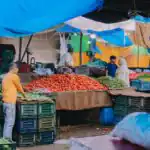
- Agricultural Marketing: This involves selling farm produce like yam, maize, vegetables, fruits, and livestock to customers in markets or shops. People who do this are called marketers or traders.
- Transportation of Farm Produce: Moving farm products from the farm to the market or processing factories. This requires vehicles like trucks and vans.
- Storage of Farm Produce: Keeping farm products safe after harvest to prevent spoilage, using facilities like silos, barns, or cold rooms.
- Agricultural Extension Services: Advising farmers on better farming methods, new seeds, and how to control pests and diseases.
- Veterinary Services: Providing healthcare for farm animals, including treating sick animals and giving vaccinations.
- Supply of Farm Inputs: Selling items needed for farming, such as seeds, fertilizers, pesticides, and farm tools.
Related Agricultural Enterprises
These are businesses that use agricultural products or provide specialized services within agriculture. They include:
- Food Processing: Turning raw farm products into finished food items, e.g., making garri from cassava, bread from wheat, or juice from fruits.
- Fishery: Rearing fish in ponds or tanks for food.
- Poultry Farming: Rearing chickens, turkeys, or ducks for eggs and meat.
- Animal Husbandry: Rearing various animals like goats, sheep, and cattle for meat, milk, and other products.
- Beekeeping (Apiculture): Rearing bees for honey and beeswax.
- Snail Farming (Heliculture): Rearing snails for food.
Teaching Methods/Instructional Techniques
Discussion, Demonstration, Guided Practice, Question and Answer, Explanation, Observation, Role-play
Instructional Procedures
Step 1: Introduction
Time: 5 minutes
Teaching Skill: Activating prior knowledge
Teacher’s Activity: The teacher greets the pupils and asks them to name some things farmers do. The teacher then introduces the lesson by explaining that agriculture is more than just planting and harvesting.
Pupils’ Activity: Pupils respond by naming farming activities like planting, watering, and harvesting. They listen attentively to the teacher’s introduction.
Learning Point: Agriculture beyond farming
Step 2: Identifying Opportunities
Time: 8 minutes
Teaching Skill: Explanation/Visualisation
Teacher’s Activity: The teacher shows pictures or plays a short video clip of different people working in agriculture (e.g., a market seller, a vet, someone packing processed food). The teacher asks pupils to identify what each person is doing and discusses how these are also part of agriculture.
Pupils’ Activity: Pupils observe the pictures/video, identify the activities, and discuss how they relate to agriculture.
Learning Point: Diverse agricultural jobs
Step 3: Agricultural Marketing and Services
Time: 8 minutes
Teaching Skill: Explanation/Listing
Teacher’s Activity: The teacher explains and lists examples of agricultural marketing and services, such as selling farm produce, transporting goods, storing food, and veterinary services. The teacher uses simple examples relevant to their community.
Pupils’ Activity: Pupils listen, ask questions, and contribute examples of people they know who do these jobs.
Learning Point: Marketing and support services
Step 4: Related Agricultural Enterprises
Time: 8 minutes
Teaching Skill: Explanation/Categorisation
Teacher’s Activity: The teacher explains and lists examples of related agricultural enterprises like food processing, fishery, poultry farming, and beekeeping. The teacher shows relevant pictures for each.
Pupils’ Activity: Pupils listen, observe the pictures, and identify different types of agricultural businesses.
Learning Point: Other agricultural businesses
Step 5: Demonstration of a Simple Agricultural Task
Time: 5 minutes
Teaching Skill: Demonstration/Modelling
Teacher’s Activity: The teacher demonstrates a safe, simple agricultural task linked to a selected vocation, e.g., how to carefully sort small fruits for market (marketing) or how to properly hold a watering can to water a plant (nursery management).
Pupils’ Activity: Pupils observe the teacher’s demonstration carefully.
Learning Point: Practical agricultural skill
Step 6: Practice/Role-play
Time: 5 minutes
Teaching Skill: Guided practice/Role-playing
Teacher’s Activity: The teacher guides pupils to practise or role-play the demonstrated task or an occupation it represents. For example, some pupils can pretend to be sellers, and others buyers at a market stall.
Pupils’ Activity: Pupils participate in the practice or role-play, discussing the occupation it represents.
Learning Point: Role-playing agricultural vocations
Step 7: Evaluation/Review
Time: 5 minutes
Teaching Skill: Questioning/Assessment
Teacher’s Activity: The teacher evaluates the learning by asking the following questions:
- Mention two other opportunities in Agriculture apart from planting.
- Name two agricultural marketing activities.
- Give an example of a related agricultural enterprise.
Pupils’ Activity: Pupils answer orally and in writing.
Learning Point: Recall of agricultural opportunities
Step 8: Note-Taking
Time: 4 minutes
Teaching Skill: Guided Writing
Teacher’s Activity: The teacher guides pupils to copy the essential Board Summary notes on other opportunities in agriculture into their notebooks.
Pupils’ Activity: Pupils copy the notes carefully into their notebooks.
Learning Point: Recording lesson notes
Step 9: Conclusion
Time: 2 minutes
Teaching Skill: Reinforcement
Teacher’s Activity: The teacher briefly reminds pupils that agriculture is a vast field with many different jobs and businesses, not just farming. The teacher encourages them to think about how these opportunities help people.
Pupils’ Activity: Pupils listen and reflect on the diverse nature of agriculture.
Learning Point: Broadening agricultural perspective
Continuous Assessment/Further Study
Type: Homework
Instruction: Answer the following questions in your notebook:
- Draw and label two farm products you can buy from an agricultural marketer.
- Find out if there is a veterinary clinic or a food processing company in your community. Write down its name if you find one.
- Imagine you are a poultry farmer. What products would you sell?
Lesson Keywords
- Agriculture – The science or practice of farming, including cultivation of the soil for the growing of crops and the rearing of animals to provide food, wool, and other products.
- Opportunities – Chances or possibilities for jobs or businesses.
- Marketing – The activity of selling products or services.
- Enterprises – Businesses or companies.
- Veterinary – Relating to the medical care and treatment of animals.
- Food Processing – Transforming raw ingredients into food or transforming food into other forms for consumption.
Differentiation
For slower learners: Provide simplified charts with fewer examples and clearer pictures. Pair them with faster learners during role-play activities. Focus on identifying just two or three key opportunities.
For faster learners: Encourage them to research additional agricultural opportunities not discussed in class, such as floriculture (flower farming) or aquaculture (aquatic animal farming). Ask them to explain the steps involved in a specific agricultural enterprise.
Suggested Lesson Videos
Search on YouTube for: opportunities in agriculture for kids primary school
Teacher Guide for Using This Lesson Plan
Before the lesson, gather relevant pictures or charts illustrating various agricultural opportunities like a market scene, a veterinary clinic, a food processing factory, a fish farm, or a poultry farm. Prepare a short, engaging video clip if available. For the demonstration, ensure you have simple, safe tools like a hand trowel, watering can, or even just some small fruits for sorting. Start by linking the lesson to pupils’ existing knowledge of farming. Encourage active participation during the identification and discussion of various agricultural jobs. During the demonstration and role-play, ensure all pupils have a chance to participate, even if it’s just by observing and discussing. Emphasise safety during any practical activity. The Board Summary should be copied by pupils after the main teaching points have been covered and understood. Check for understanding frequently through questions and observation during activities. Provide extra support to pupils who struggle to grasp the different categories of opportunities and extend the learning for those who quickly understand.
Community Join the conversation Open discussion +