

Class: Primary 4
Term: 2nd Term
Subject: Pre-Vocational Studies
Curriculum Theme: Agricultural Science
Previous Lesson: Meaning Of Soil
Topic: Types of Soil
Content/Learning Area: Soil Classification
Time Allocation: 40 minutes
Performance Objectives
By the end of the lesson, pupils should be able to:
- Cognitive Domain: Identify three types of soil and describe their characteristics.
- Affective Domain: Appreciate the importance of different soil types in plant growth.
- Psychomotor Domain: Classify soil samples into different types through observation.
- Social Domain: collaborate with classmates to discuss the uses of soil types in farming.
Reference Materials
The following resources were used in planning this lesson:
- 9–Years Basic Education Curriculum Abuja
- Educational Resource center Scheme of Work
- NAPPS National Unified Scheme of Work
- Online information from: BYJU’S – Types Of Soil – Sandy Soil, Clay Soil, Silt Soil, And Loamy Soil
- Relevant textbooks.
Instructional Materials
To deliver this lesson, the teacher will use the following materials:
- Real soil samples (sand, clay, loam)
- Transparent containers for observation
- Magnifying lens
- Charts showing soil types and their uses
Rationale for the lesson
Understanding soil types helps pupils recognize the importance of soil in agriculture and how it supports plant growth, which is essential for food production and sustainability.
Prerequisite/Previous Knowledge
Pupils have learned about the meaning of soil and its basic functions. They are familiar with seeing soil in their environment.
Lesson content
Types of Soil
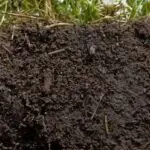
Soil is a natural resource that supports plant growth. It is indeed made up of tiny particles of rocks, minerals, and organic matter. There are three main types of soil:
The following are the main types of soil:
- Sandy Soil: This soil has large particles, feels gritty, and drains water quickly. It is not very fertile.
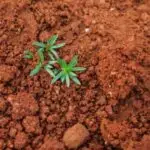
- Clay Soil: This soil has small, tightly packed particles. It feels smooth when wet and holds water well, but drains poorly.
- Loamy Soil: This soil is a mix of sand, clay, and organic matter. It is indeed the best soil for farming as it holds water and nutrients well.
Comparing Sandy, Clayey and Loamy Soil
Sandy soil has large particles, drains quickly and holds fewer nutrients. Clayey soil has very small particles, holds much water and can become sticky when wet or hard when dry. Loamy soil is a mixture with useful balance for many crops.
No soil type is best for every plant or purpose. Farmers improve soil with organic matter, drainage, mulching and suitable crop choice.
Teaching Methods
To deliver this lesson, the teacher will adopt the following methods: Questioning, Presentation, Group activity, Guided discussion, Direct instruction, Oral questioning.
Instructional Procedures
To deliver this lesson, the teacher will adopt the following steps:
Step 1: Introduction
Time: 5 mins
Teaching Skill: Set Induction
Teacher’s Activity: teacher asks pupils what they know about soil and its uses.
Pupils’ Activity: Pupils respond by sharing their ideas.
Step 2: Explanation of Soil Types
Time: 10 mins
teaching Skill: Demonstration
Teacher’s Activity: Teacher displays and describes soil samples, explaining their characteristics.
Pupils’ Activity: Pupils observe soil samples and listen.
Step 3: Soil Classification
Time: 10 mins
Teaching Skill: Group activity
Teacher’s Activity: Teacher guides pupils in grouping soil samples into sand, clay, and loam.
Pupils’ Activity: Pupils sort soil into groups.
Step 4: Discussion on Uses of Soil
Time: 5 mins
Teaching Skill: Guided discussion
Teacher’s Activity: Teacher explains the uses of each soil type in farming and construction.
Pupils’ Activity: Pupils discuss with partners.
Step 5: Note-taking
time: 5 mins
Teaching Skill: Direct instruction
Teacher’s Activity: Teacher writes the lesson summary on the board.Pupils’ Activity: Pupils copy notes into their books.
Step 6: Evaluation/Review
Time: 3 mins
Teaching Skill: Oral questioning
Teacher’s Activity: Teacher asks questions to assess understanding.
pupils’ Activity: Pupils answer questions orally.
Objective-aligned checks:
- Identify three types of soil and describe their characteristics.
- Classify soil samples into different types through observation.
Step 7: Conclusion
Time: 2 mins
Teaching Skill: Recap and reinforcement
Teacher’s Activity: Teacher reviews key points and gives a homework task.
Pupils’ Activity: Pupils listen and note homework.
Lesson Keywords
- Sandy Soil – Soil with large particles that drains water quickly.
- Clay Soil – Soil with small, tightly packed particles that holds water well.
- Loamy Soil – A mix of sand, clay, and organic matter, ideal for farming.
- Texture – The feel and composition of soil.
- Fertile – Able to support plant growth.
Lesson Evaluation
To evaluate the learning, the teacher asks pupils to:
- Name the three main types of soil.
- Describe one characteristic of sandy soil.
- Explain why loamy soil is good for farming.
- Classify a soil sample into its type by observing its texture.
Assignment/Homework
- Collect different soil samples from your environment.
- Observe and describe the texture of each sample.
- Identify the type of soil each sample is (sandy, clay, or loam).
Differentiation
- For slower learners: Provide simplified explanations and more hands-on activities with soil samples.
- For advanced learners: Encourage them to research the specific types of plants that grow best in each soil type.
- For visual/auditory/kinesthetic learners: Use visual aids like charts and diagrams, provide verbal explanations, and allow them to physically handle and classify soil samples.
Note for Teachers
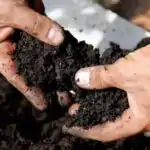
Make the lesson engaging by allowing pupils to feel the soil samples. Encourage participation by asking open-ended questions. Use charts to enhance understanding. Happy teaching!

Community Join the conversation Open discussion +