

Class: Primary 4
Term: 2nd Term
Subject: Pre-Vocational Studies
Curriculum Theme: Home Economics
Previous Lesson: Clothes For Different Occasions, Traditional And Religious Clothes
Topic: Clothes For Different Occasions: School, Work, etc.
Content/Learning Area: School, work, sports, household work, wedding, birthday, parties, etc.
Time Allocation: 40 minutes
Performance Objectives
By the end of the lesson, pupils should be able to:
- Cognitive Domain: Identify and list examples of clothes suitable for school, work, and other occasions.
- affective Domain: Appreciate the importance of wearing appropriate clothes for different occasions.
- Psychomotor Domain: Select and sort clothes for specific occasions.
- social Domain: Share ideas about the significance of dressing appropriately in different scenarios.
Reference Materials
The following resources were used in planning this lesson:
- 9 – Years Basic Education Curriculum
- Abuja Educational Resource Center scheme of Work
- NAPPS national Unified Scheme of Work
- Online information from Bewakoof – Dressing For Different Occasions With Style: Essential Guide
- Relevant Textbooks
Instructional Materials
To deliver this lesson, the teacher will use the following materials:
- Pictures of clothes for different occasions
- Flashcards showing names of different clothes
- Whiteboard and markers
- A variety of clothes (real or toy-sized)
Rationale for the Lesson
Understanding the importance of appropriate dressing helps pupils make informed choices about what to wear for various activities and occasions. This skill promotes self-confidence and respect for social norms.
Prerequisite/Previous Knowledge
Pupils are familiar with some traditional clothes and can recognize clothing items in general.
Lesson Content
Clothes For Different Occasions: School, Work, etc.
Clothes are an essential part of our daily life. They protect us and show respect for different activities or occasions. Below are some examples:
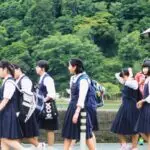
- School: Uniforms, cardigans, and socks are worn to school. Examples include:
1. School uniforms with the school’s emblem
2.Cardigans or sweaters for cooler days
3. Socks and appropriate footwear
4. Sportswear for physical education classes
- Work: Office workers wear suits, overalls, or uniforms depending on the job. These include:
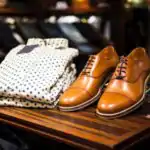
1. Suits for formal office environments
2. Overalls for manual labor jobs
3.Uniforms for specific professions like nursing or security
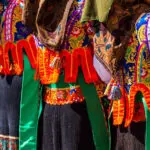
4. Traditional attire for cultural events at work
- Sports: Tracksuits, jerseys, and shorts are common. examples are:
1.Tracksuits for warm-up and cool-down periods
2. Jerseys for team sports
3. Shorts for running and field activities
4. Swimsuits for swimming
- Household Work: Casual clothes like aprons or simple t-shirts and trousers. These include:
1. Aprons to protect clothing while cooking or cleaning
2. simple t-shirts and trousers for comfort
3. gloves for handling chemicals
4.Headscarf to keep hair clean
- Wedding: Fancy dresses, suits, or traditional attire are typical. Examples include:
1. Fancy dresses for the bride and guests
2. suits for the groom and groomsmen
3. Traditional attire representing the couple’s culture
4.Aso-ebi for family and friends
- Birthday: Party dresses or colorful casual wear. These include:
1. Party dresses for birthday celebrants
2. Colorful casual wear for guests
3. Themed costumes for children’s parties
4. traditional outfits for cultural celebrations
- Parties: Formal or semi-formal clothes depending on the occasion.Examples are:
1. Formal gowns for galas and balls
2. semi-formal dresses for cocktail parties
3. Smart casual outfits for informal gatherings
4. Traditional attire for cultural parties
Teaching Methods
To deliver this lesson, the teacher will adopt the following methods: Discussion, Demonstration, group Work, Clarification, Visual Aids.
Instructional Procedures
To deliver this lesson, the teacher will adopt the following steps:
Step 1: Introduction
Time: 5 mins
Teaching Skill: Set Induction
Teacher’s Activity: Displays pictures of different clothes and asks pupils to describe what they see.
Pupils’ Activity: Observe and describe the clothes shown.
Step 2: Explanation of Clothes for Occasions
Time: 10 mins
Teaching Skill: Direct teaching
Teacher’s Activity: Explains the types of clothes suitable for school, work, sports, household work, wedding, birthdays, and parties. Displays matching pictures.
Pupils’ Activity: Listen and observe the pictures.
Step 3: Sorting Activity
Time: 8 mins
Teaching Skill: Experiential
Teacher’s Activity: Provides groups with flashcards showing clothes and asks them to sort the cards into categories for school, work, sports, and other occasions.
Pupils’ Activity: Sort the cards into the correct categories in groups.
Step 4: Discussion on Appropriate Dressing
Time: 7 mins
Teaching Skill: Discussion
Teacher’s Activity: Facilitates a discussion on why dressing appropriately is important.
Pupils’ activity: Share thoughts on the importance of appropriate dressing.
Step 5: Note-Taking
Time: 5 mins
Teaching Skill: Guided note-taking
Teacher’s activity: Guides pupils to copy concise notes into their exercise books.Pupils’ Activity: Copy the notes.
Step 6: Evaluation/Review
Time: 3 mins
Teaching Skill: Questioning
Teacher’s Activity: Asks questions to test pupils’ understanding of clothes for different occasions.
Pupils’ Activity: Answer questions orally.
Step 7: Conclusion
Time: 2 mins
Teaching Skill: Recap
Teacher’s Activity: Summarizes the key points and emphasizes the importance of choosing clothes wisely for different occasions.
Pupils’ Activity: Listen to the teacher’s summary.
Lesson Keywords
- Uniform – Clothes worn specifically to school or work to identify the wearer.
- Attire – Clothes worn for a particular purpose or occasion.
- Occasion – A particular event or time.
- Appropriate – Suitable or proper in the circumstances.
- Traditional – Relating to customs or beliefs passed down through generations.
Lesson Evaluation
To evaluate the learning,the teacher asks pupils to:
- List three types of clothes worn for school,sports,and work.
- Explain why it is important to dress appropriately for weddings and birthdays.
- Sort the following into categories: tracksuit, suit, apron, uniform, party dress.
- Discuss the role of appropriate dressing in building self-confidence.
Assignment/Homework
- Draw and label clothes suitable for three different occasions.
- Ask yoru parents about the clothes they wear to work and write a short paragraph about it.
- Explain the importance of wearing appropriate clothes to a religious event.
Differentiation
- For slower learners: Provide simplified flashcards with fewer options and more visual cues.
- For advanced learners: Ask them to research and present on the cultural significance of clothing in different Nigerian ethnic groups.
- For visual/auditory/kinesthetic learners: Use a variety of visual aids, discussions, and hands-on activities like sorting clothes.
Note for Teachers
Prepare a variety of visuals to make the lesson engaging and interactive. Encourage pupils to share their experiences about the clothes they wear for specific occasions. Happy teaching!

Community Join the conversation Open discussion +