

Class: Primary 4
term: 2nd Term
Subject: Pre-vocational Studies
curriculum Theme: Home Economics
Previous Lesson: Guideline For Proper Care Of Clothing
Topic: How to Care for Personal Clothing
Content/Learning Area: How to care for personal clothing e.g., shirts, blouses, trousers, footwear, caps, etc.
Time Allocation: 40 minutes
Performance Objectives
By the end of the lesson, pupils should be able to:
- Cognitive Domain: Identify seven examples of personal clothing and state how to care for them.
- Affective Domain: Demonstrate obligation in taking care of their clothing.
- Psychomotor Domain: Practice basic steps for cleaning and folding clothes.
- Social Domain: Share ideas on caring for clothing with peers during group activities.
Reference Materials
The following resources were used in planning this lesson:
- 9–Years Basic Education Curriculum, Abuja Educational Resource Centre.
- Scheme of Work, NAPPS National Unified Scheme of work.
- Online information from: wikiHow – 15 ways to Take Care of Your Clothes
- Relevant Textbooks.
Instructional Materials
To deliver this lesson, the teacher will employ the help of the following materials:
- Samples of personal clothing (e.g., a shirt, blouse, trousers, socks, cap).
- Cleaning materials such as water, detergent, soap, and a brush.
- Foldable table for demonstrating folding techniques.
- Visual aids such as flashcards and charts illustrating clothing care methods.
Rationale for the Lesson
Understanding how to care for personal clothing ensures pupils learn hygiene,save costs by prolonging the life of their clothes,and develop a sense of responsibility.
Prerequisite/Previous Knowledge
Pupils already know the types of clothing they wear and their uses. They have observed their parents or guardians washing and caring for clothes at home.
Lesson Content
How to Care for Personal Clothing
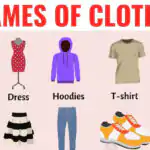
Personal clothing refers to garments and accessories we wear daily.Examples are:
- Shirts: Wash regularly with mild soap, dry in shade to avoid fading.
- Blouses: Hand wash with warm water and iron carefully.
- Trousers: Brush dirt off, wash inside out to prevent discoloration.
- Footwear: Clean with a soft brush or damp cloth and polish if leather.
- Caps: wash gently and dry in proper shape.
- Socks: Wash after every use and dry in sunlight to kill germs.
- school Uniforms: Wash weekly,starch lightly,and iron neatly.
- Underwear: Wash daily with warm water and antibacterial soap to maintain hygiene.
- Sweaters: Hand wash or use a gentle machine cycle, lay flat to dry to prevent stretching.
- scarves: Hand wash in cold water with mild detergent, hang or lay flat to dry.
Care According to Fabric and Item
Read the care label before washing, drying or ironing. Cotton may tolerate stronger washing than delicate fabrics; wool and some synthetics need cooler water and gentle handling. Shoes are brushed or wiped according to their material rather than soaked automatically.
Mend small tears early, air damp clothes, iron at a safe temperature and store clean items in a dry place. Never use bleach or a hot iron without responsible adult supervision.
Teaching Methods
To deliver this lesson, the teacher will adopt the following methods: Set Induction, Clarification, Demonstration, Group Discussion, Guided Instruction, Interactive Questioning, Recap, Summary.
Instructional Procedures
To deliver this lesson, the teacher will adopt the following steps:
Step 1: Introduction
Time: 5 mins
Teaching Skill: Set Induction
Teacher’s Activity: Introduces the topic by asking pupils about their favorite clothes and how they care for them.
Pupils’ Activity: Share responses about their clothing care practices.
Step 2: Explanation
Time: 10 mins
Teaching Skill: Expository
Teacher’s Activity: Explains the steps for caring for personal clothing and demonstrates cleaning a shirt.
Pupils’ Activity: Watch and listen attentively to the demonstration.
Step 3: Group Activity
Time: 10 mins
teaching Skill: Collaborative
Teacher’s Activity: Divides pupils into groups and gives each group a clothing item to suggest care methods.
Pupils’ Activity: Discuss and present care methods for assigned items.
Step 4: note-Taking
Time: 5 mins
Teaching Skill: Guided instruction
Teacher’s Activity: Dictates and writes key points on the board for pupils to copy.
Pupils’ Activity: Copy the notes into their exercise books.
Step 5: Evaluation/Review
Time: 5 mins
Teaching Skill: Interactive
Teacher’s Activity: Asks questions to assess understanding of clothing care methods.
Pupils’ Activity: Answer questions individually and in groups.
Objective-aligned checks:
- Identify seven examples of personal clothing and state how to care for them.
- Demonstrate obligation in taking care of their clothing.
Step 6: Conclusion
Time: 5 mins
Teaching Skill: Recap
Teacher’s Activity: summarizes the lesson and encourages pupils to care for their clothing at home.Pupils’ Activity: Listen and ask follow-up questions.
Lesson Keywords
- Personal Clothing – Garments and accessories worn daily.
- hygiene – Practices that maintain health and prevent disease.
- Detergent – Cleaning agent used for washing clothes.
- Discoloration – Loss of original color.
- Starch – A substance used to stiffen fabric.
Lesson Evaluation
To evaluate the learning, the teacher asks pupils to:
- List five examples of personal clothing.
- State two steps in caring for a shirt.
- How would you clean and care for your school uniform?
- Why is it important to care for your clothing?
- Suggest ways to keep footwear in good condition.
Assignment/Homework
- List three types of clothing you own and describe how you care for each.
- Explain why it is important to wash socks after every use.
- Describe the steps you would take to clean a pair of white canvas shoes.
Differentiation
- For slower learners: Provide simplified steps for clothing care with visual aids.
- For advanced learners: Research and present on different types of fabric and their specific care requirements.
- For visual/auditory/kinesthetic learners: Use demonstrations, verbal instructions, and hands-on activities to cater to different learning styles.
Note for Teachers
Demonstrating each care step will help pupils better understand and remember the methods. Ensure every pupil participates in the group activity for a hands-on experience. Happy teaching!


Community Join the conversation Open discussion +