

Class: Basic 4
Term: First Term
Subject: Pre-Vocational Studies (Agricultural Science)
Curriculum Theme: Agriculture
Previous lesson: Importance of Agriculture, Source of Food and Medicine
Topic: Importance of Agriculture
Content/Learning Area: Benefits of agriculture, job creation, and income generation.
Time Allocation: 40 minutes
Performance Objectives
By the end of the lesson, pupils should be able to:
- Cognitive Domain: Discuss the benefits of agricultural products to man.
- affective Domain: Appreciate the role of agriculture in providing employment and income.
- Psychomotor Domain: Identify various jobs related to agriculture.
- Social domain: Explain how agriculture contributes to the economic growth of the community.
Reference Materials
- Simplified Agricultural Science for Primary Schools.
- Agricultural Science for Primary Schools.
- Headteacher.ng
Instructional Materials
To deliver this lesson, the teacher will employ the help of the following materials: Charts illustrating agricultural activities, samples of agricultural products (e.g., grains, vegetables), pictures of people working in agriculture, and a whiteboard or chalkboard.
Rationale for the Lesson
Understanding the importance of agriculture helps pupils appreciate its role in providing food, jobs, and income, fostering a sense of value for agricultural practices.
Prerequisite/Previous Knowledge
Pupils are familiar with basic farming activities and some common crops grown in their locality.
Lesson Content
Agriculture is a vital part of our lives, providing us with food, clothing, and other essential resources. Ther are many reasons why agriculture is important.
What is Agriculture?
Agriculture is the practice of cultivating plants and raising animals for food, fiber, and other products. It is indeed a essential human activity that has been practiced for thousands of years.
Employment and Job Creation
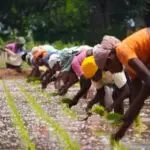
Agriculture provides a wide range of job opportunities, including farming and related activities.
The following are examples of jobs related to agriculture:
- Planting crops
- Cultivating crops
- Harvesting crops
- Processing crops
- Animal husbandry
- Agribusiness
- Agricultural research
- Agricultural extension services
- Farm management
- Agricultural marketing
Source of Income Generation
Agriculture is a significant source of income for individuals and communities. Farmers and agricultural workers earn money by selling their crops, livestock, and agricultural products. This income supports their livelihoods and contributes to the economic growth of the region.
The following are examples of how agriculture generates income:
- Selling crops at local markets
- Exporting agricultural products
- Operating agricultural processing plants
- Providing agricultural services (e.g., plowing, harvesting)
- Engaging in agricultural tourism
- Producing and selling organic products
- Rearing livestock for meat and dairy
- Cultivating cash crops like cocoa and rubber
- Selling seedlings and farm inputs
- Participating in agricultural cooperatives
Teaching Methods
To deliver this lesson, the teacher will adopt the following methods: Discussion, Explanation, Visual Aids, Question and Answer.
Instructional Procedures
To deliver this lesson, the teacher will adopt the following steps:
Step 1: Introduction (Set Induction)
Time: 5 minutes
Teaching Skill: Set Induction
Teacher’s Activity: The teacher asks pupils about their favorite foods and where they come from, linking it to agriculture.
Pupils’ Activity: Pupils respond by naming their favorite foods and discussing their origins.
Step 2: Explaining Agriculture
Time: 10 minutes
Teaching Skill: Explanation
Teacher’s Activity: The teacher explains what agriculture is and its importance in providing food and resources.
Pupils’ Activity: Pupils listen attentively and ask questions to clarify their understanding.
Step 3: Discussing Employment and Job Creation
Time: 10 minutes
Teaching Skill: Discussion
Teacher’s Activity: The teacher leads a discussion on how agriculture creates jobs and provides employment opportunities.
Pupils’ Activity: Pupils participate in the discussion by sharing examples of agricultural jobs they know.
Step 4: Income Generation
Time: 5 minutes
Teaching Skill: Explanation
Teacher’s activity: The teacher explains how agriculture serves as a source of income for farmers and communities.
Pupils’ Activity: Pupils listen and take notes on the different ways agriculture generates income.
Step 5: Note-Taking
Time: 5 minutes
teaching Skill: Writing
Teacher’s Activity: The teacher writes a summary of the lesson on the board.
Pupils’ Activity: Pupils copy the notes into their notebooks.
Step 6: Evaluation/Review
Time: 3 minutes
Teaching Skill: Questioning
teacher’s Activity: The teacher asks questions to assess pupils’ understanding of the lesson.
Pupils’ Activity: Pupils answer the questions to demonstrate their understanding.
Objective-aligned checks:
- Identify various jobs related to agriculture.
- Explain how agriculture contributes to the economic growth of the community.
Step 7: Conclusion
Time: 2 minutes
Teaching Skill: Summarization
Teacher’s Activity: The teacher summarizes the main points of the lesson.
Pupils’ Activity: Pupils listen and ask any remaining questions.
Lesson Keywords
- Agriculture – the practice of cultivating plants and rearing animals for food and other products.
- Employment – The state of having a paid job.
- Income – Money received, especially on a regular basis, for work or through investments.
- Cultivating – Preparing and using land for crops or gardening.
- Harvesting – The process of gathering a ripe crop.
Lesson Evaluation
To evaluate the learning, the teacher asks pupils to:
- List three benefits of agricultural products to man.
- Explain how agriculture contributes to employment and job creation.
- Describe how agriculture is a source of income generation.
- Name three jobs that are related to agriculture.
- Explain why it is important to support local farmers.
Assignment/Homework
- Research and write about three different types of agricultural jobs in Nigeria.
- Interview a local farmer and write a short report on how they generate income from agriculture.
- Draw a picture illustrating an agricultural activity.
Differentiation
- For slower learners: Provide simplified notes and one-on-one assistance during activities.
- For advanced learners: Encourage them to research and present on sustainable agricultural practices.
- For visual/auditory/kinesthetic learners: Use visual aids, discussions, and hands-on activities to cater to different learning styles.
Note for Teachers
Ensure to use local examples and visual aids to make the lesson relatable and engaging for the pupils. Encourage class participation and provide positive reinforcement.



Community Join the conversation Open discussion +