

Class: Primary 4
Term: 2nd term
Subject: Pre-Vocational Studies
Curriculum Theme: Home Economics
Previous Lesson: Ways Of Mending Clothes
Topic: Methods Of Washing Different Types Of clothes
Content/Learning Area: Sorting according to colors, texture of fabrics, mending any tears in the clothes, removing any stains by soaking or steeping, etc.
Time Allocation: 40 minutes
Performance Objectives
By the end of the lesson, pupils should be able to:
- Cognitive Domain: List the methods of washing different types of clothes.
- Affective Domain: Appreciate the importance of sorting clothes before washing.
- Psychomotor Domain: Demonstrate how to sort clothes by color and texture.
- Social Domain: Work collaboratively in groups to discuss methods of washing clothes.
Reference Materials
The following resources were used in planning this lesson:
- 9–Years Basic Education Curriculum
- Abuja Educational Resource Center Scheme of Work
- NAPPS National Unified Scheme of Work
- Online Information from: NBC News – How to clean every type of clothing
- Relevant Textbooks
Instructional Materials
To deliver this lesson, the teacher will use the following materials:
- Samples of different types of fabrics (cotton, silk, wool, etc.)
- Basins,water,detergent,and bleach
- Charts illustrating sorting and washing steps
- A model stained cloth for exhibition
Rationale for the Lesson
Understanding how to properly wash different types of clothes is a vital skill for maintaining cleanliness,preserving fabric quality,and fostering independence in daily life.
Prerequisite/Previous Knowledge
Pupils already know how to mend small tears in clothes and are familiar with the importance of wearing clean clothes.
Lesson Content
Methods Of Washing Different Types Of Clothes
Washing clothes properly involves several steps to ensure cleanliness and fabric care. The following are the methods:
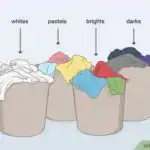
- Sorting Clothes: Separate clothes by color (light and dark) and texture to prevent color bleeding and damage.
- Mending Tears: Fix any small tears to prevent further damage during washing.
- stain Removal: Soak or steep stained clothes in water mixed with detergent before washing.
- Using Suitable Detergent: Choose a detergent suitable for the fabric type (e.g., mild detergent for delicate fabrics).
- Handwashing: Wash clothes by hand gently,especially delicate fabrics like silk and wool.
- Machine Washing: Use a washing machine for durable fabrics like cotton, following the care label instructions.
- Drying: Hang clothes properly or lay flat to dry, depending on the fabric type, to avoid shrinkage or stretching.
Teaching Methods
To deliver this lesson, the teacher will adopt the following methods: Questioning, Discussion, Explanation, Demonstration, Guided Practice, Cooperative Learning.
Instructional Procedures
To deliver this lesson,the teacher will adopt the following steps:
Step 1: Introduction
Time: 5 mins
Teaching Skill: Set Induction
TeacherS Activity: Ask pupils to mention their favorite clothes and how they wash them.
Pupils’ Activity: Respond and share ideas.
Step 2: Sorting Clothes
Time: 5 mins
Teaching Skill: Explanation
Teacher’s Activity: Show pupils how to sort clothes by color and texture.
Pupils’ Activity: Observe and ask questions.
Step 3: Mending Tears
Time: 5 mins
Teaching Skill: Guided Practice
Teacher’s Activity: Demonstrate how to mend small tears before washing.
Pupils’ Activity: watch and attempt to mend a tear.
Step 4: Removing Stains
Time: 10 mins
Teaching Skill: Explanation
Teacher’s Activity: Explain and demonstrate soaking clothes to remove stains.
Pupils’ Activity: Participate by soaking a sample cloth.
Step 5: Washing Techniques
Time: 10 mins
Teaching Skill: Guided Practice
Teacher’s Activity: Teach the techniques of washing cotton, silk, and wool.
Pupils’ Activity: Practice washing samples in groups.
Step 6: Note-Taking
Time: 3 mins
Teaching Skill: Note Writing
Teacher’s Activity: Guide pupils to copy concise notes from the board.
Pupils’ Activity: Copy notes.
Step 7: Evaluation/Review
Time: 2 mins
Teaching Skill: Questioning
teacher’s Activity: Ask evaluative questions about the lesson.Pupils’ Activity: Answer questions.
Objective-aligned checks:
- List the methods of washing different types of clothes.
- Demonstrate how to sort clothes by color and texture.
Step 8: Conclusion
Time: N/A
Teaching Skill: summarization
Teacher’s Activity: Summarize the lesson and highlight the importance of proper washing techniques.
Pupils’ Activity: Listen attentively and ask clarifying questions.
Lesson Keywords
- Sorting – Separating clothes by color and fabric type before washing.
- Mending – Repairing tears or damages in clothes.
- Stain Removal – the process of removing spots or discolorations from clothes.
- Detergent – A cleaning agent used for washing clothes.
- Handwashing – Washing clothes manually using hands.
- Machine Washing – Washing clothes using a washing machine.
Lesson Evaluation
To evaluate the learning, the teacher asks pupils to:
- List three methods of washing clothes.
- Explain why sorting clothes is critically important.
- Demonstrate how to remove a stain from a piece of cloth.
- Identify the best way to dry woolen clothes.
Assignment/Homework
- List five different types of fabrics and the best washing method for each.
- Describe the steps you would take to wash a white cotton shirt with a stubborn stain.
- Explain why it is important to use the right amount of detergent when washing clothes.
Differentiation
- for slower learners: Provide simplified charts and one-on-one demonstrations.
- For advanced learners: Research and present on eco-friendly washing methods.
- For visual/auditory/kinesthetic learners: Use visual aids,verbal instructions,and hands-on activities.
Note for Teachers
Ensure to involve pupils in hands-on activities to keep them engaged. Use relatable examples and be patient while demonstrating techniques. Happy teaching!


Community Join the conversation Open discussion +