

Class: Primary 4
Term: 3rd Term
Subject: Pre-Vocational Studies
Curriculum Theme: Home Economics
Previous Lesson:
Topic: Meaning Of Food And Nutrients
Content/Learning Area: Meaning Of Food, Meaning Of Nutrients
Time Allocation: 40 minutes
Performance Objectives
By the end of the lesson, pupils should be able to:
- Cognitive Domain: Explain the meaning of food and nutrients.
- Affective Domain: Show interest in eating good and healthy food.
- psychomotor Domain: Identify some foods that contain nutrients.
- Social Domain: Work together in groups to share examples of food.
Reference Materials
The following resources were used in planning this lesson:
- 9 Years Basic Education Curriculum
- Abuja Educational Resource Center Scheme of Work
- NAPPS National Unified Scheme of Work
- Online Details from: Britannica – Food | Definition & Nutrition
- Relevant Textbooks
instructional Materials
To deliver this lesson, the teacher will employ the help of the following materials:
- Flashcards of different food items
- Food chart
- Real food samples (fruits, grains, protein)
- Pictures showing healthy meals
- Whiteboard and marker
Rationale for the Lesson
Understanding food and nutrients helps pupils make healthy eating choices and grow strong and smart.
Prerequisite/Previous Knowledge
Pupils have seen and eaten various food types at home and can mention names of common foods.
Lesson Content
Meaning of Food and Nutrients
Food is what we eat every day to live and grow. It gives us energy to play, work, and learn. It also helps us stay strong and not fall sick.
The following are what food does for us:
- Helps us grow
- Gives us energy
- Keeps us healthy
- Repairs our body
- Makes us strong
- Helps in brain growth
- Boosts our immune system
Meaning of Nutrients
Nutrients are the useful parts found in food that our body needs. Different foods give us different types of nutrients. They are:
- Carbohydrates
- Proteins
- Fats and oils
- Vitamins
- Minerals
- Water
- Fiber
Food, Nutrients and Examples
Food is any safe substance eaten or drunk to support the body. Nutrients are useful substances in food. Carbohydrates and fats supply energy; proteins support growth and repair; vitamins and minerals regulate body processes; water and fibre also support health.
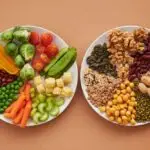
Rice contains mainly carbohydrate, beans provide protein and other nutrients, vegetables and fruits provide varied vitamins, minerals and fibre, while fish and eggs provide protein. Most foods contain more than one nutrient.
Teaching Methods
to deliver this lesson, the teacher will adopt the following methods: Discussion, lecture, Explanation, Storytelling, Question and Answer, Visual Aids, Group Work
Instructional Procedures
To deliver this lesson, the teacher will adopt the following steps:
Step 1: Introduction
Time: 5 mins
Teaching Skill: Set Induction
Teacher’s Activity: Tells a story about a boy who always feels weak because he eats only sweets.
Pupils’ Activity: Listen attentively and respond to questions.
Step 2: meaning of Food
Time: 7 mins
teaching skill: Explanation
Teacher’s Activity: Explains what food is and why we need food. Shows food samples and food chart.
Pupils’ Activity: Listen, observe, and mention some food they know.
Step 3: Meaning of Nutrients
Time: 7 mins
Teaching Skill: Explanation
Teacher’s Activity: Explains what nutrients are and where we can find them. Uses real food examples.
Pupils’ activity: observe food items and state the nutrients they may contain.
Step 4: Group Activity
time: 6 mins
Teaching Skill: Group Work
Teacher’s Activity: Organizes pupils into small groups to identify and classify foods with nutrients.
Pupils’ Activity: Work together in groups to sort and talk about foods and nutrients.
Step 5: note-Taking
Time: 5 mins
Teaching Skill: Writing
Teacher’s Activity: Guides pupils to copy lesson content from board.
Pupils’ activity: Copy notes in their books.
Step 6: Evaluation/Review
Time: 5 mins
Teaching Skill: Assessment
Teacher’s Activity: Asks questions and checks pupils’ understanding.
Pupils’ Activity: Answer questions orally.
Objective-aligned checks:
- Explain the meaning of food and nutrients.
- Identify some foods that contain nutrients.
Step 7: Conclusion
Time: 5 mins
Teaching Skill: Instructional Closure
Teacher’s Activity: Summarizes key points and encourages pupils to eat balanced food every day.
Pupils’ Activity: Listen and say what they have learnt.
Lesson Keywords
- Food – What we eat to grow and stay strong
- Nutrients – Good things in food that help our body
- Carbohydrates – Give us energy
- Proteins – Help us grow and build our body
- Vitamins – Keep us healthy
lesson Evaluation
To evaluate the learning, the teacher asks pupils to:
- explain what food is.
- Mention three reasons why we eat food.
- Say what nutrients are.
- List four types of nutrients.
- Mention one food that gives protein.
- Work in groups to sort food items based on nutrients.
Assignment/Homework
- List five different foods you ate yesterday.
- Which nutrients do you think are in those foods?
- Ask your parents to help you find three more foods rich in vitamins.
Differentiation
- For slower learners: The teacher will assist slower learners with visual aids and simplified explanations.
- For advanced learners: Faster learners will help in leading group activities.
- For visual/auditory/kinesthetic learners: Use flashcards, real food samples, and group activities to cater to different learning styles.
Note for Teachers
Always connect the lesson to pupils’ daily experiences and use real examples they can relate to for better understanding.



Community Join the conversation Open discussion +