

Note for teachers using this lesson plan
This lesson focuses on teaching Primary 1 pupils how to bend and stretch their bodies safely. Before starting, ensure the activity space is clear and safe, and demonstrate each movement clearly. Emphasise the importance of gentle, controlled movements and maintaining personal space to prevent injuries. By the end of the lesson, pupils should be able to perform basic bending and stretching exercises correctly and safely.
Class: Primary One
Term: First Term
Week: 4
Age: 6 years
Duration: 45 minutes
Subject: Physical and Health Education
Curriculum Theme: Motor Skills Development
Focal competence: Moving the body parts with good body balance
Key competencies/values: Safety Awareness
Skills:
- Moving of the body parts with flexibility, balance and coordination
Previous Lesson: Twisting the wrist and twinkling/moving the fingers
Topic: Moving Our Body Parts 1: Bending And Stretching
Subject Matter: Bending, stretching the body safely
Specific Objectives
By the end of the lesson, pupils/students should be able to:
Cognitive Domain
- Identify safe ways to bend the body.
- Explain the difference between controlled stretching and jerking.
- State simple safety rules for body movements.
Affective Domain
- Show willingness to participate in bending and stretching activities safely.
- Appreciate the importance of personal space during physical activities.
Psychomotor Domain
- Demonstrate safe bending of the trunk, knees, and arms.
- Perform gentle stretching of selected body parts.
- Maintain balance while bending and stretching.
- Find a suitable teacher-supervised video clip showing safe body movement using a search engine.
Social Domain
- Interact respectfully with peers while observing personal space during activities.
Reference Materials
The following resources were used in planning this lesson:
- 2025 Revised 9 Years Basic Education Curriculum
- Relevant State Unified Scheme of Work
- Primary Physical and Health Education Textbook for Primary 1
- The HeadTeacher Scheme of work
Instructional Materials
The teacher will teach this lesson with the aid of:
- Cones or safe markers
- Whistle where appropriate
- Open safe activity space
- Appropriate sportswear
- Pictures showing safe bending and stretching
Rationale for the Lesson
This lesson is important because it teaches pupils fundamental motor skills essential for physical development and daily activities. Learning safe bending and stretching techniques helps prevent injuries and promotes good body posture. It also lays a foundation for more complex physical exercises in the future.
Prerequisite/Previous Knowledge
Pupils have basic knowledge of their body parts and can follow simple instructions for movement.
Lesson Content/Board Summary
Moving Our Body Parts 1: Bending And Stretching
Correct Standing Posture
Before any movement, it is important to stand correctly. A correct standing posture means:
- Standing straight with your head up.
- Shoulders relaxed.
- Feet slightly apart.
Safe Bending of Body Parts
Bending means to curve or move a part of your body. We can bend different parts of our body safely:
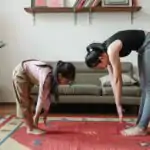
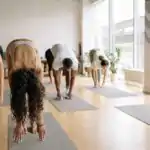
- Bending the Trunk: Bend forward slowly from your waist, keeping your back straight.
- Bending the Knees: Bend your knees slowly as if you are sitting down, then stand up.
- Bending the Arms: Bend your elbows to bring your hands towards your shoulders.
Safe Stretching of Body Parts
Stretching means to extend a part of your body to its full length. Always stretch gently and slowly.
- Arm Stretch: Extend your arm forward or upward gently.
- Leg Stretch: Extend your leg forward or backward gently.
- Side Stretch: Raise one arm over your head and lean gently to the opposite side.
Controlled Stretching vs. Jerking
It is important to stretch slowly and gently. This is called controlled stretching.
- Controlled Stretching: Slow, smooth movements that extend your body parts without pain.
- Jerking: Fast, sudden, and forceful movements that can hurt your body. Always avoid jerking when stretching.
Personal Space and Safety Rules
When moving our bodies, we must follow safety rules:
- Personal Space: Keep enough space around yourself so you do not hit others.
- Listen to the Teacher: Always follow the teacher’s instructions.
- Move Gently: Do not push or run into others.
- Wear Proper Clothes: Wear clothes that allow you to move freely.
Teaching Methods/Instructional Techniques
Discussion, Demonstration, Guided Practice, Question and Answer, Explanation, Observation, Practical Activity
Instructional Procedures
Step 1: Introduction
Time: 5 minutes
Teaching Skill: Warm-up/Engagement
Teacher’s Activity: The teacher greets the pupils, leads a short warm-up activity like marching on the spot or light jogging, and then introduces the topic of moving body parts safely by asking pupils to identify parts of their body they can move.
Pupils’ Activity: Pupils respond to greetings, participate in the warm-up, and identify various body parts they can move.
Learning Point: Introduction to body movement
Step 2: Correct Standing Posture
Time: 5 minutes
Teaching Skill: Demonstration/Explanation
Teacher’s Activity: The teacher explains and demonstrates the correct standing posture (head up, shoulders relaxed, feet slightly apart). The teacher guides pupils to assume this posture.
Pupils’ Activity: Pupils observe the teacher’s demonstration and practice standing in the correct posture.
Learning Point: Proper standing posture
Step 3: Safe Bending Demonstration
Time: 6 minutes
Teaching Skill: Demonstration/Instruction
Teacher’s Activity: The teacher demonstrates safe bending movements for the trunk (bending forward), knees (squatting slightly), and arms (bending elbows). The teacher emphasizes slow, controlled movements.
Pupils’ Activity: Pupils observe the teacher’s demonstrations carefully and listen to instructions.
Learning Point: Safe bending techniques
Step 4: Pupils Practice Bending
Time: 6 minutes
Teaching Skill: Guided Practice/Correction
Teacher’s Activity: The teacher guides pupils to practice the bending movements demonstrated (trunk, knees, arms). The teacher moves around to observe, correct postures, and ensure pupils maintain balance and personal space.
Pupils’ Activity: Pupils practice bending their body parts safely, focusing on balance and control.
Learning Point: Practising safe bending
Step 5: Safe Stretching Demonstration
Time: 6 minutes
Teaching Skill: Demonstration/Explanation
Teacher’s Activity: The teacher demonstrates gentle stretching of selected body parts, such as arms (reaching up/forward) and legs (gentle leg swings). The teacher explains the difference between controlled stretching and jerking, warning against jerking movements.
Pupils’ Activity: Pupils observe the teacher’s demonstrations and listen to the explanation of safe stretching vs. jerking.
Learning Point: Safe stretching techniques
Step 6: Pupils Practice Stretching
Time: 6 minutes
Teaching Skill: Guided Practice/Reinforcement
Teacher’s Activity: The teacher guides pupils to practice the gentle stretching movements. The teacher reminds them to maintain personal space and avoid jerking. The teacher also helps pupils find a teacher-supervised video clip showing safe body movement using a search engine on a tablet or computer, if available.
Pupils’ Activity: Pupils practice gentle stretching, maintain personal space, and observe the video clip if shown.
Learning Point: Practising safe stretching
Step 7: Evaluation/Review
Time: 5 minutes
Teaching Skill: Questioning/Assessment
Teacher’s Activity: The teacher evaluates the learning by asking the following questions:
- Show me how to bend your knees safely.
- Show me how to stretch your arm gently.
- Why is it important to keep personal space when moving?
- What is the difference between controlled stretching and jerking?
Pupils’ Activity: Pupils answer orally and in writing.
Learning Point: Assessment of safe movements
Step 8: Note-Taking
Time: 4 minutes
Teaching Skill: Guided Writing
Teacher’s Activity: The teacher guides pupils to copy the essential Board Summary notes on safe bending, stretching, and safety rules into their notebooks.
Pupils’ Activity: Pupils copy the notes carefully into their notebooks.
Learning Point: Recording lesson information
Step 9: Conclusion
Time: 2 minutes
Teaching Skill: Consolidation
Teacher’s Activity: The teacher briefly reminds pupils about the importance of moving their bodies safely and always maintaining personal space. The teacher praises them for their participation.
Pupils’ Activity: Pupils listen attentively and give a final response.
Learning Point: Reinforcement of safety
Continuous Assessment/Further Study
Type: Homework
Instruction: Draw and colour two pictures. One picture should show a child bending safely, and the other should show a child stretching gently. Write one sentence under each picture about what the child is doing.
- Draw a child bending safely.
- Write a sentence about safe bending.
- Draw a child stretching gently.
- Write a sentence about gentle stretching.
Lesson Keywords
- Bend – To curve or move a body part.
- Stretch – To extend a body part to its full length.
- Safe – Not likely to cause harm or injury.
- Balance – To stay steady and not fall.
- Personal Space – The area around you that belongs only to you.
- Jerking – Fast, sudden, and forceful movements.
Differentiation
For weaker learners: Provide more one-on-one guidance during practical activities, simplify instructions, and allow them to observe peers before attempting movements. Use visual aids like large pictures of safe movements.
For faster learners: Encourage them to demonstrate movements to the class, ask them to identify more body parts that can bend or stretch, or challenge them to create a short sequence of safe bending and stretching movements.
Suggested Lesson Videos
For suitable educational videos, search on YouTube for: Primary 1 safe bending stretching exercises for kids
Teacher Guide for Using This Lesson Plan
Before the lesson, ensure the activity area is clear and free from obstacles. Have any cones or markers ready to define personal spaces if needed. Begin with a brief warm-up to prepare pupils’ bodies for movement. Clearly demonstrate each bending and stretching movement, emphasizing slowness and control. Continuously observe pupils during practice to correct any unsafe movements and remind them about maintaining personal space. Explain the difference between controlled stretching and jerking using simple language and actions. Pupils should copy the Board Summary notes after the practical activities and evaluation. Encourage all pupils to participate and provide positive reinforcement for their efforts, especially for those who might be shy or less coordinated. For the video clip objective, have a tablet or computer ready to quickly search and show a suitable, short clip.
Community Join the conversation Open discussion +