

Class: Primary Two
Term: First Term
Subject: Basic Science and Technology
Curriculum Theme: Physical & Health Education
Previous Lesson: Moving Our Body Parts
topic: Moving Our Body Parts
Content/Learning Area: Bending, stretching
Time Allocation: 40 minutes
Performance Objectives
By the end of the lesson, pupils should be able to:
- Cognitive Domain:
– Explain the basic skills in bending and stretching.
– Identify the body parts involved in bending and stretching.
- Psychomotor Domain:
– demonstrate bending and stretching movements.
- Affective Domain:
– Appreciate the importance of bending and stretching.
- Social Domain:
– participate actively in class activities.
Reference Materials
- 9 – Years Basic Education Curriculum
- Abuja Educational Resource Center Scheme of Work
- NAPPS National Unified Scheme of Work
- Online Details
- Relevant Textbooks
Instructional Materials
To deliver this lesson, the teacher will use the following materials:
- Whiteboard or chart paper
- Markers or crayons
Rationale for the Lesson
Understanding bending and stretching is crucial for developing physical coordination and versatility. These movements are fundamental to many daily activities and sports, promoting healthy physical advancement.
Prerequisite/Previous Knowledge
The teacher will start by asking pupils to stand up and perform simple actions like raising their arms, bending their knees, and touching their toes. This will help to engage the pupils and introduce the concept of body movements.
Lesson Content
Moving Our Body Parts
Our bodies are amazing and can move in many ways. Bending and stretching are two vital movements.
What is Bending?
Bending is when we curve or fold a body part. Examples are:
- Bending your arm to pick up a toy.
- Bending your knees to sit.
- Bending your waist to pick something from the floor.
What is Stretching?
Stretching makes our body parts longer or straighter. It’s like gently pulling our muscles to make them more flexible. Examples are:
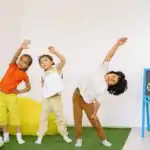
- stretching your arms above your head.
- Stretching your legs out.
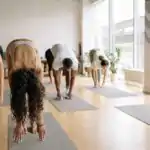
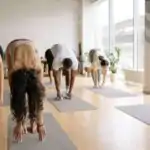
- Stretching your back by reaching for your toes.
Bending and Stretching
Bending makes a body joint close or the body move forward, backward or sideways. Stretching lengthens the body or a muscle gently. Examples are bending the knees, touching towards the toes and reaching both arms upward.
Movements should be slow and controlled. Keep enough space, do not force a joint and stop if a movement hurts.
Teaching Methods
To deliver this lesson, the teacher will adopt the following methods: Presentation, Guided Practice, Question and Answer
Instructional Procedures
To deliver this lesson, the teacher will adopt the following steps:
Step 1: Introduction
time: 5 minutes
Teaching Skill: Questioning
Teacher’s Activity: Ask pupils what they do when they want to pick something up from the floor or reach for something high.
Pupils’ Activity: Respond to the teacher’s questions.
Step 2: Description of Key Concepts
Time: 10 minutes
Teaching Skill: Explaining
Teacher’s Activity: Explain the concepts of bending and stretching with simple examples.
Pupils’ Activity: Listen attentively and ask questions.
Step 3: Presentation/Guided Practice
Time: 10 minutes
teaching Skill: Demonstrating
Teacher’s Activity: Demonstrate bending and stretching movements,encouraging pupils to mimic.
Pupils’ Activity: Imitate the teacher’s movements.
Step 4: Autonomous Practice
Time: 5 minutes
Teaching Skill: Observing
teacher’s Activity: Guide pupils as they practice bending and stretching independently.
Pupils’ Activity: Practice bending and stretching movements.
Step 5: Note-Taking
Time: 5 minutes
Teaching Skill: Summarizing
Teacher’s Activity: Summarize key points on the board.
pupils’ Activity: Copy key points into their notebooks.
Step 6: Evaluation/Review
Time: 5 minutes
Teaching Skill: Questioning
Teacher’s Activity: Ask evaluation questions.
Pupils’ Activity: Answer the evaluation questions.
step 7: conclusion
Time: 5 minutes
Teaching Skill: Summarizing
Teacher’s Activity: Review the key concepts of bending and stretching and encourage pupils to practice these movements regularly.
Pupils’ Activity: Listen attentively and ask questions.
Lesson Keywords
- Bending – Curving or folding a body part.
- Stretching – Making body parts longer or straighter.
- Versatility – The ability to move body parts easily.
- Coordination – The ability to use diffrent parts of the body together smoothly.
Lesson Evaluation
To evaluate the learning, the teacher asks pupils to:
- What is bending?
- What is stretching?
- Give an example of when you bend your body.
- How do bending and stretching help us?
- Name some body parts we can bend.
- Name some body parts we can stretch.
Assignment/Homework
- Practice bending and stretching exercises at home.
- List three activities you do every day that involve bending or stretching.
differentiation
- For slower learners: Provide one-on-one assistance and simplified instructions.
- For advanced learners: Encourage them to create their own bending and stretching exercises.
- For visual/auditory/kinesthetic learners: Use visual aids, verbal instructions, and hands-on activities to cater to different learning styles.
Note for Teachers
Ensure pupils perform the exercises safely and avoid overstretching. Encourage active participation and provide positive reinforcement.
Community Join the conversation Open discussion +