

Note for teachers using this lesson plan
Before the lesson, prepare or gather a traffic-light chart or model and pictures of road signs. This lesson introduces Primary 1 pupils to the colours of traffic lights and their meanings to develop early road safety awareness. Ensure pupils understand the importance of obeying these signals for their safety. By the end of the lesson, pupils should be able to identify each traffic-light colour and state the action associated with it.
Class: Primary One
Term: Third Term
Week: 10
Age: 6 years
Duration: 45 minutes
Subject: Physical & Health Education
Curriculum Theme: Safety and Emergency Preparedness
Focal competence: Identifying basic road signs and traffic symbols to develop early roadsafety awareness
Skills:
- Identification of traffic light colours and meaning
Previous Lesson: Simple road signs and their meanings
Topic: Traffic Lights
Subject Matter: Traffic-light colours, their meanings
Specific Objectives
By the end of the lesson, pupils/students should be able to:
Cognitive Domain
- identify traffic-light colours;
- state the meaning of each traffic-light colour;
- recognise traffic-light colours and state their meanings.
Reference Materials
The following resources were used in planning this lesson:
- 2025 Revised 9 Years Basic Education Curriculum
- Relevant State Unified Scheme of Work
- Physical and Health Education for Primary 1, Pupil’s Book
- The HeadTeacher Scheme of work
Instructional Materials
The teacher will teach this lesson with the aid of:
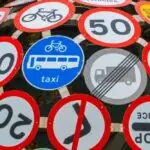
- Posters showing pictures of road signs and symbols
- Road-sign and traffic-light charts
- Model zebra crossing and cones
- Appropriate sportswear
- A model traffic light (or drawing)
Rationale for the Lesson
This lesson is important because it teaches young pupils about traffic lights, which are essential for road safety. Understanding traffic light colours and their meanings helps children know when it is safe to cross the road. This knowledge helps prevent accidents and promotes responsible behaviour as pedestrians from an early age.
Prerequisite/Previous Knowledge
Pupils should be able to identify basic colours like red, yellow, and green, and have a general understanding of road use.
Lesson Content/Board Summary
Traffic Lights
Traffic-Light Colours and Their Meanings
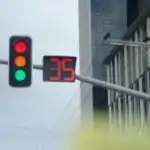
Traffic lights are signals used on roads to control the movement of vehicles and pedestrians. They have three main colours:
- Red Light: This colour means “STOP.” When the red light is on, vehicles must stop, and pedestrians should not cross the road.
- Amber/Yellow Light: This colour means “GET READY” or “WAIT.” It comes on after green before red, or after red before green. Drivers should prepare to stop or prepare to go. Pedestrians should wait for the green light.
- Green Light: This colour means “GO.” When the green light is on, vehicles can move, and pedestrians can cross the road if it is safe.
Pedestrian Attention to Traffic Lights
Pedestrians must always pay attention to traffic lights before crossing the road. It is important to:
- Look for the pedestrian signal (if available) or the main traffic light.
- Wait for the green light or the “walk” signal before stepping onto the road.
- Always look left, right, and left again to ensure no vehicles are coming, even when the light is green.
Safe Behaviour at a Crossing
To be safe at a road crossing, pupils should:
- Always cross at designated crossings like zebra crossings or where there are traffic lights.
- Stop, look, and listen before crossing.
- Walk quickly across the road, do not run.
- Never play near the road or at a crossing.
- Hold an adult’s hand when crossing the road.
Teaching Methods/Instructional Techniques
Discussion, Demonstration, Guided Practice, Question and Answer, Explanation, Observation, Practical Activity
Instructional Procedures
Step 1: Introduction
Time: 5 minutes
Teaching Skill: Engagement/Questioning
Teacher’s Activity: The teacher greets the pupils and asks them if they have ever seen traffic lights on the road. The teacher explains that traffic lights help people and cars move safely.
Pupils’ Activity: Pupils respond to the teacher’s questions and share their experiences of seeing traffic lights.
Learning Point: Introduction to traffic lights
Step 2: Introduction to Traffic-Light Colours
Time: 8 minutes
Teaching Skill: Demonstration/Explanation
Teacher’s Activity: The teacher uses a traffic-light chart or model to show the three main colours: red, amber (yellow), and green. The teacher explains that each colour tells us what to do.
Pupils’ Activity: Pupils observe the traffic light model and listen to the teacher’s explanation.
Learning Point: Identifying traffic light colours
Step 3: Meaning of Red Light
Time: 5 minutes
Teaching Skill: Explanation/Modelling
Teacher’s Activity: The teacher points to the red light on the chart/model and explains that red means “STOP.” The teacher demonstrates the “stop” action and asks pupils to repeat it.
Pupils’ Activity: Pupils identify the red light and demonstrate the “stop” action.
Learning Point: Red light meaning
Step 4: Meaning of Amber/Yellow Light
Time: 5 minutes
Teaching Skill: Explanation/Guidance
Teacher’s Activity: The teacher points to the amber/yellow light and explains that it means “GET READY” or “WAIT.” The teacher explains that it comes before red or green.
Pupils’ Activity: Pupils identify the amber/yellow light and understand its meaning.
Learning Point: Amber light meaning
Step 5: Meaning of Green Light
Time: 5 minutes
Teaching Skill: Explanation/Reinforcement
Teacher’s Activity: The teacher points to the green light and explains that green means “GO.” The teacher demonstrates the “go” action and asks pupils to repeat it.
Pupils’ Activity: Pupils identify the green light and demonstrate the “go” action.
Learning Point: Green light meaning
Step 6: Pedestrian Safety at Crossings
Time: 8 minutes
Teaching Skill: Discussion/Practical Application
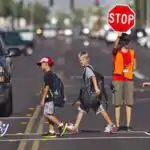
Teacher’s Activity: The teacher discusses with pupils how pedestrians should use traffic lights and behave safely at crossings, including looking left, right, and left again. The teacher uses the model zebra crossing to illustrate safe crossing behaviour.
Pupils’ Activity: Pupils participate in the discussion and practice safe crossing behaviour at the model zebra crossing.
Learning Point: Safe crossing behaviour
Step 7: Evaluation/Review
Time: 5 minutes
Teaching Skill: Questioning/Assessment
Teacher’s Activity: The teacher evaluates the learning by asking the following questions:
- What are the three colours of a traffic light?
- What does the red light mean?
- What does the green light mean?
- What should you do when you see a yellow light?
Pupils’ Activity: Pupils answer orally and in writing.
Learning Point: Traffic light knowledge assessment
Step 8: Note-Taking
Time: 4 minutes
Teaching Skill: Guided Writing
Teacher’s Activity: The teacher guides pupils to copy the essential Board Summary notes about traffic-light colours and their meanings into their notebooks.
Pupils’ Activity: Pupils copy the notes carefully into their notebooks.
Learning Point: Recording lesson notes
Step 9: Conclusion
Time: 5 minutes
Teaching Skill: Consolidation
Teacher’s Activity: The teacher reminds pupils that traffic lights help keep everyone safe on the road and encourages them to always obey traffic signals. The teacher praises pupils for their participation.
Pupils’ Activity: Pupils listen attentively and acknowledge the importance of obeying traffic lights.
Learning Point: Importance of traffic lights
Continuous Assessment/Further Study
Type: Homework
Instruction: Draw a traffic light in your notebook and colour each section correctly. Write down what each colour means.
- Draw a traffic light.
- Colour the top light red.
- Colour the middle light yellow.
- Colour the bottom light green.
- Write “STOP” next to the red light.
- Write “WAIT” next to the yellow light.
- Write “GO” next to the green light.
Lesson Keywords
- Traffic light – A set of coloured lights at a crossing or junction to control traffic.
- Red light – Signal to stop.
- Amber/Yellow light – Signal to get ready or wait.
- Green light – Signal to go.
- Pedestrian – A person walking along a road or in a developed area.
- Crossing – A place where people can cross a road.
Differentiation
For weaker learners, the teacher will provide more one-on-one guidance, use simpler language, and allow them to point to colours rather than stating their names. Faster learners can be asked to identify other road signs or explain why traffic lights are important in their own words.
Suggested Lesson Videos
For further understanding, search on YouTube for: traffic light colours and meanings for kids primary 1
Teacher Guide for Using This Lesson Plan
Ensure you have a clear traffic light chart or model ready before the lesson. Begin by engaging pupils with questions about their experiences with traffic lights. Follow the instructional procedures step-by-step, demonstrating each colour and its meaning with clear actions. Encourage pupils to actively participate in identifying colours and performing actions. Pay close attention to pupils’ understanding during the practical activity at the model zebra crossing. Allow pupils sufficient time to copy the Board Summary notes, ensuring they understand what they are writing. For continuous assessment, remind pupils to complete the drawing and labelling activity at home. Emphasise the practical importance of obeying traffic lights for their safety.
Community Join the conversation Open discussion +