

Class: Primary One
Term: Second Term
Subject: Basic Science and Technology
curriculum Theme: Physical & Health Education
Previous Lesson: Benefits of Swimming
topic: Local Games
Content/Learning Area: What are Local Games?, Benefits of Local Games, Fire On the Mountain as a Local Game
Time allocation: 40 minutes
Performance objectives
By the end of the lesson, pupils should be able to:
- Cognitive Domain:
1. List the benefits of local games.
2.Explain the rules and objectives of the game “Fire on the Mountain”.
3. Identify other local games.
- Psychomotor Domain:
1. Demonstrate skills in the local game “fire on the mountain”.
- Affective domain:
1. Appreciate the importance of preserving local games.
2. Show enthusiasm for playing local games.
- Social Domain:
1. Participate actively in group games.
2. Cooperate with peers during game play.
Reference Materials
- 9 – Years Basic Education Curriculum
- Abuja Educational resource centre Scheme of work
- NAPPS National Unified Scheme of Work
- Relevant Textbooks
Instructional Materials
To deliver this lesson, the teacher will use the following materials:
- whiteboard or chart paper
- Markers or crayons
- Pictures or videos of local games
- Space for playing games
Rationale for the Lesson
This lesson is vital because it introduces pupils to their cultural heritage through traditional games. Understanding and playing local games promotes physical activity, teamwork, and cultural appreciation.
Prerequisite/Previous Knowledge
The teacher will start by asking pupils what games they play during break time.The teacher will then introduce the concept of local games as traditional games played in their community, linking it to their prior knowledge of games.
Lesson Content
What are Local Games?
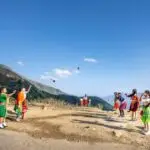
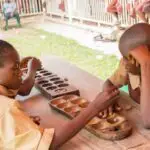
Local games are traditional games played within a specific community or region. They’re often passed down through generations, reflecting the culture and history of the people.These games are fun and engaging for all ages, usually played outdoors and involving physical activity, teamwork, and strategy.Playing local games offers many benefits.
Benefits of Local Games
There are numerous advantages to playing local games, contributing to physical, social, and cultural advancement. The following are benefits of local games:
- Physical fitness: Games often involve running, jumping, and other activities that improve fitness.
- Social interaction: group play promotes teamwork and social skills.
- cultural preservation: Playing these games helps keep traditions alive.
- recreation: they’re a fun way to spend time with others.
- Cognitive development: many local games require strategic thinking and problem-solving skills.
- Community Bonding: Local games often bring people together, strengthening community ties.
Fire on The Mountain as a Local Game
“Fire on the Mountain” is a popular Nigerian game. It’s a fast-paced game requiring running and swift thinking.
Teaching Methods
To deliver this lesson, the teacher will adopt the following methods: Exhibition, Description, Question and Answer, and Games.
Instructional Procedures
To deliver this lesson, the teacher will adopt the following steps:
Step 1: Introduction (Set Induction)
Time: 5 minutes
Teaching Skill: Questioning, introduction
Teacher’s Activity: Briefly introduce the topic of local games and their importance.
Pupils’ Activity: Listen attentively and participate in the discussion.
Step 2: Explanation of Key Concepts
Time: 10 minutes
Teaching Skill: Explanation, Discussion
Teacher’s Activity: Explain what local games are and their benefits.
Pupils’ Activity: Listen attentively and ask questions.
Step 3: Demonstration/Guided Practice
Time: 15 minutes
Teaching Skill: demonstration,Guided Practice
Teacher’s Activity: Demonstrate how to play “fire on the Mountain” and guide pupils through the game.
Pupils’ Activity: Observe the demonstration and participate in the guided practice.
Step 4: Independent Practice
Time: 5 minutes
Teaching Skill: monitoring, Feedback
Teacher’s Activity: Supervise pupils as they play “Fire on the mountain” independently.
Pupils’ Activity: Play the game independently, applying what they have learned.
Step 5: Note-Taking
Time: 2 minutes
Teaching Skill: Note-Taking
Teacher’s Activity: Guide pupils in taking notes on the key points of the lesson.
Pupils’ Activity: Take notes on the key points of the lesson.
Step 6: Evaluation/Review
Time: 3 minutes
Teaching Skill: Questioning, Review
Teacher’s Activity: Ask evaluation questions to assess pupils’ understanding.
Pupils’ Activity: Answer the evaluation questions.
Objective-aligned checks:
- List the benefits of local games.
- Explain the rules and objectives of the game “ Fire on the Mountain ”.
- Identify other local games.
Step 7: Conclusion
Time: 2 minutes
Teaching skill: Summarizing
Teacher’s Activity: Summarize the key points of the lesson.Pupils’ Activity: Listen attentively and ask questions for clarification.
Lesson keywords
- Local Games – Traditional games played within a specific community or region.
- Fire on the Mountain – A popular Nigerian game involving running and quick thinking.
- Cultural Preservation – The act of keeping traditions and cultural practices alive.
- Physical Fitness – The state of being physically healthy and active.
- Social Interaction – Communication and interaction between individuals in a group.
Lesson Evaluation
To evaluate the learning,the teacher asks pupils to:
- What are some benefits of playing local games?
- Describe the rules of “Fire on the Mountain”.
- Name some other local games you know.
- Why is it important to keep local games alive?
- How can you help preserve local games?
Assignment/Homework
- research and write about another local game played in your community.
- Ask your parents or grandparents about their favorite local games and share with the class next time.
- Play “Fire on the Mountain” or another local game with your family and write about your experience.
Differentiation
- For slower learners: Provide one-on-one assistance during the game and simplify the rules if necessary.
- for advanced learners: Encourage them to create variations of the game or to research other local games and present them to the class.
- For visual/auditory/kinesthetic learners: Use visual aids like pictures and videos, explain the rules verbally, and allow for active participation in the game.
Note for Teachers
Encourage active participation and create a fun,inclusive surroundings. Emphasize the importance of teamwork and sportsmanship during game play. Be mindful of pupils’ physical abilities and adjust the game as needed to ensure everyone can participate comfortably.


Community Join the conversation Open discussion +