

Note for teachers using this lesson plan
This lesson focuses on teaching Primary 1 pupils essential water adjustment skills and safe entry/exit techniques for swimming. Prioritise safety by ensuring close adult supervision, whether in a pool or during dry-land simulations. By the end of the lesson, pupils should confidently demonstrate basic water adjustment and safe movements into and out of the water.
Class: Primary 1
Term: Second Term
Week: 5
Age: 6 years
Duration: 45 minutes
Subject: Physical & Health Education
Curriculum Theme: Aquatic Sports
Focal competence: Practising safe water entry, floating and kicking to gain confidence and stay safe in water
Key competencies/values: Respect; Tolerance
Skills:
- Gaining water confidence
Previous Lesson: Safety precautions in swimming
Topic: Swimming: Water Adjustment And Entry/Exit
Subject Matter: Adjusting to water, coming into/out of water safely
Specific Objectives
By the end of the lesson, pupils should be able to:
Psychomotor Domain
- Perform basic water-adjustment steps.
- Demonstrate safe entry into and exit from water.
Reference Materials
The following resources were used in planning this lesson:
- 2025 Revised 9 Years Basic Education Curriculum
- Relevant State Unified Scheme of Work
- Primary Physical and Health Education for Nigerian Schools, Book 1
- The HeadTeacher Scheme of work
Instructional Materials
The teacher will teach this lesson with the aid of:
- Swimming trunks
- Pool (if available)
- Safe supervised pool where available or dry-land simulation area
- Float or kick-board where appropriate
- Pictures or charts showing safe water entry/exit
- Water basin or bucket for face immersion practice (if no pool)
Rationale for the Lesson
This lesson is important as it introduces young learners to fundamental water safety and confidence skills. Mastering safe water entry, exit, and adjustment builds a crucial foundation for future swimming abilities. It helps pupils feel comfortable and secure in aquatic environments, reducing fear and promoting enjoyment.
Prerequisite/Previous Knowledge
Pupils are expected to have basic knowledge of body movements and following instructions.
Lesson Content/Board Summary
Swimming: Water Adjustment And Entry/Exit
Safe Water Entry
Safe water entry means getting into the water without falling or hurting yourself. For beginners, the safest ways to enter the water are:
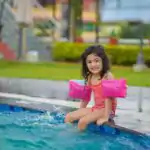
- Sitting Entry: Sit on the edge of the pool, facing the water. Slide your feet into the water first, then gently push off with your hands to enter.
- Shallow Steps Entry: If the pool has steps, hold the handrail (if available) and walk down the steps slowly, one foot at a time, until you are in the water.
Safe Water Exit
Safe water exit means getting out of the water carefully. For beginners, the safest ways to exit the water are:
- Push-up Exit: Hold the edge of the pool with both hands. Kick your legs to bring your body close to the wall. Push down with your hands and pull your body up onto the edge.
- Shallow Steps Exit: If the pool has steps, walk up the steps slowly, one foot at a time, holding the handrail if available.
Adjusting to Water (Water Confidence)
Adjusting to water helps you feel comfortable and confident. This includes:
- Getting Face Wet: Gently splash water on your face. You can put your face in a basin of water or let water run over it.
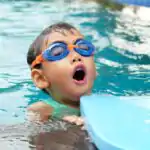
- Blowing Bubbles: Take a deep breath, put your mouth and nose in the water, and blow out slowly. This helps with breathing control.
- Holding the Side or Using Support: Hold onto the side of the pool or use a float/kick-board to support yourself while in the water. This helps you feel secure.
- Moving in Shallow Water: Walk or move around in the shallow part of the pool where your feet can touch the bottom.
Teaching Methods/Instructional Techniques
Discussion, Demonstration, Guided Practice, Observation, Practical Activity
Instructional Procedures
Step 1: Introduction
Time: 5 minutes
Teaching Skill: Engaging/Questioning
Teacher’s Activity: The teacher greets the pupils and asks them if they have ever been near water or seen people swimming. The teacher then introduces the topic of learning how to get into and out of water safely and how to feel comfortable in water.
Pupils’ Activity: Pupils respond to questions and listen attentively.
Learning Point: Importance of water safety
Step 2: Safe Water Entry Demonstration and Practice
Time: 10 minutes
Teaching Skill: Demonstration/Guided Practice
Teacher’s Activity: The teacher (or lifeguard) demonstrates safe water entry methods (sitting entry, shallow steps entry) using a pool or dry-land simulation. The teacher guides pupils to practice these entries under strict supervision.
Pupils’ Activity: Pupils observe the demonstration and practice safe water entry techniques.
Learning Point: Safe water entry techniques
Step 3: Safe Water Exit Demonstration and Practice
Time: 7 minutes
Teaching Skill: Demonstration/Guided Practice
Teacher’s Activity: The teacher (or lifeguard) demonstrates safe water exit methods (push-up exit, shallow steps exit) using a pool or dry-land simulation. The teacher guides pupils to practice these exits under strict supervision.
Pupils’ Activity: Pupils observe and practice safe water exit techniques.
Learning Point: Safe water exit techniques
Step 4: Getting Face and Body Comfortable with Water
Time: 7 minutes
Teaching Skill: Practical Application
Teacher’s Activity: The teacher guides pupils to gently splash water on their faces and bodies, either in the shallow end of a pool or using a water basin for dry-land simulation. The teacher encourages them to get their faces wet.
Pupils’ Activity: Pupils practice getting their faces and bodies wet with water.
Learning Point: Getting body comfortable
Step 5: Blowing Bubbles for Breathing Adjustment
Time: 4 minutes
Teaching Skill: Instruction/Practice
Teacher’s Activity: The teacher demonstrates how to take a deep breath, put the mouth and nose in the water, and blow out slowly to make bubbles. Pupils practice this skill in the water or using a basin.
Pupils’ Activity: Pupils practice blowing bubbles in the water.
Learning Point: Blowing bubbles for breathing
Step 6: Holding the Side or Using Support
Time: 4 minutes
Teaching Skill: Support/Confidence Building
Teacher’s Activity: The teacher guides pupils to hold onto the side of the pool (if applicable) or use a float/kick-board for support while moving or standing in shallow water. The teacher emphasizes feeling secure.
Pupils’ Activity: Pupils hold the side or use a float to gain confidence in the water.
Learning Point: Using support for confidence
Step 7: Evaluation/Review
Time: 5 minutes
Teaching Skill: Questioning/Assessment
Teacher’s Activity: The teacher evaluates the learning by asking the following questions:
- How do we enter the water safely?
- How do we get out of the water safely?
- What can you do to feel comfortable with water on your face?
- Why is it important to blow bubbles in the water?
Pupils’ Activity: Pupils answer orally and in writing.
Learning Point: Water adjustment and entry/exit
Step 8: Note-Taking
Time: 4 minutes
Teaching Skill: Guided Writing
Teacher’s Activity: The teacher guides pupils to copy the essential Board Summary notes on safe water entry, exit, and adjustment into their notebooks.
Pupils’ Activity: Pupils copy the notes carefully into their notebooks.
Learning Point: Recording lesson notes
Step 9: Conclusion
Time: 2 minutes
Teaching Skill: Reinforcement
Teacher’s Activity: The teacher reminds pupils about the importance of always having an adult supervise them near water and praises them for their participation in learning safe water skills. The teacher reiterates that practicing these steps makes swimming fun and safe.
Pupils’ Activity: Pupils listen and acknowledge the importance of water safety.
Learning Point: Recap of water safety
Continuous Assessment/Further Study
Type: Practice Exercise
Instruction: At home, with a parent or guardian, practice the dry-land simulations for safe water entry and exit. You can use a low stool or step to pretend it is the pool edge.
- Show how you would safely sit and slide into a pretend pool.
- Show how you would safely push up and get out of a pretend pool.
- Practice blowing bubbles into a basin of water.
Lesson Keywords
- Water – The liquid we swim in.
- Swimming – Moving through water using your body.
- Entry – Getting into the water.
- Exit – Getting out of the water.
- Adjustment – Getting used to something new, like water.
- Safety – Being protected from harm or danger.
- Bubbles – Air blown out into the water.
- Float – Something that stays on top of the water and helps you stay up.
Differentiation
For weaker learners: Provide more one-on-one guidance during practical demonstrations. Allow them more time for dry-land simulations before attempting pool activities. Use simple, clear instructions and repeat demonstrations as needed. Focus on one skill at a time.
For faster learners: Encourage them to demonstrate the skills to their peers. Challenge them to hold their breath for a slightly longer count while blowing bubbles or try moving a short distance in shallow water while holding a float.
Suggested Lesson Videos
For visual demonstrations of water adjustment and safe entry/exit for young children, search on YouTube for: primary 1 safe water entry exit adjustment
Teacher Guide for Using This Lesson Plan
Before the lesson, ensure the learning environment is safe and appropriate, whether it’s a supervised pool or a designated dry-land simulation area. If a pool is used, a qualified lifeguard must be present. Prepare any necessary instructional materials like floats, kick-boards, or a water basin. Begin by engaging pupils with questions about water and swimming to gauge their prior exposure and comfort levels. Clearly demonstrate each step of safe water entry, exit, and adjustment, breaking down complex movements into simple, manageable parts for Primary 1 pupils. Emphasize the “look before you leap” principle for safety. Allow ample time for guided practice, providing individual feedback and encouragement. For dry-land simulations, ensure pupils understand they are pretending and that real water requires real caution. Guide pupils to copy the Board Summary notes after the practical activities to reinforce learning. Constantly check for understanding and address any fears or misconceptions about water. Support weaker learners with extra attention and simpler tasks, while challenging faster learners with slightly more complex movements or peer demonstration opportunities. Always prioritize safety and supervision throughout the lesson.

Community Join the conversation Open discussion +