

Note for teachers using this lesson plan
This lesson introduces Primary 1 pupils to the basic objectives of first aid and the common contents of a first aid box. Emphasise that first aid is for immediate help and not a replacement for professional medical care. Ensure all materials displayed are safe for children to handle and strictly remind pupils that they should never administer medicines or use sharp objects without adult supervision. By the end, pupils should be able to identify key first aid items and understand their simple uses.
Class: Primary One
Term: Third Term
Week: 8
Age: 6 years
Duration: 45 minutes
Subject: Physical & Health Education
Curriculum Theme: Safety and Emergency Preparedness
Focal competence: Identifying the contents of a first aid box and their uses
Key competencies/values: Respect
Skills:
- Identification of first aid box and the contents
Previous Lesson: First Aid and Recognising a First Aid Box
Topic: First Aid: Objectives And Contents Of The First Aid Box
Subject Matter: Objectives of first aid, materials found in a first aid box
Specific Objectives
By the end of the lesson, pupils/students should be able to:
Cognitive Domain
- Mention the objectives of first aid.
- Identify materials found in a first aid box.
- Recognise a first aid box.
Affective Domain
- Appreciate the importance of a first aid box.
- Show respect for first aid materials.
Psychomotor Domain
- Point to different contents of a first aid box.
Reference Materials
The following resources were used in planning this lesson:
- 2025 Revised 9 Years Basic Education Curriculum
- Relevant State Unified Scheme of Work
- Physical and Health Education for Primary Schools, Book 1
- The HeadTeacher Scheme of work
Instructional Materials
The teacher will teach this lesson with the aid of:
- A real first aid box
- Safe sample materials in a first aid box (e.g., methylated spirit, iodine, cotton wool, hand gloves, blunt scissors, bandages, plasters, a clean bowl)
- First-aid picture cards
Rationale for the Lesson
This lesson is important for Primary 1 pupils as it introduces them to basic safety knowledge and immediate care in case of minor injuries. Understanding first aid objectives and the contents of a first aid box helps pupils know how to react in simple emergency situations. It also promotes awareness of safety and the importance of seeking help when needed.
Prerequisite/Previous Knowledge
Pupils should have a basic understanding of personal hygiene and simple safety rules at home and school.
Lesson Content/Board Summary
First Aid: Objectives And Contents Of The First Aid Box
Objectives of First Aid
First aid is the immediate help given to an injured or sick person before medical help arrives. The main objectives of first aid are:
- To save life.
- To prevent the injury or sickness from getting worse.
- To promote recovery.
Meaning and Purpose of a First Aid Box
A first aid box is a special container that holds materials used to give immediate help to someone who is injured or sick. Its purpose is to keep all necessary first aid items organised and ready for use in an emergency.
Common Contents of a First Aid Box and Their Uses
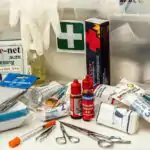
A first aid box contains important items for treating minor injuries. Some common contents include:
- Plasters: Used to cover small cuts and wounds to keep them clean.
- Bandages: Used to hold dressings in place, support injured parts, or stop bleeding.
- Gauze: Used to clean wounds or cover them before applying a bandage.
- Cotton Wool: Used to clean wounds with antiseptic liquid.
- Hand Gloves: Worn by the person giving first aid to protect themselves from germs.
- Antiseptic Liquid (e.g., Methylated Spirit, Iodine): Used to clean wounds and prevent infection.
- Blunt Scissors: Used to cut bandages or plasters to the right size.
- Clean Bowl: Used to mix water with antiseptic or to wash hands.
Keeping the First Aid Box Safe and Ready
It is important to keep the first aid box:
- Clean and tidy.
- Clearly labelled so everyone knows what it is.
- Out of unsafe reach of small children.
- Checked regularly to replace used or expired items.
Teaching Methods/Instructional Techniques
Discussion, Demonstration, Guided Practice, Question and Answer, Explanation, Observation.
Instructional Procedures
Step 1: Introduction
Time: 5 minutes
Teaching Skill: Questioning/Engagement
Teacher’s Activity: The teacher asks pupils what they do when they get a small cut or fall down at school or home. The teacher then introduces the topic of first aid and its importance.
Pupils’ Activity: Pupils share their experiences and listen attentively.
Learning Point: Introduction to first aid
Step 2: Discussion of First Aid Objectives
Time: 8 minutes
Teaching Skill: Explanation/Discussion
Teacher’s Activity: The teacher explains the objectives of first aid using simple language and examples relevant to children (e.g., stopping a small cut from bleeding more, cleaning a wound to prevent germs). The teacher displays picture cards showing people receiving or giving first aid.
Pupils’ Activity: Pupils listen, observe the picture cards, and ask questions.
Learning Point: Objectives of first aid
Step 3: Introduction to the First Aid Box
Time: 7 minutes
Teaching Skill: Demonstration/Explanation
Teacher’s Activity: The teacher displays a first aid box and explains its meaning and purpose. The teacher shows how the box keeps items safe and ready. The teacher reminds pupils that only adults should handle the box and its contents.
Pupils’ Activity: Pupils observe the first aid box and listen to the explanation.
Learning Point: Meaning of first aid box
Step 4: Identifying Contents of the First Aid Box
Time: 8 minutes
Teaching Skill: Identification/Naming
Teacher’s Activity: The teacher carefully takes out each item from the first aid box (e.g., plaster, bandage, cotton wool, hand gloves, antiseptic) and shows it to the pupils. The teacher asks pupils to identify and name each item.
Pupils’ Activity: Pupils identify and name the first aid materials as shown by the teacher. They are reminded not to touch without permission.
Learning Point: Identification of contents
Step 5: Discussing Uses of First Aid Items
Time: 7 minutes
Teaching Skill: Explanation/Questioning
Teacher’s Activity: For each item identified, the teacher briefly explains its simple use (e.g., “This plaster is for covering small cuts,” “This bandage holds things in place”). The teacher emphasizes that pupils should never administer medicines or use sharp objects like scissors themselves.
Pupils’ Activity: Pupils listen to the uses of each item and ask simple questions.
Learning Point: Uses of first aid items
Step 6: Proper Care of the First Aid Box
Time: 4 minutes
Teaching Skill: Instruction/Reinforcement
Teacher’s Activity: The teacher discusses how to keep the first aid box clean, labelled, and out of reach of small children. The teacher stresses the importance of an adult checking the box regularly.
Pupils’ Activity: Pupils listen and understand the importance of proper care for the first aid box.
Learning Point: Care of first aid box
Step 7: Evaluation/Review
Time: 5 minutes
Teaching Skill: Questioning/Assessment
Teacher’s Activity: The teacher evaluates the learning by asking the following questions:
- Mention two objectives of first aid.
- What is a first aid box for?
- Name two items found in a first aid box.
- Where should a first aid box be kept?
Pupils’ Activity: Pupils answer orally and in writing.
Learning Point: Recall of lesson content
Step 8: Note-Taking
Time: 4 minutes
Teaching Skill: Guided Writing
Teacher’s Activity: The teacher guides pupils to copy the essential Board Summary notes on first aid objectives and contents into their notebooks.
Pupils’ Activity: Pupils copy the notes carefully into their notebooks.
Learning Point: Recording lesson notes
Step 9: Conclusion
Time: 2 minutes
Teaching Skill: Summarisation
Teacher’s Activity: The teacher briefly reminds pupils that first aid is important for helping people quickly, and that a first aid box contains useful items for minor injuries. The teacher reiterates that only adults should give first aid.
Pupils’ Activity: Pupils listen and understand the main points of the lesson.
Learning Point: First aid importance reinforced
Continuous Assessment/Further Study
Type: Homework
Instruction: Draw a first aid box and label any three items you remember seeing inside it.
- Draw a first aid box.
- Label three contents inside it.
- Ask an adult at home to show you their first aid box.
Lesson Keywords
- First Aid – Immediate help given to an injured or sick person.
- Objectives – The goals or aims of something.
- First Aid Box – A container with materials for first aid.
- Plaster – A sticky strip to cover small cuts.
- Bandage – Material used to cover wounds or support injured parts.
- Antiseptic – Liquid used to clean wounds and prevent germs.
Differentiation
For weaker learners: Provide pre-labelled picture cards of first aid items for matching. Focus on identifying just two or three common items and their basic uses. Allow them to answer questions by pointing to items.
For faster learners: Ask them to name additional items that might be found in a first aid box or explain why it’s important to keep the box clean and accessible.
Suggested Lesson Videos
For further visual learning, teachers can search on YouTube for: first aid box contents for kids primary 1
Teacher Guide for Using This Lesson Plan
Before the lesson, gather a real first aid box and safe, child-friendly samples of the contents mentioned (e.g., a blunt pair of scissors, empty antiseptic bottles, clean cotton wool, plasters, bandages). Ensure the box is clean and all items are clearly visible. Begin by engaging pupils with questions about their experiences with minor injuries to connect to the topic. During the lesson, demonstrate each item from the first aid box, allowing pupils to see and name them. Emphasise the safety rule that only adults should administer first aid or handle sharp objects. After discussing the objectives and contents, guide pupils to copy the Board Summary notes. Regularly check for understanding through questions and observations. Provide extra support for pupils struggling to identify items by using more visual aids and repetition, while challenging faster learners with more detailed questions about the importance and care of the first aid box.

Community Join the conversation Open discussion +