

Class: Primary One
Term: Second Term
Subject: Basic Science and Technology
Curriculum theme: physical & Health Education
Previous Lesson: Games, Local Games e.g Cat and Rat
Topic: Athletics – short Distance Race
Content/Learning Area: What is Athletics?, Short Distance Race, Safety rules in short Distance Race
Time Allocation: 40 minutes
Performance Objectives
By the end of the lesson, pupils should be able to:
- Cognitive Domain:
1. Define athletics and short distance race.
2. Identify safety rules in short distance races.
3.Explain the importance of warming up before a race.
- Psychomotor Domain:
1. Demonstrate proper running techniques in a short distance race.2.Show understanding of starting signals and race procedures.
- Affective Domain:
1. Show respect for race officials and fellow participants.2. Display good sportsmanship.
- Social Domain:
1. Cooperate with classmates during activities.
2. Follow instructions and participate actively.
Reference Materials
- 9 – years Basic Education Curriculum
- Abuja Educational Resource Center Scheme of Work
- NAPPS National Unified Scheme of Work
- Relevant Textbooks
Instructional Materials
To deliver this lesson, the teacher will employ the help of the following materials:
- Whiteboard or chart paper
- Markers or pens
- Pictures or illustrations of short distance races
- Optional: Cones or markers for a simulated race
Rationale for the Lesson
Understanding athletics and short distance races promotes physical activity and healthy habits. Learning safety rules ensures safe participation in sports, preventing injuries. This lesson lays a foundation for future physical education lessons.
Prerequisite/Previous Knowledge
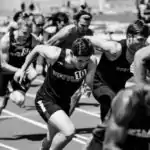
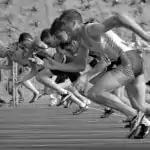
The teacher will start by asking pupils about their favorite games and sports. They will then introduce the topic of athletics, showing pictures of runners. This will generate excitement and curiosity about the lesson.
Lesson Content
What is Athletics?
Athletics, also known as track and field, includes running, jumping, and throwing events.
Short distance Race
A short distance race is a running competition over a short distance.
Safety Rules in Short Distance Race
Safety rules are guidelines that help prevent injuries and ensure fair play during a short distance race. The following are safety rules in short distance race:
- Wear proper running shoes.
- Warm up and stretch before the race.
- Pay attention to the starting signal.
- practice good sportsmanship; avoid pushing others.
- Stay in your assigned lane throughout the race.
- Avoid sudden stops or turns that could cause collisions.
- Listen to and follow the instructions of race officials.
- report any injuries or discomfort to the race officials promptly.
Teaching Methods
To deliver this lesson, the teacher will adopt the following methods: Discussion, Presentation, Question and Answer, Practical Activity (optional).
Instructional Procedures
To deliver this lesson, the teacher will adopt the following steps:
Step 1: Introduction (Set Induction)
Time: 5 minutes
Teaching Skill: Questioning, explaining
Teacher’s Activity: Briefly introduce athletics and short distance races. Show pictures.
Pupils’ Activity: Listen attentively and respond to questions.
Step 2: Description of Key Concepts
Time: 10 minutes
Teaching Skill: Explaining,clarifying
Teacher’s Activity: Explain what athletics and short distance races are. Define key terms.
Pupils’ activity: Listen, ask questions, and take notes.
Step 3: Exhibition/guided Practice
Time: 10 minutes
Teaching Skill: Demonstrating, guiding
Teacher’s Activity: Demonstrate proper running techniques and starting positions. (Optional: guide pupils in a short practice run.)
Pupils’ Activity: Observe the demonstration and participate in the practice run (if applicable).
Step 4: Autonomous Practice
Time: 5 minutes
Teaching Skill: Monitoring, providing feedback
teacher’s Activity: Supervise pupils as they practice running techniques.
Pupils’ Activity: Practice running techniques individually or in small groups.
Step 5: Note-Taking
Time: 5 minutes
Teaching Skill: Guiding note-taking
Teacher’s Activity: Guide pupils in summarizing key points and safety rules.
Pupils’ Activity: Write down key points and safety rules.
Step 6: Evaluation/Review
Time: 5 minutes
Teaching Skill: Questioning,summarizing
Teacher’s Activity: Ask review questions to assess understanding.
Pupils’ Activity: Answer review questions.
Objective-aligned checks:
- Define athletics and short distance race.
- Identify safety rules in short distance races.
- Explain the importance of warming up before a race.
Step 7: Conclusion
Time: 5 minutes
Teaching Skill: Summarizing, encouraging
Teacher’s Activity: Summarize the key points, emphasizing the importance of safety and sportsmanship in short distance races. Encourage pupils to continue practicing and participating in physical activities.
Pupils’ Activity: Listen attentively and ask any remaining questions.
Lesson Keywords
- Athletics – A group of sporting events that include running, jumping, and throwing.
- Short Distance Race – A running competition over a short distance, such as 100m or 200m.
- Safety Rules – Guidelines to prevent injuries and ensure fair play during a race.
- Sportsmanship – Fair and respectful behavior towards others in sports.
- Warm-up – Exercises done before a race to prepare the body.
Lesson Evaluation
to evaluate the learning, the teacher asks pupils to:
- What are three safety rules for a short distance race?
- Why is warming up significant before a race?
- What is good sportsmanship in a race?
- What are some examples of short distance races?
- How can we improve our running speed?
Assignment/Homework
- List five safety rules for a short distance race.
- Explain why warming up is important before any physical activity.
- Describe what good sportsmanship means in a race.
Differentiation
- For slower learners: Provide one-on-one assistance and simplified instructions.
- for advanced learners: Challenge with additional questions or a longer practice run.
- For visual/auditory/kinesthetic learners: Use visual aids, verbal explanations, and hands-on activities to cater to different learning styles.
Note for Teachers
Ensure to emphasize the importance of safety and sportsmanship throughout the lesson. Provide clear demonstrations and hands-on practice to reinforce learning. Adjust the pace and complexity of the lesson based on the pupils’ understanding and abilities.


Community Join the conversation Open discussion +