

Class: Pre-School Level 4
Term: First Term
Week: 3
Age: 5 years
Duration: 30 minutes
Subject: Basic Science and Technology
Curriculum Theme: Basic Science and Technology
Previous Lesson: Not separately stated in the scheme.
Topic: FIRST AID BOX: MEANING AND CONTENTS
Subject Matter: First Aid Box: Meaning and Contents
Specific Objectives
By the end of the lesson, pupils should be able to:
Cognitive Domain
- Describe in simple terms what a first aid box is.
- Identify at least three contents of a first aid box.
- State the purpose of some first aid box contents.
Affective Domain
- Show care and concern for someone who is hurt.
- Understand the importance of telling an adult when someone is injured.
Psychomotor Domain
- Point to and name items in a first aid box when shown.
- Participate in a simple role-play of telling an adult about an injury.
Social Domain
- Listen attentively as the teacher explains.
- Take turns in identifying items.
Reference Materials
- NAPPS National Unified Teaching Scheme for Pre-School Level 4
- Early Childhood Care and Education resources
- Relevant picture charts and posters
Instructional Materials
- An actual (empty or safe) first aid box/kit
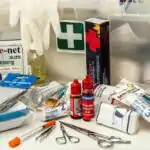
- Examples of first aid contents: bandage, plaster, cotton wool, antiseptic wipes, small blunt-tipped scissors (teacher-handled only)
- Charts and posters showing content of a first aid box
- Video clips on first aid for children
Rationale for the Lesson
Learning about first aid is important for 5-year-olds as it teaches them to recognise common items used for minor injuries and, crucially, to understand the importance of informing a responsible adult when someone gets hurt. This knowledge helps build a sense of safety and responsibility in young children.
Prerequisite/Previous Knowledge
Pupils may have experienced minor cuts or bruises, or seen an adult care for someone who is hurt. They also know about different types of boxes and containers.
Lesson Content/Board Summary
First Aid Box: Meaning and Contents
What is First Aid?
First aid is the help given to someone who is hurt or suddenly ill, before a doctor or nurse arrives. It is the first help given.
What is a First Aid Box?
A first aid box is a special container where we keep items to help people who get small injuries or feel unwell. It is usually kept in homes, schools, and cars.
Contents of a First Aid Box:
A first aid box contains many useful things. Here are some of them:
- Bandage: Used to cover a wound or support a sprain. It helps keep the injury clean.
- Plaster (or Band-Aid): A small sticky strip used to cover small cuts and scrapes.
- Antiseptic Wipes: Used to clean small cuts or scrapes to prevent germs.
- Cotton Wool: Soft cotton used for cleaning wounds with antiseptic liquid.
- Small Scissors: Used by an adult to cut bandages or plasters to size. (Children should never use scissors without adult supervision).
Important Rule: Only adults should use the first aid box. Children should always tell an adult if someone gets hurt.
Key Words
- First Aid – The first help given to someone who is hurt.
- First Aid Box – A box with things to help people with small injuries.
- Bandage – Material to cover a wound.
- Plaster – A small sticky strip for cuts.
What the Teacher Should Show or Draw
The teacher should display an actual first aid box and its contents. Point to each item clearly. Show charts or pictures of the items and their uses.
First Aid Box Song
Tune: “Twinkle, Twinkle Little Star”
Lyrics:
First aid box, what do you see?
Things to help you and help me.
Plaster, bandage, clean and neat,
For little boo-boos on our feet.
If you’re hurt, what will you do?
Tell an adult, they’ll help you!
Actions:
- “First aid box, what do you see?” – Point to the first aid box.
- “Things to help you and help me.” – Point to self and then to a friend.
- “Plaster, bandage, clean and neat,” – Pretend to put on a plaster, then wrap a bandage.
- “For little boo-boos on our feet.” – Point to feet.
- “If you’re hurt, what will you do?” – Shrug shoulders.
- “Tell an adult, they’ll help you!” – Point to an adult (teacher).
How to use the rhyme: Sing the song together after introducing the first aid box and its contents. Repeat it several times with actions to help pupils remember the items and the key message of telling an adult.
Watch and Learn About First Aid
The teacher will show a short, age-appropriate video clip about first aid kits and their contents to reinforce the lesson.
Teaching Methods/Instructional Techniques
Play-based Learning, Demonstration, Guided Practice, Songs and Rhymes, Picture Talk, Question and Answer, Role-play, Manipulation of Objects, Repetition, Practical Activity.
Instructional Procedures
Step 1: Introduction
Time: 3 minutes
Teaching Skill: Engagement/Recap
Teacher’s Activity: The teacher greets the pupils and asks if anyone has ever had a small cut or bruise. “What did Mummy or Daddy do to help you feel better?”
Pupils’ Activity: Pupils respond by sharing their experiences or nodding their heads. They might say “Mummy put medicine” or “Daddy put plaster.”
Learning Point: Pupils recall experiences of minor injuries and care.
Step 2: Meaning of First Aid
Time: 4 minutes
Teaching Skill: Explanation/Concept Introduction
Teacher’s Activity: The teacher explains in simple terms what “first aid” means: “First aid is the very first help we give someone who gets a small injury or feels sick, before a doctor comes. It’s quick help!” The teacher gives examples like cleaning a small cut or putting a plaster on a scrape.
Pupils’ Activity: Pupils listen attentively and repeat “First aid is first help.”
Learning Point: Pupils understand the simple meaning of first aid.
Step 3: Introducing the First Aid Box
Time: 5 minutes
Teaching Skill: Demonstration/Identification
Teacher’s Activity: The teacher shows the pupils an actual first aid box. “Look! This is a first aid box. It’s a special box that holds all the things we use for first aid. It helps us keep safe and healthy when we have a small accident.” The teacher asks pupils to describe the box (colour, shape).
Pupils’ Activity: Pupils observe the first aid box, touch it gently, and describe its appearance. They repeat “First aid box.”
Learning Point: Pupils recognise a first aid box and understand its purpose.
Step 4: Exploring Contents (Part 1)
Time: 5 minutes
Teaching Skill: Identification/Function
Teacher’s Activity: The teacher opens the first aid box and takes out a bandage and a plaster. “What is this? This is a bandage. It helps to cover bigger cuts or hold a sore arm. And this is a plaster! We use it for small cuts and scrapes.” The teacher demonstrates how a plaster sticks.
Pupils’ Activity: Pupils identify the bandage and plaster, repeat their names, and watch the demonstration. Some pupils can come forward to touch the items gently.
Learning Point: Pupils identify and know the basic use of a bandage and plaster.
Step 5: Exploring Contents (Part 2)
Time: 4 minutes
Teaching Skill: Identification/Safety
Teacher’s Activity: The teacher takes out antiseptic wipes, cotton wool, and shows the small scissors (emphasising adult use). “These are antiseptic wipes, they clean a cut to keep germs away. This is cotton wool, we use it with liquid to clean. And these small scissors are for cutting bandages, but only adults use them, never children!”
Pupils’ Activity: Pupils identify the items, repeat their names, and listen carefully to the safety instruction about scissors.
Learning Point: Pupils identify more first aid items and understand the rule about adult supervision.
Step 6: Reinforcement and Rhyme/Video
Time: 5 minutes
Teaching Skill: Repetition/Engagement
Teacher’s Activity: The teacher leads the pupils in singing the “First Aid Box Song” with actions. Afterwards, the teacher plays the short video clip about first aid kits for children. “Let’s watch a video to see more about our first aid box!”
Pupils’ Activity: Pupils sing the song with actions and watch the video attentively, pointing out items they recognise.
Learning Point: Pupils reinforce their learning through song and visual media.
Step 7: Evaluation/Review
Time: 4–5 minutes
Teaching Skill: Questioning/Assessment
Teacher’s Activity: The teacher checks pupils’ understanding through short questions and practical tasks.
- What is this box called? (Teacher points to the first aid box).
- Show me the plaster. (Teacher asks pupils to point to the plaster).
- What do we use a bandage for?
- When do we use a first aid box to treat a person? (From the seed)
- What should you do if your friend falls and gets hurt?
Pupils’ Activity: Pupils respond orally and demonstrate the required skill where appropriate (e.g., pointing to items, saying “First aid box”, “Tell an adult”).
Learning Point: Pupils demonstrate understanding of the lesson.
Step 8: Conclusion
Time: 2 minutes
Teaching Skill: Summarisation/Closure
Teacher’s Activity: The teacher praises the pupils for their participation. “Remember, our first aid box helps us when we have small hurts, but we must always tell an adult first! Adults will help us use it safely.”
Pupils’ Activity: Pupils repeat the key message of telling an adult and thank the teacher.
Learning Point: Pupils internalise the main safety message about first aid.
Lesson Keywords
- First Aid – The immediate help given to someone who is hurt or suddenly ill.
- First Aid Box – A special container holding items for treating minor injuries.
- Bandage – A strip of material used to cover and protect a wound.
- Plaster – A small, adhesive strip used for minor cuts and scrapes.
- Antiseptic – A substance used to clean wounds and prevent infection.
Differentiation
- Support: For pupils who struggle, the teacher will use larger, more colourful pictures of first aid items. Provide hand-over-hand guidance to point to items. Focus on identifying just two key items (e.g., plaster and bandage) through repetition.
- Extension: For pupils who grasp the concept quickly, the teacher can ask them to name other places where they might see a first aid box (e.g., in a car, at a clinic). They can also be encouraged to describe the use of an item in their own words.
Note for teachers using this lesson plan
Before the lesson, ensure you have an actual first aid box (empty or containing only safe, non-medicinal items for demonstration) and real examples of its contents. Emphasise throughout the lesson that children should never handle medicines or sharp objects from a first aid box, and that they must always inform a responsible adult if they or someone else gets hurt. The main idea children must understand is that the first aid box contains things to help with small injuries, and an adult is always needed to use it. Observe pupils’ ability to point to and name items and their understanding of telling an adult as key indicators of learning.

Community Join the conversation Open discussion +