

Class: Senior Secondary School 1 (SS1, SS 1, SSS1, SSS 1)
Term: 3rd Term
Week: 4
Age: 15 years
Duration: 45 minutes
Subject: Biology
Curriculum Theme: Biology
Previous Lesson: Conservation, Waste Management and Deforestation.
Topic: PEST & DISEASES OF AGRICULTURAL IMPORTANCE.
Subject Matter: Pests definition and types, life cycle of pests, control of pests, diseases types, livestock pests and diseases they cause, simple pest management practices
Specific Objectives
By the end of the lesson, pupils should be able to:
Cognitive Domain:
- Define pests and identify their different types.
- Describe the life cycle of common agricultural pests.
- Explain various methods for controlling agricultural pests.
- Identify different types of diseases affecting agricultural produce and livestock.
- List common livestock pests and the diseases they cause.
- Explain simple pest management practices.
Affective Domain:
- Appreciate the importance of effective pest and disease control in agriculture.
- Value healthy livestock and agricultural produce.
- Show interest in preventing pest infestations and disease outbreaks in farms.
Psychomotor Domain:
- Compile a table of local livestock pests and the related diseases they cause.
- Identify pests on livestock or from pictures.
Social Domain:
- Collaborate with peers in identifying pests and discussing control measures.
Reference Materials
The following resources were used in planning this lesson:
- 9 Years Basic Education Curriculum for Biology (Senior Secondary Education)
- State Unified Scheme of Work for Biology SSS 1
- Essential Biology for Senior Secondary Schools by M.C. Michael
- https://www.biologyonline.com/dictionary/pest
- https://www.fao.org/plant-protection/pest-management/en/
Instructional Materials
The teacher will teach this lesson with the aid of:
- Livestock farm visit or pictures of pests and diseased animals
- Charts showing different types of agricultural pests
- Sample table template for recording pests and diseases
- Notebooks and pens
Rationale for the Lesson
This lesson helps pupils understand what pests and diseases are and how they affect agriculture. Knowing this enables them to contribute to better food production and healthier livestock, which is important for food security and economic well-being in their communities.
Prerequisite/Previous Knowledge
Pupils have some basic knowledge of agriculture, different types of farm animals, and common crops cultivated in their locality.
Lesson Content/Board Summary
PEST & DISEASES OF AGRICULTURAL IMPORTANCE
1. Definition of Pests
A pest is any organism that is destructive or troublesome to crops, livestock, or humans. Pests cause economic damage by reducing crop yields, harming animals, or spreading diseases.
2. Types of Pests
The following are common types of agricultural pests:
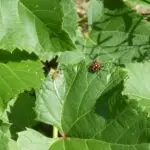
- Insect Pests: Examples include locusts, aphids, weevils, grasshoppers, and caterpillars. They feed on plants or transmit diseases.
- Rodent Pests: Examples include rats and mice. They consume and contaminate stored grains and damage crops in the field.
- Bird Pests: Examples include weaver birds and pigeons. They feed on grains and fruits.
- Nematodes: Microscopic roundworms that attack plant roots, causing stunted growth and reduced yields.
- Mites: Tiny arthropods that suck sap from plants or blood from animals, causing damage or irritation.
- Weeds: Unwanted plants that compete with crops for nutrients, water, and sunlight.
3. Life Cycle of Pests (Insects)
Most insect pests undergo metamorphosis, which can be complete or incomplete:
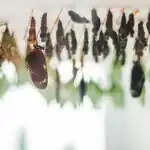
- Complete Metamorphosis: Involves four stages: Egg → Larva → Pupa → Adult. Examples: Butterflies, beetles.
- Incomplete Metamorphosis: Involves three stages: Egg → Nymph → Adult. Examples: Grasshoppers, cockroaches.
4. Control of Pests
The following are methods used to control pests:
- Cultural Control: Practices that make the environment less favorable for pests. Examples: Crop rotation, timely planting, sanitation (removing crop residues), proper tillage.
- Biological Control: Using natural enemies (predators, parasites, pathogens) to reduce pest populations. Example: Ladybirds eating aphids.
- Chemical Control: Use of pesticides (insecticides, herbicides, fungicides) to kill pests. This method requires careful application due to potential environmental and health risks.
- Integrated Pest Management (IPM): A holistic approach that combines various control methods (cultural, biological, chemical) in an environmentally sensitive way to manage pest populations below economic injury levels.
5. Types of Diseases
Diseases affecting agricultural importance can be classified as:
- Infectious Diseases: Caused by pathogens (bacteria, viruses, fungi, protozoa). They can spread from one organism to another. Examples: Newcastle disease in poultry, Cassava mosaic virus.
- Non-infectious Diseases: Not caused by pathogens and do not spread. Examples: Nutritional deficiencies, genetic disorders, environmental stress (e.g., drought, extreme temperatures).
6. Livestock Pests and Diseases They Cause
The following are common livestock pests and the diseases they can transmit or cause:
- Ticks: Transmit diseases like Anaplasmosis, Babesiosis (redwater fever), and East Coast fever in cattle. They also cause irritation and blood loss.
- Tsetse Fly: Transmits Trypanosomiasis (sleeping sickness) in cattle and humans.
- Lice: Cause irritation, skin damage, and anaemia in heavily infested animals.
- Mites: Cause skin conditions such as mange or scabies, leading to hair loss, itching, and discomfort.
- Fleas: Cause irritation, skin allergies, and can transmit tapeworms to animals.
7. Simple Pest Management Practices
The following are simple practices for managing pests and diseases:
- Farm Sanitation: Keeping farm premises clean, removing weeds and crop residues.
- Resistant Varieties: Planting crop varieties or rearing animal breeds that are naturally resistant to certain pests and diseases.
- Quarantine: Isolating new animals or plants before introducing them to the main farm to prevent disease spread.
- Vaccination: Vaccinating livestock against common infectious diseases.
- Proper Nutrition: Providing balanced diets to animals and crops to boost their natural resistance.
- Regular Inspection: Regularly checking crops and animals for early signs of pests or diseases.
Teaching Methods/Instructional Techniques
Discussion, Lecture, Demonstration, Question and Answer, Visual Aids
Instructional Procedures
Step 1: Introduction
Time: 5 minutes
Teaching Skill: Set Induction
Teacher’s Activity: The teacher greets the pupils and asks them about common problems faced by farmers in their community. The teacher then guides the discussion towards how pests and diseases affect farming.
Pupils’ Activity: Pupils respond to the questions and share their experiences or observations about farming problems.
Learning Point: Pupils are introduced to the topic and connect it to real-life agricultural challenges.
Step 2: Definition and Types of Pests
Time: 7 minutes
Teaching Skill: Explanation/Identification
Teacher’s Activity: The teacher defines a pest and explains the different types of agricultural pests using charts or pictures. The teacher gives examples for each type.
Pupils’ Activity: Pupils listen attentively, observe the charts, and identify common pests from their environment.
Learning Point: Pupils learn the definition of a pest and can identify various types of agricultural pests.
Step 3: Life Cycle and Control of Pests
Time: 8 minutes
Teaching Skill: Explanation/Illustration
Teacher’s Activity: The teacher explains the general life cycle of insect pests (complete and incomplete metamorphosis). The teacher then discusses various pest control methods, including cultural, biological, chemical, and integrated pest management (IPM).
Pupils’ Activity: Pupils listen, ask questions for clarification, and take notes on the different life cycles and control methods.
Learning Point: Pupils understand pest life cycles and different strategies for pest control.
Step 4: Types of Diseases
Time: 5 minutes
Teaching Skill: Explanation
Teacher’s Activity: The teacher explains the two main types of diseases: infectious and non-infectious, providing examples relevant to agriculture.
Pupils’ Activity: Pupils listen and understand the distinction between infectious and non-infectious diseases.
Learning Point: Pupils can differentiate between infectious and non-infectious diseases.
Step 5: Livestock Pests and Diseases They Cause
Time: 8 minutes
Teaching Skill: Demonstration/Observation
Teacher’s Activity: The teacher takes pupils on a short visit to a livestock farm (if available) or shows detailed pictures/charts of common livestock pests (e.g., ticks, tsetse fly, lice) and explains the diseases they transmit or cause. The teacher guides pupils to compile a table of local livestock pests and related diseases.
Pupils’ Activity: Pupils observe the pests (on animals or pictures), identify them, record their observations, and work on compiling the table as guided by the teacher.
Learning Point: Pupils can identify common livestock pests and link them to the diseases they cause.
Step 6: Simple Pest Management Practices
Time: 7 minutes
Teaching Skill: Discussion/Application
Teacher’s Activity: The teacher discusses simple and practical pest management practices that can be adopted by farmers, emphasizing prevention and early intervention. The teacher encourages pupils to share any practices they know.
Pupils’ Activity: Pupils participate in the discussion, explain simple pest control methods and prevention practices, and contribute their own ideas.
Learning Point: Pupils learn practical ways to manage pests and diseases in agricultural settings.
Step 7: Evaluation/Review
Time: 5 minutes
Teaching Skill: Questioning/Assessment
Teacher’s Activity: The teacher evaluates the learning by asking the following questions:
- Define a pest.
- List three types of agricultural pests.
- Mention two methods of pest control.
- Name two diseases affecting livestock and the pests that transmit them.
- State one simple pest management practice.
Pupils’ Activity: Pupils answer orally and in writing.
Learning Point: Pupils demonstrate understanding of the lesson.
Step 8: Conclusion
Time: 2 minutes
Teaching Skill: Summarization
Teacher’s Activity: The teacher summarizes the key points of the lesson, reiterating the importance of pest and disease control for sustainable agriculture. The teacher gives pupils homework to research one specific pest common in their area and its control.
Pupils’ Activity: Pupils listen to the summary and copy down the homework.
Learning Point: Pupils consolidate their understanding of the lesson and are encouraged to research further.
Lesson Keywords
- Pest – Any organism that is destructive or troublesome to crops, livestock, or humans.
- Disease – An abnormal condition affecting an organism, often caused by infection, nutritional deficiency, or environmental stress.
- Life Cycle – The series of changes in the life of an organism, including reproduction.
- Pesticides – Chemical substances used to kill pests.
- Integrated Pest Management (IPM) – An ecological approach to pest control that combines various methods to manage pest populations.
- Quarantine – Isolation of animals or plants to prevent the spread of disease.
Differentiation
The teacher will provide additional support to pupils who are struggling by using simplified language and more visual aids. Advanced pupils will be encouraged to research specific local pests and present their findings to the class.
Note for teachers using this lesson plan
Teachers should adapt the lesson content and activities to suit the specific needs and context of their pupils and available resources. A real farm visit is highly recommended if feasible; otherwise, high-quality pictures and videos should be used as alternatives. Emphasize safety precautions during any farm visit.
Community Join the conversation Open discussion +