

Class: Senior Secondary School 1 (SS1, SS 1, SSS1, SSS 1)
Term: 1st Term
Week: 4
Age: 15 years
Duration: 45 minutes
Subject: Biology
Curriculum Theme: Biology
Previous Lesson: Laboratory Safety Procedures, Equipment and Emergency Causes.
Topic: THE CELL
Subject Matter: Cell as the living unit, cell theory, forms of existence as independent organism colony and filament, cell structures and functions, differences between plant and animal cells
Specific Objectives
By the end of the lesson, pupils should be able to:
Cognitive Domain:
- Define a cell as the basic unit of life.
- State the main postulates of the cell theory.
- List different forms of existence of organisms (independent, colony, filament).
- Identify the major structures of plant and animal cells.
- State the functions of various cell organelles.
- Differentiate between plant and animal cells based on their structures.
Affective Domain:
- Appreciate the importance of the cell as the fundamental unit of life.
- Show interest in observing microscopic organisms and cell structures.
- Demonstrate carefulness while handling microscopes and prepared slides.
Psychomotor Domain:
- Observe prepared slides of different organisms and cells under a microscope.
- Draw and label diagrams of plant and animal cells.
- Accurately identify parts of the cell from a diagram or microscope view.
Social Domain:
- Collaborate with peers during practical observation sessions.
- Participate actively in class discussions about cell structures and functions.
Reference Materials
The following resources were used in planning this lesson:
- 9 Years Basic Education Curriculum for Senior Secondary Biology.
- State Unified Scheme of Work for Senior Secondary Biology.
- Modern Biology for Senior Secondary Schools by Ramalingam.
- Essential Biology for Senior Secondary Schools by M.C. Michael.
Instructional Materials
The teacher will teach this lesson with the aid of:
- Prepared slides of Paramecium, Euglena, Volvox, and Spirogyra.
- Prepared slides of typical plant and animal cells (e.g., onion epidermal cells, human cheek cells).
- Microscope.
- Drawing paper and pencils.
- Charts showing detailed diagrams of plant and animal cells.
- Projector (if available) to display cell diagrams.
Rationale for the Lesson
This lesson helps pupils understand that all living things are made up of basic units called cells. Learning about cells is important because it provides a foundation for understanding how organisms grow, develop, and carry out life processes. This knowledge is essential for further studies in biology and for appreciating the complexity of life.
Prerequisite/Previous Knowledge
Pupils are expected to have prior knowledge of living and non-living things, as well as the basic characteristics of living organisms, from their Junior Secondary School Biology classes.
Lesson Content/Board Summary
THE CELL
Definition of a Cell
A cell is the basic structural and functional unit of all known organisms. It is the smallest unit of life that can replicate independently.
The Cell Theory
The cell theory is a fundamental concept in biology. It states the following postulates:
- All living organisms are composed of one or more cells.
- The cell is the basic unit of structure and organization in organisms.
- All cells arise from pre-existing cells.
Forms of Existence of Organisms
Organisms can exist in different forms based on their cellular organization:
- Independent Organisms (Unicellular): These are single-celled organisms that exist independently. Examples include Paramecium, Euglena, Amoeba, and bacteria.
- Colony: A group of similar cells living together in close association, often showing some degree of cooperation, but each cell can survive independently. Example: Volvox.
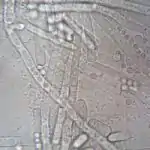
- Filament: Cells arranged end-to-end to form a thread-like structure. Example: Spirogyra.
- Multicellular Organisms: Organisms composed of many cells that are organized into tissues, organs, and systems, with specialized functions. Examples include humans, animals, and higher plants.
Basic Cell Structures and Functions
All cells generally possess the following basic components:
- Cell Membrane (Plasma Membrane): A thin, selectively permeable outer boundary that controls the movement of substances into and out of the cell.
- Cytoplasm: The jelly-like substance filling the cell, where most cellular activities take place. It contains organelles.
- Nucleus: The control center of the cell, containing the genetic material (DNA) and regulating cell activities.
Other important organelles include:
- Mitochondria: Site of cellular respiration and energy production (ATP).
- Ribosomes: Sites of protein synthesis.
- Endoplasmic Reticulum (ER): Network of membranes involved in synthesis, transport, and modification of proteins and lipids.
- Golgi Apparatus (Body): Modifies, sorts, and packages proteins and lipids for secretion or delivery to other organelles.
- Lysosomes (Animal cells): Contain digestive enzymes to break down waste materials and cellular debris.
- Vacuoles: Storage sacs for water, nutrients, and waste products. Large central vacuole in plant cells.
- Chloroplasts (Plant cells): Sites of photosynthesis, containing chlorophyll.
- Cell Wall (Plant cells): A rigid outer layer that provides structural support and protection to plant cells.
Differences Between Plant and Animal Cells
The main differences between plant and animal cells are:
- Cell Wall: Present in plant cells, absent in animal cells.
- Chloroplasts: Present in plant cells (for photosynthesis), absent in animal cells.
- Vacuoles: Plant cells usually have one large, central vacuole; animal cells have small, temporary, or no vacuoles.
- Centrioles: Present in animal cells (involved in cell division), absent in plant cells.
- Shape: Plant cells generally have a fixed, rectangular shape due to the cell wall; animal cells have an irregular or rounded shape.
- Storage Material: Plant cells store food as starch; animal cells store food as glycogen.
Teaching Methods/Instructional Techniques
Discussion, Lecture, Demonstration, Question and Answer, Visual Aids
Instructional Procedures
Step 1: Introduction
Time: 5 minutes
Teaching Skill: Set Induction
Teacher’s Activity: The teacher greets the pupils and reminds them about the characteristics of living things they learned in previous classes. The teacher then asks pupils what they think all living things are made of. The teacher introduces the topic “The Cell” as the basic unit of life.
Pupils’ Activity: Pupils respond to questions and listen attentively to the introduction.
Learning Point: Pupils recall previous knowledge and are introduced to the lesson topic.
Step 2: Definition of Cell and Cell Theory
Time: 7 minutes
Teaching Skill: Explanation/Questioning
Teacher’s Activity: The teacher defines a cell and explains the historical development and the main postulates of the cell theory (all organisms are made of cells, cells are the basic unit of life, all cells come from pre-existing cells). The teacher uses a chart to illustrate this.
Pupils’ Activity: Pupils listen, take notes, and ask questions for clarification.
Learning Point: Pupils understand the definition of a cell and the foundational principles of the cell theory.
Step 3: Forms of Existence of Organisms
Time: 6 minutes
Teaching Skill: Explanation/Demonstration
Teacher’s Activity: The teacher explains different forms of existence of organisms (independent unicellular, colony, filament, multicellular) using examples like Paramecium, Volvox, and Spirogyra, pointing to their respective slides or diagrams.
Pupils’ Activity: Pupils observe the diagrams/slides and listen to the explanations, identifying the different forms.
Learning Point: Pupils learn that organisms can exist in various forms based on their cellular organization.
Step 4: Basic Cell Structures and Functions
Time: 10 minutes
Teaching Skill: Demonstration/Explanation
Teacher’s Activity: The teacher displays charts of typical plant and animal cells. The teacher points to and explains the major parts of the cell (cell membrane, cytoplasm, nucleus) and other key organelles (mitochondria, ribosomes, ER, Golgi apparatus, lysosomes, vacuoles, chloroplasts, cell wall), describing their specific functions.
Pupils’ Activity: Pupils observe the charts, listen to the explanations, and take notes on the structures and their functions.
Learning Point: Pupils identify and understand the functions of various cell organelles.
Step 5: Practical Observation (Microscope)
Time: 8 minutes
Teaching Skill: Practical/Guidance
Teacher’s Activity: The teacher guides pupils to observe prepared slides of plant and animal cells (e.g., onion epidermal cells, human cheek cells) under the microscope. The teacher instructs them to identify visible structures and briefly sketch what they observe.
Pupils’ Activity: Pupils work in groups or individually to observe the slides, identify structures, and make simple sketches.
Learning Point: Pupils gain practical experience in observing cells and identifying their parts.
Step 6: Differences between Plant and Animal Cells
Time: 4 minutes
Teaching Skill: Comparison/Discussion
Teacher’s Activity: The teacher uses a comparative chart or draws a table on the board to highlight and explain the key differences between plant and animal cells, emphasizing the presence/absence of cell wall, chloroplasts, and the nature of vacuoles.
Pupils’ Activity: Pupils observe the comparison, ask questions, and contribute their observations from the practical session.
Learning Point: Pupils can distinguish between plant and animal cells based on structural differences.
Step 7: Evaluation/Review
Time: 5 minutes
Teaching Skill: Questioning/Assessment
Teacher’s Activity: The teacher evaluates the learning by asking the following questions:
- Define a cell.
- State any two postulates of the cell theory.
- Mention two forms of existence of organisms with examples.
- List three structures found in a plant cell but not in an animal cell.
- State the function of the nucleus and mitochondria.
Pupils’ Activity: Pupils answer orally and in writing.
Learning Point: Pupils demonstrate understanding of the lesson.
Step 8: Conclusion
Time: 2 minutes
Teaching Skill: Summarization
Teacher’s Activity: The teacher briefly summarizes the key points of the lesson, reiterating that the cell is the fundamental unit of life and highlighting the structural differences between plant and animal cells. The teacher gives an assignment to draw and label a typical plant and animal cell.
Pupils’ Activity: Pupils listen to the summary and copy the assignment.
Learning Point: Pupils consolidate their understanding and are given a task to reinforce learning.
Lesson Keywords
- Cell – The basic structural and functional unit of all living organisms.
- Cell Theory – The scientific theory stating that all living things are made of cells, cells are the basic unit of life, and all cells come from pre-existing cells.
- Unicellular – An organism consisting of a single cell.
- Multicellular – An organism consisting of multiple cells.
- Organelle – A specialized subunit within a cell that has a specific function.
- Nucleus – The control center of a eukaryotic cell, containing genetic material.
- Cytoplasm – The jelly-like substance filling the cell, outside the nucleus.
- Cell Membrane – The outer boundary of an animal cell, and just inside the cell wall in plant cells, controlling substance movement.
- Cell Wall – A rigid outer layer of plant, fungal, and bacterial cells, providing support and protection.
- Chloroplast – An organelle in plant cells where photosynthesis takes place.
- Mitochondrion – An organelle responsible for cellular respiration and energy production.
Differentiation
For visual learners, the use of charts, diagrams, and microscope slides will be highly beneficial. Kinesthetic learners will benefit from the practical observation and drawing activities. Advanced pupils can be encouraged to research specific organelles in more detail or compare different types of cells (e.g., prokaryotic vs. eukaryotic). Struggling pupils can be paired with stronger peers during microscope observation and given simplified diagrams to label.
Note for teachers using this lesson plan
Ensure all instructional materials, especially prepared slides and microscopes, are ready and in good working condition before the lesson begins. Manage time effectively during the practical observation to ensure all pupils get a chance to use the microscope. Encourage pupils to ask questions and foster a collaborative learning environment, especially during the observation sessions. Emphasize safety precautions while handling equipment.


Community Join the conversation Open discussion +