

Note for teachers using this lesson plan
This lesson introduces students to the world of microorganisms, their types, and their diverse effects. Teachers should prepare visual aids like videos or simulations of different microorganisms and, if possible, set up simple culture experiments in advance to allow for observation. Emphasise safety precautions when handling any cultures. By the end, learners should be able to define microorganisms, identify common types, and describe their beneficial and harmful roles in the environment and on human health.
Class: SS 1
Term: Third Term
Week: 9
Age: 15 years
Duration: 60 minutes
Subject: Biology
Curriculum Theme: Health and Diseases
Focal competence: Identifying microorganisms and their effects
Key competencies/values: Collaboration; Research and Problem Solving; Problem Solving
Skills:
- Observing microorganisms using a microscope
- Culturing microorganisms
Previous Lesson: Scientific Collaboration and Communication, Developing Scientific Research
Topic: Microorganisms Around Us
Subject Matter: Meaning of Microorganisms, Micro-organisms around us, Effects (beneficial and harmful) of microorganisms on the human body
Specific Objectives
By the end of the lesson, pupils/students should be able to:
Cognitive Domain
- Define microorganisms.
- Describe microorganisms.
- Identify microorganisms around us.
- Describe the beneficial effects of microorganisms.
- Describe the harmful effects of microorganisms.
Affective Domain
- Collaborate effectively in group discussions and activities.
- Engage in research and problem-solving related to microorganisms.
Psychomotor Domain
- Observe microorganisms using a microscope.
- Initiate and observe cultures of microorganisms.
Reference Materials
The following resources were used in planning this lesson:
- 2025 New Revised Senior Secondary Education Curriculum (SSEC)
- Relevant State Unified Scheme of Work
- A suitable Biology textbook for SS 1
- The HeadTeacher Scheme of work For The New Revised Senior Secondary Education Curriculum (SSEC)
Instructional Materials
The teacher will teach this lesson with the aid of:
- Microscopes
- Petri dishes
- Culture media
- Incubator
- Glass slides
- Cover slips
- Video clips or simulations of various microorganisms
- Charts showing different types of microorganisms
Rationale for the Lesson
This lesson is important for students to understand the pervasive nature of microscopic life forms in their environment. It helps them appreciate the dual role of microorganisms, both as essential components of ecosystems and as agents of disease, thereby promoting informed health practices and environmental awareness.
Prerequisite/Previous Knowledge
Students should have a basic understanding of living organisms and the concept of disease from their Junior Secondary Science lessons.
Lesson Content/Board Summary
Microorganisms Around Us
Meaning of Microorganisms
Microorganisms, also known as microbes, are living organisms that are too small to be seen with the naked eye. They can only be observed using a microscope. They are ubiquitous, meaning they are found almost everywhere—in the air, water, soil, on surfaces, and inside living organisms.
Types of Microorganisms Around Us
Microorganisms are a diverse group and include:
- Bacteria: These are single-celled prokaryotic organisms that lack a true nucleus. They come in various shapes like rods (bacilli), spheres (cocci), and spirals (spirilla). Bacteria are found in almost every habitat on Earth and play crucial roles in nutrient cycling.
- Fungi: These are eukaryotic organisms that include yeasts, moulds, and mushrooms. They are typically decomposers, breaking down dead organic matter. Some fungi are single-celled (like yeast), while others are multicellular (like moulds).
- Algae: These are diverse photosynthetic eukaryotic organisms, ranging from single-celled forms to large multicellular seaweeds. They are found in aquatic environments and produce a significant portion of the Earth’s oxygen.
- Protozoa: These are single-celled eukaryotic organisms that are typically motile and feed on other microorganisms or organic matter. Examples include Amoeba, Paramecium, and Plasmodium. Many are found in water and soil.
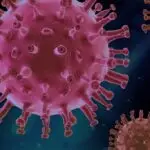
- Viruses: These are non-cellular infectious agents that can only replicate inside the living cells of other organisms. They are much smaller than bacteria and consist of genetic material (DNA or RNA) enclosed in a protein coat. Viruses are obligate parasites.
Effects of Microorganisms on the Human Body
Beneficial Effects of Microorganisms
Microorganisms have many positive impacts on humans and the environment:
- Digestion: Beneficial bacteria in the human gut (gut flora) aid in the digestion of food, produce vitamins (like Vitamin K and B vitamins), and protect against harmful pathogens.
- Food Production: Microorganisms are essential in the production of various foods, such as yeast for bread making, bacteria for yoghurt, cheese, and fermented foods (e.g., ogi, garri), and fungi for brewing.
- Medicine Production: Many antibiotics (e.g., penicillin from fungi) and vaccines are derived from or produced using microorganisms.
- Decomposition and Nutrient Cycling: Microorganisms act as decomposers, breaking down dead organic matter and returning essential nutrients to the soil, which is vital for plant growth.
- Bioremediation: Certain microorganisms are used to clean up environmental pollutants, such as oil spills and toxic waste, by breaking them down into less harmful substances.
Harmful Effects of Microorganisms
Some microorganisms are pathogenic, causing diseases in humans, animals, and plants:
- Diseases in Humans:
- Bacteria: Cause diseases like cholera, typhoid, tuberculosis, pneumonia, and tetanus.
- Viruses: Cause diseases like common cold, influenza, measles, HIV/AIDS, and COVID-19.
- Fungi: Cause skin infections (e.g., ringworm, athlete’s foot) and internal infections (e.g., candidiasis).
- Protozoa: Cause diseases like malaria (Plasmodium), amoebic dysentery (Entamoeba histolytica), and sleeping sickness (Trypanosoma).
- Food Spoilage: Microorganisms like bacteria and fungi can cause food to spoil, making it unfit for consumption and potentially causing food poisoning.
- Plant Diseases: Many microorganisms cause diseases in crops, leading to significant agricultural losses. Examples include bacterial blight, fungal rusts, and viral mosaics.
- Animal Diseases: Microorganisms are responsible for various diseases in livestock and pets, impacting animal health and agricultural productivity.
Teaching Methods/Instructional Techniques
Discussion, Demonstration, Guided Practice, Question and Answer, Explanation, Observation, Group Work, Practical Activity
Instructional Procedures
Step 1: Introduction
Time: 5 minutes
Teaching Skill: Questioning/Engagement
Teacher’s Activity: The teacher greets the students and asks them if they can name any living things that are too small to be seen with their eyes. The teacher then introduces the topic: “Microorganisms Around Us.”
Pupils’ Activity: Pupils respond to the questions and listen attentively to the introduction.
Learning Point: Microorganisms introduction
Step 2: Meaning of Microorganisms
Time: 10 minutes
Teaching Skill: Explanation/Definition
Teacher’s Activity: The teacher explains the meaning of microorganisms, emphasising their microscopic nature and ubiquity. The teacher uses simple language and examples to make the concept clear.
Pupils’ Activity: Pupils listen, ask questions for clarification, and contribute examples of where microorganisms might be found.
Learning Point: Microorganism definition
Step 3: Types of Microorganisms
Time: 10 minutes
Teaching Skill: Classification/Illustration
Teacher’s Activity: The teacher introduces the main types of microorganisms (bacteria, fungi, algae, protozoa, viruses) using charts or projected images/videos. The teacher briefly describes the key characteristics of each type.
Pupils’ Activity: Pupils observe the visuals, listen to the descriptions, and identify the different types of microorganisms.
Learning Point: Microorganism classification
Step 4: Beneficial Effects of Microorganisms
Time: 10 minutes
Teaching Skill: Discussion/Elaboration
Teacher’s Activity: The teacher guides a discussion on the beneficial effects of microorganisms, linking them to everyday life examples such as food production, digestion, medicine, and environmental roles. The teacher encourages students to share their own knowledge.
Pupils’ Activity: Pupils participate in the discussion, provide examples, and note down the beneficial effects.
Learning Point: Positive microbial impacts
Step 5: Harmful Effects of Microorganisms
Time: 5 minutes
Teaching Skill: Explanation/Awareness
Teacher’s Activity: The teacher discusses the harmful effects of microorganisms, focusing on common diseases they cause in humans (e.g., malaria, typhoid, common cold) and food spoilage. The teacher stresses the importance of hygiene.
Pupils’ Activity: Pupils listen, ask questions about diseases, and understand the importance of preventing microbial infections.
Learning Point: Negative microbial impacts
Step 6: Observation and Inference
Time: 5 minutes
Teaching Skill: Demonstration/Observation
Teacher’s Activity: The teacher either shows videos/simulations of microorganisms under a microscope or, if resources permit, demonstrates prepared slides of microorganisms or pre-grown cultures from air, water, or soil. The teacher guides students to observe and discuss what they see.
Pupils’ Activity: Pupils observe the videos/simulations or microscope slides/cultures and discuss their observations and make inferences about the characteristics of the microorganisms.
Learning Point: Microorganism characteristics
Step 7: Evaluation/Review
Time: 5 minutes
Teaching Skill: Questioning/Assessment
Teacher’s Activity: The teacher evaluates the learning by asking the following questions:
- What are microorganisms?
- Mention three types of microorganisms.
- State two beneficial effects of microorganisms.
- Identify two harmful effects of microorganisms on the human body.
Pupils’ Activity: Pupils answer orally and in writing.
Learning Point: Lesson understanding check
Step 8: Note-Taking
Time: 10 minutes
Teaching Skill: Guided Writing
Teacher’s Activity: The teacher guides pupils/students to copy the essential Board Summary notes on the meaning, types, and effects of microorganisms into their notebooks.
Pupils’ Activity: Pupils/students copy the notes carefully into their notebooks.
Learning Point: Board summary record
Step 9: Conclusion
Time: 5 minutes
Teaching Skill: Summarisation
Teacher’s Activity: The teacher briefly summarises the key learning points, reiterating that microorganisms are tiny living things with both beneficial and harmful roles, and encourages students to maintain good hygiene practices.
Pupils’ Activity: Pupils listen and reflect on the lesson’s main points.
Learning Point: Microorganism importance reinforced
Continuous Assessment/Further Study
Type: Homework
Instruction: Answer the following questions in your notebook:
- Research and write a short paragraph on how microorganisms are used in the production of a specific Nigerian fermented food (e.g., ogi, garri, iru).
- List three diseases caused by viruses and three caused by bacteria.
- Explain why it is important to wash your hands regularly, relating your answer to microorganisms.
Lesson Keywords
- Microorganisms – Organisms too small to be seen with the naked eye.
- Bacteria – Single-celled prokaryotic microbes.
- Fungi – Eukaryotic decomposers like yeasts and moulds.
- Algae – Photosynthetic aquatic eukaryotes.
- Protozoa – Single-celled motile eukaryotes.
- Viruses – Non-cellular parasitic infectious agents.
- Pathogenic – Disease-causing.
- Bioremediation – Use of organisms to clean up pollutants.
Differentiation
For students who grasp concepts quickly, encourage them to research specific examples of microorganisms used in biotechnology or environmental conservation. For students needing more support, provide simplified diagrams and additional verbal explanations, focusing on one type of microorganism and one effect at a time.
Suggested Lesson Videos
For further understanding, students can search on YouTube for:
- “Types of Microorganisms for SS1 Biology”
- “Beneficial and Harmful Microorganisms”
- “Microorganisms under the microscope”

Community Join the conversation Open discussion +