

Note for teachers using this lesson plan
This lesson focuses on understanding organic manure, its types, and the practical steps involved in its production. Teachers should prepare by gathering examples of decomposed plant/animal matter and simple farm tools to demonstrate the concepts. Ensure students grasp the importance of organic manure for soil health and can articulate the production process by the end of the lesson.
Class: SS 1
Term: Second Term
Week: 10
Age: 15 years
Duration: 60 minutes
Subject: Biology
Curriculum Theme: Society and Environmental Biology
Focal competence: Using locally produced organic manure to improve soil quality
Key competencies/values: Collaboration; Research and Problem Solving; Problem Solving
Skills:
- Preparing manure
Previous Lesson: Agricultural Pests and Pest Control Strategies
Topic: Organic Manure Production
Subject Matter: Meaning of organic manure, Types, Production
Specific Objectives
By the end of the lesson, pupils/students should be able to:
Cognitive Domain
- Define organic manure.
- Explain the concept of organic manure.
- Identify different types of organic manure.
- State the steps involved in producing organic manure.
Affective Domain
- Appreciate the importance of organic manure in improving soil quality.
- Value collaborative efforts in agricultural practices.
Psychomotor Domain
- Demonstrate the preparation of simple organic manure.
Social Domain
- Collaborate effectively in group discussions and practical activities related to manure production.
Reference Materials
The following resources were used in planning this lesson:
- 2025 New Revised Senior Secondary Education Curriculum (SSEC)
- Relevant State Unified Scheme of Work
- A suitable Biology textbook for SS 1
- The HeadTeacher Scheme of work For The New Revised Senior Secondary Education Curriculum (SSEC)
Instructional Materials
The teacher will teach this lesson with the aid of:
- Decomposed plant and animal remains (e.g., dry leaves, grass, food scraps)
- Animal wastes (e.g., poultry droppings, cow dung)
- Simple farm tools (e.g., shovel, rake, hoe)
- Chart showing different types of organic manure
- Pictures illustrating the steps of organic manure production
Rationale for the Lesson
This lesson is important for students to understand sustainable agricultural practices and their role in maintaining soil fertility. Knowledge of organic manure production helps in promoting environmentally friendly farming methods and reducing reliance on synthetic fertilizers. It also equips students with practical skills applicable in agriculture.
Prerequisite/Previous Knowledge
Students should have basic knowledge of soil composition, plant nutrients, and the importance of healthy soil for crop growth.
Lesson Content/Board Summary
Organic Manure Production
Meaning of Organic Manure
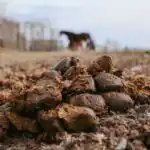
Organic manure refers to natural substances derived from the decomposition of plant and animal matter, which are added to the soil to improve its fertility and structure. It includes materials such as compost, farmyard manure, green manure, and animal droppings. These materials release nutrients slowly into the soil, enhancing its capacity to hold water and support microbial life.
Types of Organic Manure
Organic manure can be broadly classified into the following types:
- Farmyard Manure (FYM): This is a mixture of animal dung, urine, bedding material (like straw), and leftover feed. It is typically collected from cattle sheds and allowed to decompose. FYM is rich in essential plant nutrients and improves soil structure.
- Compost Manure: Compost is a dark, crumbly, and earthy-smelling product made from the controlled decomposition of various organic materials such as crop residues, weeds, leaves, food scraps, and other biodegradable waste. The decomposition process is carried out by microorganisms under aerobic conditions.
- Green Manure: This involves growing specific plants (e.g., legumes like sunn hemp, cowpea, or non-legumes like mustard) and then ploughing them back into the soil while they are still green. These plants add organic matter and nutrients, especially nitrogen (if legumes are used), to the soil.
- Vermicompost: This is a type of compost produced with the help of earthworms. Earthworms consume organic waste and excrete nutrient-rich castings, which significantly improve soil fertility and plant growth.
- Poultry Manure: This consists of droppings from chickens, ducks, and other poultry. It is a highly concentrated source of nitrogen, phosphorus, and potassium, making it a very effective fertilizer.
Production of Organic Manure (Compost Production)
Compost production is a common method of producing organic manure. The steps involved in making compost are:
- Site Selection: Choose a shaded, well-drained area near a water source and away from living areas to minimize odour. The site should be easily accessible.
- Gathering Materials: Collect a variety of organic materials, including “greens” (nitrogen-rich, e.g., fresh grass clippings, food scraps, animal manure) and “browns” (carbon-rich, e.g., dry leaves, straw, wood chips, sawdust).
- Layering the Materials: Start with a base layer of coarse brown materials (e.g., twigs, straw) for aeration. Then, alternate layers of green and brown materials. A common ratio is two parts brown to one part green. Each layer should be about 10-15 cm thick.
- Moistening the Pile: Water each layer as it is added to ensure the pile is consistently moist, like a wrung-out sponge. Avoid over-watering, which can lead to anaerobic conditions.
- Aeration (Turning the Pile): Regularly turn the compost pile with a fork or shovel every 1-2 weeks. This introduces oxygen, which is essential for the microorganisms that break down the organic matter, and helps to mix the materials. Turning also prevents foul odours.
- Monitoring Temperature: A healthy compost pile will heat up due to microbial activity (reaching 50-60°C). This heat helps to kill weed seeds and pathogens. If the pile cools down, it may need more green material, moisture, or turning.
- Maturation: The composting process can take several weeks to a few months, depending on the materials used and how often the pile is turned. The compost is ready when it is dark brown, crumbly, has an earthy smell, and the original materials are no longer recognizable.
- Application: Once mature, the compost can be spread on garden beds, mixed into potting soil, or used as a top dressing around plants.
Teaching Methods/Instructional Techniques
Discussion, Demonstration, Guided Practice, Question and Answer, Explanation, Observation, Group Work
Instructional Procedures
Step 1: Introduction
Time: 5 minutes
Teaching Skill: Engaging/Questioning
Teacher’s Activity: The teacher greets the students and asks them about ways farmers improve soil fertility. The teacher then introduces the topic: Organic Manure Production.
Pupils’ Activity: Pupils respond to questions and listen attentively to the introduction.
Learning Point: Soil fertility improvement methods
Step 2: Meaning of Organic Manure
Time: 10 minutes
Teaching Skill: Explanation/Discussion
Teacher’s Activity: The teacher guides students in a class discussion to define and explain organic manure, using examples of decomposed plant and animal remains as visual aids.
Pupils’ Activity: Pupils participate in the discussion, offer definitions, and ask questions for clarity.
Learning Point: Definition of organic manure
Step 3: Identifying Types of Organic Manure
Time: 10 minutes
Teaching Skill: Identification/Classification
Teacher’s Activity: The teacher presents a chart showing various types of organic manure (Farmyard Manure, Compost, Green Manure, Vermicompost, Poultry Manure) and explains each type with examples.
Pupils’ Activity: Pupils observe the chart, identify the different types, and take notes.
Learning Point: Types of organic manure
Step 4: Introduction to Manure Production
Time: 5 minutes
Teaching Skill: Explaining/Setting context
Teacher’s Activity: The teacher introduces the concept of producing organic manure, specifically focusing on compost production as a practical example. The teacher highlights the importance of proper decomposition.
Pupils’ Activity: Pupils listen and prepare for the practical steps.
Learning Point: Compost production overview
Step 5: Steps in Organic Manure Production (Part 1)
Time: 10 minutes
Teaching Skill: Demonstration/Instruction
Teacher’s Activity: The teacher explains and demonstrates the first few steps of compost production: site selection, gathering materials (greens and browns), and layering the materials. The teacher uses the available instructional materials (e.g., dry leaves, animal waste, shovel).
Pupils’ Activity: Pupils observe the demonstration and ask clarifying questions about the materials and layering process.
Learning Point: Initial compost production steps
Step 6: Steps in Organic Manure Production (Part 2)
Time: 5 minutes
Teaching Skill: Instruction/Reinforcement
Teacher’s Activity: The teacher continues explaining the remaining steps: moistening the pile, aeration (turning), monitoring temperature, and maturation. The teacher emphasizes safety precautions when handling tools and organic waste.
Pupils’ Activity: Pupils listen, take notes, and discuss the importance of each step.
Learning Point: Advanced compost production steps
Step 7: Evaluation/Review
Time: 5 minutes
Teaching Skill: Questioning/Assessment
Teacher’s Activity: The teacher evaluates the learning by asking the following questions:
- What is organic manure?
- Mention two types of organic manure.
- List three steps involved in producing compost manure.
- Why is aeration important in compost production?
Pupils’ Activity: Pupils answer orally and in writing.
Learning Point: Manure production understanding
Step 8: Note-Taking
Time: 10 minutes
Teaching Skill: Guided Writing
Teacher’s Activity: The teacher guides pupils/students to copy the essential Board Summary notes on the meaning, types, and production steps of organic manure into their notebooks.
Pupils’ Activity: Pupils/students copy the notes carefully into their notebooks.
Learning Point: Recording lesson content
Step 9: Conclusion
Time: 5 minutes
Teaching Skill: Summarizing/Consolidation
Teacher’s Activity: The teacher summarizes the key points of the lesson, reiterating the importance of organic manure for sustainable agriculture and encouraging students to practice making compost at home or in school gardens.
Pupils’ Activity: Pupils listen and ask any final questions.
Learning Point: Organic manure importance
Continuous Assessment/Further Study
Type: Homework/Project
Instruction: Answer the following questions and prepare a mini-compost pile.
- Differentiate between Farmyard Manure and Green Manure.
- Explain how organic manure improves soil structure.
- List five common materials that can be used to make compost.
- Start a small compost pile at home or within the school compound using available organic waste. Document the process with pictures or a short report, noting the materials used and observations over a week.
Lesson Keywords
- Organic Manure – Natural substances from decomposed plant and animal matter used to enrich soil.
- Compost – Decomposed organic material used as a soil conditioner.
- Farmyard Manure (FYM) – Mixture of animal dung, urine, and bedding material.
- Green Manure – Crops grown and ploughed into the soil to improve fertility.
- Vermicompost – Compost produced using earthworms.
- Aeration – The process of introducing air into the compost pile.
- Decomposition – The process of breaking down organic matter by microorganisms.
Differentiation
For students who grasp the concepts quickly, encourage them to research different composting methods (e.g., pit composting, heap composting) or the specific nutrient content of various organic manures. For students needing additional support, provide simplified diagrams of the composting process and pair them with stronger students for group activities and discussions.
Suggested Lesson Videos
For further understanding, search on YouTube for:
organic manure production biology ss1 nigeria

Community Join the conversation Open discussion +