

Note for teachers using this lesson plan
This lesson introduces Senior Secondary 1 students to the concept of pollution, its various types, and their sources. Teachers should prepare visual aids like charts or video clips to illustrate different forms of pollution and their impacts. Emphasise the importance of environmental responsibility and safety when discussing potential pollution sites. By the end of the lesson, students should be able to clearly define pollution, identify its types, and explain where pollutants originate from.
Class: SS 1
Term: Third Term
Week: 1
Age: 15 years
Duration: 60 minutes
Subject: Biology
Curriculum Theme: Society and Environmental Biology
Focal competence: identifying sources, effects and control of pollution for managing environmental quality
Key competencies/values: Collaboration; Environmental Literacy
Skills:
- Identifying causes, effects and how to control pollution
Previous Lesson:
Topic: Pollution, Types and Sources of Pollutants
Subject Matter: Meaning of pollution, Types of pollution, Sources of pollutants
Specific Objectives
By the end of the lesson, pupils/students should be able to:
Cognitive Domain
- define pollution;
- identify the different types of pollution;
- explain the sources of pollutants.
Affective Domain
- appreciate the need for a clean environment;
- show willingness to participate in pollution control efforts.
Psychomotor Domain
- draw simple diagrams illustrating types of pollution;
- propose practical ways to reduce pollution in their local environment.
Social Domain
- collaborate with peers to discuss environmental issues.
Reference Materials
The following resources were used in planning this lesson:
- 2025 New Revised Senior Secondary Education Curriculum (SSEC)
- Relevant State Unified Scheme of Work
- Modern Biology for Senior Secondary Schools
- The HeadTeacher Scheme of work For The New Revised Senior Secondary Education Curriculum (SSEC)
Instructional Materials
The teacher will teach this lesson with the aid of:
- Charts showing different types of pollution (air, water, soil, noise)
- Video clips or pictures illustrating causes and effects of pollution
- Community resources (e.g., local areas with visible signs of pollution for discussion)
- Whiteboard and markers
Rationale for the Lesson
This lesson is important because it educates students about environmental degradation caused by pollution, which is a major global and local challenge. Understanding the types and sources of pollutants helps students recognise their roles in environmental protection and encourages responsible behaviour. This knowledge is fundamental for promoting sustainable practices and maintaining ecological balance.
Prerequisite/Previous Knowledge
Students should have a basic understanding of their immediate environment and the importance of cleanliness.
Lesson Content/Board Summary
Pollution, Types and Sources of Pollutants
Meaning of Pollution
Pollution refers to the introduction of harmful substances or products into the environment, making it unhealthy or unsafe for living organisms. These harmful substances are called pollutants.
Types of Pollution
Pollution can be classified into several types based on the part of the environment affected or the nature of the pollutant. The main types include:
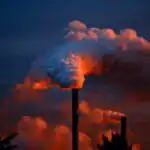
- Air Pollution: This is the contamination of the atmosphere by harmful gases, dust, smoke, and other particulate matter. It can lead to respiratory diseases, acid rain, and global warming.
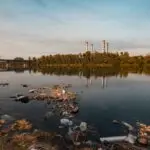
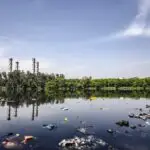
- Water Pollution: This occurs when harmful substances like chemicals, waste, and microorganisms contaminate water bodies (rivers, lakes, oceans), degrading water quality and making it toxic to humans and aquatic life.
- Soil Pollution: This is the contamination of soil by the presence of toxic chemicals, salts, radioactive materials, or disease-causing agents. It reduces soil fertility and can contaminate food crops grown in the soil.
- Noise Pollution: This refers to excessive or unwanted sound that can disrupt human or animal life. High levels of noise can lead to hearing loss, stress, and sleep disturbances.
Sources of Pollutants
Pollutants originate from various human activities and natural processes. Key sources include:
- Homes (Domestic Sources):
- Sewage and wastewater from toilets, baths, and kitchens (water pollution).
- Household waste like plastics, food scraps, and electronic waste (soil and water pollution).
- Detergents and cleaning agents (water pollution).
- Smoke from cooking fires (air pollution).
- Industries (Industrial Sources):
- Gases and smoke from factories (e.g., carbon monoxide, sulphur dioxide) (air pollution).
- Industrial effluents containing heavy metals, chemicals, and dyes discharged into water bodies (water pollution).
- Solid industrial waste dumped on land (soil pollution).
- Loud machinery and operations (noise pollution).
- Soil (Agricultural and Land-use Sources):
- Pesticides, herbicides, and chemical fertilisers used in agriculture (soil and water pollution through runoff).
- Erosion carrying sediments and chemicals into water bodies.
- Improper disposal of waste directly into the soil.
- Noise (Sources of Noise Pollution):
- Vehicles (cars, motorcycles, trucks, airplanes) producing engine and horn sounds.
- Construction activities (drilling, hammering, heavy machinery).
- Loud music from speakers, generators, and public address systems.
- Industrial machinery and equipment.
- Plants (Natural and Agricultural Sources):
- Pollen from certain plants can act as an air pollutant for individuals with allergies.
- Decomposition of large amounts of plant matter, especially in water bodies, can lead to oxygen depletion and water pollution (eutrophication).
- Agricultural practices involving plant residues can contribute to soil and water contamination if not managed properly.
Teaching Methods/Instructional Techniques
Discussion, Explanation, Question and Answer, Group Work, Observation, Visual Aids.
Instructional Procedures
Step 1: Introduction
Time: 5 minutes
Teaching Skill: Engaging/Questioning
Teacher’s Activity: The teacher greets the students and asks them to observe their surroundings, both inside and outside the classroom, and mention anything they consider “dirty” or “unpleasant.” The teacher then links their responses to the idea of environmental contamination.
Pupils’ Activity: Pupils respond by mentioning dirty floors, waste papers, loud noises, or bad smells. They listen attentively.
Learning Point: Introduction to pollution
Step 2: Meaning of Pollution
Time: 10 minutes
Teaching Skill: Explanation/Definition
Teacher’s Activity: The teacher explains the meaning of pollution as the introduction of harmful substances into the environment and defines pollutants with examples. The teacher writes the definition on the board.
Pupils’ Activity: Pupils listen, ask questions for clarification, and attempt to define pollution in their own words.
Learning Point: Definition of pollution
Step 3: Types of Pollution (Air and Water)
Time: 10 minutes
Teaching Skill: Explanation/Visualisation
Teacher’s Activity: The teacher uses charts and video clips to explain air and water pollution, discussing their characteristics and common examples. The teacher guides students to discuss in groups the meaning and types of pollution they observe in their community.
Pupils’ Activity: Pupils observe the charts/videos, participate in group discussions, and identify examples of air and water pollution from their experiences.
Learning Point: Air and water pollution
Step 4: Types of Pollution (Soil and Noise)
Time: 8 minutes
Teaching Skill: Explanation/Discussion
Teacher’s Activity: The teacher continues by explaining soil and noise pollution, providing examples relevant to the students’ daily lives. The teacher encourages students to share instances of these types of pollution they have encountered.
Pupils’ Activity: Pupils listen, contribute to the discussion with personal examples, and ask questions.
Learning Point: Soil and noise pollution
Step 5: Sources of Pollutants (Homes and Industries)
Time: 7 minutes
Teaching Skill: Categorisation/Examples
Teacher’s Activity: The teacher discusses common sources of pollutants from homes (domestic waste, sewage) and industries (factory smoke, chemical effluents), using visual aids where available.
Pupils’ Activity: Pupils identify and list pollutants from homes and industries, relating them to the types of pollution discussed earlier.
Learning Point: Domestic and industrial pollutants
Step 6: Sources of Pollutants (Soil, Noise, Plants)
Time: 5 minutes
Teaching Skill: Elaboration/Clarification
Teacher’s Activity: The teacher explains how soil-related activities (e.g., agriculture), noise-generating activities, and even plants (e.g., pollen) can act as sources of pollutants. The teacher guides students to discuss potential polluted areas and how to control them.
Pupils’ Activity: Pupils contribute ideas on how these sources generate pollutants and discuss control methods.
Learning Point: Other pollutant sources
Step 7: Evaluation/Review
Time: 5 minutes
Teaching Skill: Questioning/Assessment
Teacher’s Activity: The teacher evaluates the learning by asking the following questions:
- What is pollution?
- Mention three types of pollution.
- Name two sources of air pollution.
- Identify a source of noise pollution.
Pupils’ Activity: Pupils answer orally and in writing.
Learning Point: Understanding pollution concepts
Step 8: Note-Taking
Time: 10 minutes
Teaching Skill: Guided Writing
Teacher’s Activity: The teacher guides pupils/students to copy the essential Board Summary notes on pollution, its types, and sources into their notebooks.
Pupils’ Activity: Pupils/students copy the notes carefully into their notebooks.
Learning Point: Recording lesson notes
Step 9: Conclusion
Time: 5 minutes
Teaching Skill: Summarising/Reinforcement
Teacher’s Activity: The teacher summarises the key points of the lesson, reiterating the definition of pollution, its types, and the various sources of pollutants. The teacher encourages students to be mindful of their environment.
Pupils’ Activity: Pupils listen and ask any final questions.
Learning Point: Lesson consolidation
Continuous Assessment/Further Study
Type: Homework/Project
Instruction: Answer the following questions and prepare a short report.
- Define the term “pollutant” and give two examples.
- Differentiate between air pollution and water pollution, providing one example for each.
- Identify a polluted area in your community (e.g., a dirty gutter, a noisy market, a smoky area). Describe the type of pollution observed and suggest two ways it can be controlled.
- Research and list three diseases caused by air pollution.
Lesson Keywords
- Pollution – The introduction of harmful substances into the environment.
- Pollutants – Harmful substances that cause pollution.
- Air Pollution – Contamination of the atmosphere.
- Water Pollution – Contamination of water bodies.
- Soil Pollution – Contamination of soil.
- Noise Pollution – Excessive or unwanted sound.
- Domestic Waste – Waste from homes.
- Industrial Effluents – Liquid waste from industries.
Differentiation
For learners needing support: Provide simplified definitions and more visual examples. Pair them with stronger students for group discussions. Offer pre-filled outlines for note-taking.
For advanced learners: Challenge them to research the long-term effects of specific pollutants on human health or ecosystems. Encourage them to propose innovative solutions for local pollution problems or investigate the role of government policies in pollution control.
Suggested Lesson Videos
For further understanding, students can search on YouTube for:
- “Types of Pollution for SS1 Biology”
- “Sources of Environmental Pollutants”
- “What is Pollution? – Biology for Senior Secondary Schools”

Community Join the conversation Open discussion +