

Class: Senior Secondary School 1 (SS1, SS 1, SSS1, SSS 1)
Term: 3rd Term
Week: 3
Age: 15 years
Duration: 45 minutes
Subject: Biology
Curriculum Theme: Ecology and Environmental Biology
Previous Lesson: Effects of pollutants and Pollution control.
Topic: EFFECTS OF AGRICULTURAL ACTIVITIES ON ECOLOGICAL SYSTEM
Subject Matter: Effects of bush burning and tillage, effects of fertilizers herbicides and pesticides, effects of different farming methods on ecosystems, examples of ecosystem changes from farm practices
Specific Objectives
By the end of the lesson, pupils should be able to:
Cognitive Domain:
- Identify the effects of bush burning and tillage on the ecosystem.
- Explain the impacts of fertilizers, herbicides, and pesticides on the environment.
- Describe how different farming methods can affect ecosystems.
- Give examples of ecosystem changes resulting from farm practices.
Affective Domain:
- Discuss the importance of reducing ecological damage from agricultural activities.
- Appreciate the need for sustainable farming practices to protect the environment.
Psychomotor Domain:
- Observe and describe changes in farmlands due to agricultural practices using provided pictures or visual aids.
- Suggest practical ways to minimize ecological damage caused by farming.
Social Domain:
- Participate actively in discussions about environmental impacts of agriculture.
Reference Materials
The following resources were used in planning this lesson:
- 9 Years Basic Education Curriculum for Biology (Senior Secondary Education)
- State Unified Scheme of Work for Biology SSS 1
- Modern Biology for Senior Secondary Schools by S.T. Ramalingam
- Essential Biology for Senior Secondary Schools by M.C. Michael
Instructional Materials
The teacher will teach this lesson with the aid of:
- Pictures showing farmlands cleared by burning.
- Images illustrating farms where chemicals (fertilizers, herbicides, pesticides) are used.
- Observation checklists for analyzing impacts.
- Pictures of different farming methods (e.g., monoculture, mixed farming).
- Notebooks and pens for pupils.
Rationale for the Lesson
This lesson helps pupils understand how common agricultural activities can affect the natural environment around them. It enables them to identify practices that harm ecosystems and suggests better ways to farm, which is important for maintaining a healthy environment and ensuring sustainable food production.
Prerequisite/Previous Knowledge
Pupils have prior knowledge of ecosystems, components of the environment, and basic agricultural practices.
Lesson Content/Board Summary
EFFECTS OF AGRICULTURAL ACTIVITIES ON ECOLOGICAL SYSTEM
Introduction to Agricultural Activities and Ecosystems
An ecosystem is a community of living organisms interacting with their non-living environment. Agricultural activities are practices involved in cultivating land, raising crops, and rearing animals for food, fiber, and other products.
Effects of Bush Burning
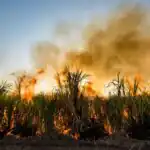
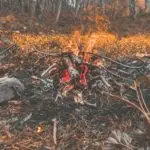
Bush burning is the practice of setting fire to vegetation cover, often to clear land for farming or to stimulate new growth.
The following are effects of bush burning:
- It destroys soil organic matter, leading to reduced soil fertility.
- It kills beneficial soil microorganisms and insects.
- It exposes the soil to erosion by wind and water.
- It pollutes the atmosphere with smoke and greenhouse gases.
- It destroys habitats and kills wildlife, leading to loss of biodiversity.
Effects of Tillage
Tillage is the mechanical manipulation of soil to prepare it for planting, usually involving ploughing, harrowing, and ridging.
The following are effects of tillage:
- It disrupts soil structure, making it more prone to erosion.
- It can lead to compaction of soil layers below the tilled depth.
- It accelerates the decomposition of organic matter, reducing its content in the soil.
- It can bring weed seeds to the surface, encouraging weed growth.
Effects of Fertilizers, Herbicides, and Pesticides
Fertilizers are substances added to soil to supply plant nutrients and enhance crop growth.
Herbicides are chemicals used to kill unwanted plants (weeds).
Pesticides are chemicals used to kill pests, including insects, fungi, and rodents.
The following are effects of these chemicals:
- Water Pollution: Runoff containing fertilizers can lead to eutrophication of water bodies, causing algal blooms and oxygen depletion, which harms aquatic life.
- Soil Contamination: Accumulation of heavy metals and other toxic substances in soil.
- Toxicity to Non-Target Organisms: Herbicides and pesticides can kill beneficial insects (like pollinators), birds, and other wildlife.
- Bioaccumulation and Biomagnification: Toxic chemicals can build up in the food chain, affecting organisms at higher trophic levels, including humans.
- Development of Resistance: Pests and weeds can develop resistance to these chemicals over time, requiring stronger doses or new chemicals.
Effects of Different Farming Methods on Ecosystems
Different farming methods have varying impacts on ecosystems.
The following are general effects:
- Monoculture: Planting a single crop over a large area reduces biodiversity and increases susceptibility to pests and diseases, often requiring more chemical inputs.
- Intensive Farming: High-input agriculture can lead to soil degradation, water depletion, and increased pollution.
- Deforestation for Agriculture: Clearing forests for farmland destroys habitats, contributes to climate change, and increases soil erosion.
Examples of Ecosystem Changes from Farm Practices
The following are examples of ecosystem changes:
- Loss of specific plant and animal species due to habitat destruction or poisoning from chemicals.
- Pollution of rivers and lakes by agricultural runoff, affecting aquatic biodiversity.
- Changes in soil composition and structure, leading to reduced fertility and increased desertification in some areas.
- Alteration of local climate patterns due to extensive land clearing.
Teaching Methods/Instructional Techniques
Discussion, Lecture, Demonstration, Question and Answer, Visual Aids
Instructional Procedures
Step 1: Introduction
Time: 5 minutes
Teaching Skill: Set Induction/Questioning
Teacher’s Activity: The teacher greets the pupils and asks them to recall what they learned about ecosystems and agricultural practices in previous lessons. The teacher then introduces the topic by asking pupils if they have observed any changes in farmlands around their community or seen how farmers prepare their land.
Pupils’ Activity: Pupils respond to questions and share their observations.
Learning Point: Pupils connect prior knowledge to the new topic and are introduced to the lesson’s focus.
Step 2: Effects of Bush Burning and Tillage
Time: 10 minutes
Teaching Skill: Explanation/Observation
Teacher’s Activity: The teacher explains what bush burning and tillage are, using pictures of farmlands affected by these practices. The teacher then explains the specific effects of bush burning and tillage on soil, plants, animals, and the atmosphere, as outlined in the board summary.
Pupils’ Activity: Pupils observe the pictures, listen attentively, and take notes on the effects discussed.
Learning Point: Pupils understand the negative impacts of bush burning and tillage on the ecosystem.
Step 3: Effects of Fertilizers, Herbicides, and Pesticides
Time: 10 minutes
Teaching Skill: Explanation/Discussion
Teacher’s Activity: The teacher defines fertilizers, herbicides, and pesticides. Using images of farms where these chemicals are applied, the teacher explains their specific impacts on water quality, soil health, and non-target organisms, including the concepts of bioaccumulation and biomagnification.
Pupils’ Activity: Pupils identify the chemicals in the images, participate in discussions about their impacts, and record key points.
Learning Point: Pupils grasp the environmental and health consequences of chemical use in agriculture.
Step 4: Effects of Different Farming Methods
Time: 5 minutes
Teaching Skill: Elaboration/Illustration
Teacher’s Activity: The teacher discusses how different farming methods, such as monoculture and intensive farming, contribute to ecological changes. The teacher uses pictures to illustrate these methods and their general effects like loss of biodiversity and soil degradation.
Pupils’ Activity: Pupils observe the illustrations, listen to the explanations, and note down the effects of various farming methods.
Learning Point: Pupils understand that farming techniques influence ecosystem health.
Step 5: Examples of Ecosystem Changes and Safer Practices
Time: 5 minutes
Teaching Skill: Brainstorming/Application
Teacher’s Activity: The teacher provides specific examples of ecosystem changes resulting from agricultural practices (e.g., specific species loss, river pollution). The teacher then guides a brief discussion, asking pupils to suggest ways farmers can reduce ecological damage.
Pupils’ Activity: Pupils contribute examples and suggest safer farming practices based on their understanding.
Learning Point: Pupils apply their knowledge to identify real-world impacts and propose solutions.
Step 6: Evaluation/Review
Time: 5 minutes
Teaching Skill: Questioning/Assessment
Teacher’s Activity: The teacher evaluates the learning by asking the following questions:
- Define bush burning and mention two of its effects on the ecosystem.
- State three negative impacts of using chemical fertilizers on the environment.
- Explain how tillage can lead to soil erosion.
- Give two examples of ecosystem changes that can result from intensive farming.
Pupils’ Activity: Pupils answer orally and in writing.
Learning Point: Pupils demonstrate understanding of the lesson.
Step 7: Conclusion
Time: 5 minutes
Teaching Skill: Summarization/Assignment
Teacher’s Activity: The teacher summarizes the main points of the lesson, emphasizing the importance of sustainable agricultural practices. The teacher then assigns homework: “List five ways farmers can protect the environment while carrying out their activities.”
Pupils’ Activity: Pupils listen to the summary and copy down the homework assignment.
Learning Point: Pupils reinforce their learning and prepare for further exploration of the topic.
Lesson Keywords
- Ecosystem – A community of living organisms interacting with their non-living environment.
- Bush burning – The practice of setting fire to vegetation cover, often to clear land.
- Tillage – The mechanical manipulation of soil to prepare it for planting.
- Fertilizers – Substances added to soil to supply plant nutrients.
- Herbicides – Chemicals used to kill unwanted plants (weeds).
- Pesticides – Chemicals used to kill pests.
- Monoculture – The cultivation of a single crop in a given area.
Differentiation
For struggling learners, the teacher will use more simplified language and provide additional visual aids or real-life examples. Group activities will allow peer support. Advanced learners will be encouraged to research and present on specific case studies of ecosystem changes due to agriculture or propose innovative sustainable farming solutions.
Note for teachers using this lesson plan
Teachers should encourage pupils to think critically about the environmental consequences of farming practices common in their local communities. Real-life examples or local news related to agricultural impacts can make the lesson more relatable. Emphasize that while agriculture is essential, sustainable methods are necessary for long-term environmental health.
Community Join the conversation Open discussion +