

Note for teachers using this lesson plan
For this lesson, teachers should prepare by gathering visual aids like pictures or video clips of various animal husbandry practices and irrigation methods. The central concept involves understanding and applying these agricultural techniques. Emphasise safety when discussing farm tools and practices. By the end of the lesson, learners should be able to identify and describe appropriate animal husbandry and irrigation methods.
Class: SS 1
Term: Second Term
Week: 8
Age: 15 years
Duration: 60 minutes
Subject: Biology
Curriculum Theme: Society and Environmental Biology
Focal competence: Using agricultural practices and control of pests to manage their small-scale farms
Key competencies/values: Communication; Environmental Literacy; Entrepreneurship
Skills:
- Applying pest control measures
- Identifying agricultural pests
Previous Lesson: Land Preparation and Sowing or Planting
Topic: Basic Agricultural Practices: Animal Husbandry
Subject Matter: Animal Husbandry, Irrigation Methods
Specific Objectives
By the end of the lesson, pupils/students should be able to:
Cognitive Domain
- Identify different irrigation methods.
Affective Domain
- Appreciate the importance of proper animal husbandry practices.
- Demonstrate environmental literacy regarding water usage in agriculture.
Psychomotor Domain
- Apply appropriate animal husbandry practices.
- Apply appropriate irrigation methods.
Social Domain
- Communicate effectively about agricultural practices.
Reference Materials
The following resources were used in planning this lesson:
- 2025 New Revised Senior Secondary Education Curriculum (SSEC)
- Relevant State Unified Scheme of Work
- A suitable Biology textbook for Senior Secondary 1
- The HeadTeacher Scheme of work For The New Revised Senior Secondary Education Curriculum (SSEC)
Instructional Materials
The teacher will teach this lesson with the aid of:
- Pictures or charts illustrating different domestic animals and their products.
- Diagrams or video clips showing various irrigation methods (sprinkler, surface, drip).
- Farm inputs and tools (e.g., watering can, hose, small farm implements for demonstration).
- Whiteboard and markers.
Rationale for the Lesson
This lesson is important as it introduces students to fundamental agricultural practices essential for food production and economic development. Understanding animal husbandry and irrigation methods equips learners with practical knowledge for sustainable farming. It also fosters environmental literacy by highlighting efficient water management techniques in agriculture.
Prerequisite/Previous Knowledge
Pupils/students should have a basic understanding of living organisms, their classification, and the general importance of agriculture in society.
Lesson Content/Board Summary
Basic Agricultural Practices: Animal Husbandry and Irrigation Methods
Animal Husbandry
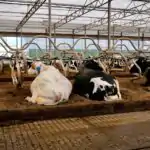
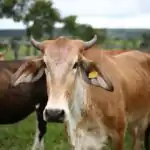
Animal husbandry refers to the branch of agriculture concerned with the raising, breeding, and management of domestic animals. It involves caring for animals to obtain products like meat, milk, eggs, wool, and hides, or for labour.
Aspects of Animal Husbandry
- Raising Animals: This involves providing suitable housing, feeding, and general care for animals from birth to maturity. It includes ensuring proper sanitation and hygiene in animal shelters.
- Breeding Animals: This focuses on the controlled reproduction of animals to improve desirable traits such as faster growth rate, higher milk yield, disease resistance, or better quality products. It involves selecting healthy and productive parent animals.
- Managing Domestic Animals: This covers all daily activities related to animal care, including feeding, watering, cleaning, health monitoring, and protecting them from predators and adverse weather conditions.
- Production of Animal Products: The ultimate goal of animal husbandry is the efficient production of various products.
Examples of Animal Products
- Meat: From cattle, goats, sheep, pigs, poultry.
- Milk: From cattle, goats.
- Eggs: From poultry (chickens, ducks, turkeys).
- Wool: From sheep.
- Hides/Skins: From cattle, goats, sheep (used for leather).
- Manure: Used as organic fertiliser.
Irrigation Methods
Irrigation is the artificial application of water to land or soil to assist in the growth of agricultural crops, maintenance of landscapes, and revegetation of disturbed soils in dry areas and during periods of inadequate rainfall.
Types of Irrigation Methods
- Sprinkler Irrigation:
This method involves distributing water through a system of pipes by pumping it to one or more central locations within the field and spraying it into the air through sprinklers so that it breaks up into small water drops which fall to the ground like natural rainfall. It is suitable for most crops and uneven terrains.
Advantages: Efficient water use, suitable for various terrains, less labour-intensive once set up.
Disadvantages: High initial cost, water loss due to evaporation and wind drift, requires consistent water pressure. - Surface Irrigation (Flood or Furrow Irrigation):
Water is distributed over the soil surface by gravity. It is either flooded over the entire field (flood irrigation) or channelled into small furrows between crop rows (furrow irrigation). This method is common in flat areas and for crops that can tolerate waterlogging.
Advantages: Low initial cost, simple to operate, uses gravity.
Disadvantages: High water loss through runoff and deep percolation, uneven water distribution, can lead to waterlogging and soil erosion. - Drip Irrigation (Trickle Irrigation):
This method involves applying water slowly and directly to the root zone of plants, drop by drop, using a network of pipes, valves, tubing, and emitters. Water is delivered precisely where it is needed, minimising waste.
Advantages: Highly efficient water use (minimal evaporation and runoff), reduces weed growth, conserves nutrients, suitable for various terrains.
Disadvantages: High initial cost, emitters can clog, requires regular maintenance.
Teaching Methods/Instructional Techniques
Discussion, Demonstration, Guided Practice, Question and Answer, Explanation, Observation, Group Work.
Instructional Procedures
Step 1: Introduction
Time: 5 minutes
Teaching Skill: Questioning
Teacher’s Activity: The teacher greets the students and asks them to name some animals commonly raised in their communities and what products are obtained from them. The teacher then introduces the topic: “Basic Agricultural Practices: Animal Husbandry and Irrigation Methods.”
Pupils’ Activity: Pupils respond by naming animals like goats, chickens, cattle, and their products like meat, eggs, and milk.
Learning Point: Introduction to animal farming
Step 2: Explanation of Animal Husbandry
Time: 10 minutes
Teaching Skill: Explanation/Discussion
Teacher’s Activity: The teacher explains the meaning of animal husbandry, discussing its key aspects: raising, breeding, and managing domestic animals. The teacher uses charts or pictures to illustrate different domestic animals.
Pupils’ Activity: Pupils listen attentively, ask questions for clarification, and identify animals from the charts.
Learning Point: Meaning of animal husbandry
Step 3: Discussing Animal Products
Time: 5 minutes
Teaching Skill: Question and Answer
Teacher’s Activity: The teacher guides a class discussion on the various products obtained from domestic animals, linking them to their importance in human diet and economy.
Pupils’ Activity: Pupils contribute by listing animal products and discussing their uses.
Learning Point: Animal products and uses
Step 4: Introduction to Irrigation
Time: 5 minutes
Teaching Skill: Explanation
Teacher’s Activity: The teacher introduces the concept of irrigation, explaining why it is necessary in agriculture, especially in dry seasons or regions with insufficient rainfall.
Pupils’ Activity: Pupils listen and note down the definition and importance of irrigation.
Learning Point: Necessity of irrigation
Step 5: Exploring Sprinkler and Surface Irrigation
Time: 10 minutes
Teaching Skill: Demonstration/Observation
Teacher’s Activity: The teacher shows video clips or diagrams of sprinkler and surface irrigation methods. The teacher explains how each method works, including their advantages and disadvantages. If possible, a simple demonstration using a watering can (simulating sprinkler) and pouring water on a flat surface (simulating surface irrigation) can be done.
Pupils’ Activity: Pupils observe the video clips/diagrams/demonstration, discuss the methods, and identify their features.
Learning Point: Sprinkler and surface irrigation
Step 6: Exploring Drip Irrigation
Time: 5 minutes
Teaching Skill: Demonstration/Observation
Teacher’s Activity: The teacher shows video clips or diagrams of drip irrigation, explaining its mechanism, advantages, and disadvantages. The teacher highlights its water efficiency.
Pupils’ Activity: Pupils observe, discuss, and compare drip irrigation with the other methods.
Learning Point: Drip irrigation method
Step 7: Evaluation/Review
Time: 5 minutes
Teaching Skill: Questioning/Assessment
Teacher’s Activity: The teacher evaluates the learning by asking the following questions:
- What is animal husbandry?
- Mention two products obtained from animal husbandry.
- List three common irrigation methods.
- Explain one advantage of drip irrigation.
Pupils’ Activity: Pupils answer orally and in writing.
Learning Point: Assessment of understanding
Step 8: Note-Taking
Time: 10 minutes
Teaching Skill: Guided Writing
Teacher’s Activity: The teacher guides pupils/students to copy the essential Board Summary notes on animal husbandry and irrigation methods into their notebooks.
Pupils’ Activity: Pupils/students copy the notes carefully into their notebooks.
Learning Point: Recording lesson notes
Step 9: Conclusion
Time: 5 minutes
Teaching Skill: Reinforcement
Teacher’s Activity: The teacher summarises the key points of the lesson, reiterating the importance of proper animal husbandry and efficient irrigation for agricultural productivity and sustainability. The teacher encourages students to observe these practices in their local environment.
Pupils’ Activity: Pupils listen and ask any final questions.
Learning Point: Lesson summary and reinforcement
Continuous Assessment/Further Study
Type: Homework/Further Reading
Instruction: Answer the following questions in your notebook and research more about local animal husbandry practices.
- Describe the meaning of animal husbandry in your own words.
- Identify two ways in which animal husbandry contributes to the Nigerian economy.
- Compare and contrast sprinkler irrigation with surface irrigation, stating one advantage and one disadvantage for each.
- Suggest which irrigation method would be most suitable for a small vegetable garden in a dry region and explain why.
- Research and write a short paragraph about a common domestic animal raised in your locality, detailing how it is cared for and what products are derived from it.
Lesson Keywords
- Animal Husbandry – The branch of agriculture concerned with raising and caring for domestic animals.
- Breeding – The controlled reproduction of animals to improve desirable traits.
- Irrigation – The artificial application of water to land to assist in crop growth.
- Sprinkler Irrigation – Water sprayed into the air to fall like rain.
- Surface Irrigation – Water distributed over the soil surface by gravity.
- Drip Irrigation – Water applied slowly and directly to the plant root zone.
Differentiation
For students who grasp concepts quickly, encourage them to research modern advancements in animal breeding or sustainable irrigation technologies. For students needing more support, provide simplified diagrams and allow them to work in pairs to discuss the advantages and disadvantages of each irrigation method.
Suggested Lesson Videos
You can search on YouTube for: animal husbandry practices SS1 biology nigeria and irrigation methods for agriculture SS1 biology
Community Join the conversation Open discussion +