

Class: Primary 5
Term: 2nd Term
Subject: Pre-Vocational Studies
Curriculum Theme: Agricultural Science
Previous Lesson: Identification Of Some Common Insects Pest
Topic: Damages Caused By Pests
Content/Learning Area: Eat crop leaves and roots, Destroy grains, etc.
Time Allocation: 40 minutes
Performance Objectives
By the end of the lesson, pupils should be able to:
- Cognitive Domain: Identify at least five damages caused by pests.
- Affective Domain: Explain the importance of protecting crops from pests.
- Psychomotor Domain: Create a pest album showing examples of pest damages.
- Social Domain: Work in groups to discuss strategies to control pests.
Reference Materials
The following resources were used in planning this lesson:
- 9 – Years Basic Education Curriculum Abuja educational Resource Center
- Scheme of Work NAPPS National Unified Scheme of Work
- Online Facts from: Britannica – Insect – Crop pests, Damage, Control
- Relevant Textbooks
Instructional Materials
To deliver this lesson, the teacher will use the following materials:
- Pictures of common pests and their damages.
- pest albums.
- Whiteboard and markers.
- Charts showing pest-damaged crops.
Rationale for the lesson
Understanding the damages caused by pests is vital because it helps pupils appreciate the need to protect crops, ensuring food security and healthy plants.
Prerequisite/Previous Knowledge
Pupils have identified some common pests in the previous lesson and have basic knowledge of how pests affect crops.
Lesson Content
Damages Caused By Pests
pests are organisms that harm plants, animals, or humans. They can cause serious damage to crops, which reduces food production. Below are damages caused by pests:
The following are examples of damages caused by pests:
- Eating Crop Leaves and Roots: Pests like grasshoppers destroy leaves, reducing the plant’s ability to make food.
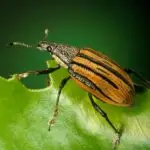
- Destroying Grains: Weevils and beetles infest stored grains, making them unusable.
- Drilling Holes in Fruits: Pests like fruit flies damage fruits, making them rot quickly.
- Sucking Plant Juices: Aphids suck juices from plant stems and leaves, causing them to wither.
- Transmitting Diseases: Some pests,like whiteflies,spread diseases that weaken or kill plants.
- Damaging Plant Stems: Termites and borers can weaken or kill plants by feeding on their stems.
- Contaminating Food: Cockroaches and rodents can contaminate stored food, making it unsafe to eat.
Teaching Methods
To deliver this lesson, the teacher will adopt the following methods: Discussion,lecture,Visual Aids,Demonstration,Interactive teaching,Collaborative,Group discussion,Guided writing,Autonomous work,Oral questioning,Review session.
Instructional Procedures
To deliver this lesson, the teacher will adopt the following steps:
Step 1: Introduction
Time: 5 mins
Teaching Skill: Set Induction
teachers Activity: Asks pupils to recall some common pests and their activities.
Pupils’ Activity: Answer questions and share previous knowledge.
Step 2: Explanation of Pest Damages
Time: 10 mins
Teaching Skill: Explanation
Teacher’s Activity: Explains what pest damages are and shows pictures of damages.
Pupils’ Activity: Observe pictures and listen attentively.
Step 3: Examples of Pest Damages
Time: 8 mins
Teaching Skill: Demonstration
Teacher’s Activity: Lists and explains types of damages caused by pests.
Pupils’ Activity: Copy the examples in their notebooks.
Step 4: Group Activity – Pest Album Creation
Time: 7 mins
Teaching Skill: Collaborative
Teacher’s activity: Divides pupils into groups to discuss and create a pest album.
Pupils’ Activity: Work in groups to discuss and make the album.
Step 5: Note-Taking
Time: 5 mins
Teaching Skill: Guided writing
Teacher’s Activity: Guides pupils to copy the main points into their notes.
Pupils’ Activity: Write down the notes neatly.
step 6: Evaluation/Review
Time: 3 mins
Teaching Skill: Oral questioning
Teacher’s Activity: Asks questions to test pupils’ understanding of the topic.
Pupils’ Activity: Answer questions.
Objective-aligned checks:
- Identify at least five damages caused by pests.
- Explain the importance of protecting crops from pests.
Step 7: Conclusion
Time: 2 mins
Teaching Skill: Summary
Teacher’s Activity: Summarizes the lesson and emphasizes the importance of pest control.
pupils’ Activity: Listen to the summary.
Lesson Keywords
- Pests – Organisms that cause damage to crops, animals, or humans.
- Crop Damage – Harm caused to plants, reducing their yield or quality.
- Infestation – The presence of pests in large numbers, causing damage.
- Pest Control – Methods used to manage or eliminate pests.
- aphids – Small insects that suck plant juices, causing them to wither.
Lesson Evaluation
To evaluate the learning, the teacher asks pupils to:
- Mention five damages caused by pests.
- Explain why pest control is crucial.
- Describe how pests affect stored grains.
- Discuss one way to protect crops from pests.
- Create a simple pest album showing examples of damages caused by pests.
Assignment/Homework
- List five common pests in your local area.
- Describe the damages each pest causes.
- Research and write down one method to control each pest.
Differentiation
- For slower learners: Provide simplified examples and one-on-one assistance during group activities.
- For advanced learners: Encourage them to research additional pests and their control methods.
- for visual/auditory/kinesthetic learners: Use visual aids, discussions, and hands-on activities like creating a pest album.
Note for Teachers
Encourage pupils to actively participate in discussions and group activities. Show them real-life examples if possible to make the lesson relatable. Happy teaching!
Community Join the conversation Open discussion +