

Class: Senior Secondary School 1 (SS1, SS 1, SSS1, SSS 1)
Term: 1st Term
Week: 2
Age: 15 years
Duration: 45 minutes
Subject: Biology
Curriculum Theme: Biology
Previous Lesson: Laboratory Safety Rules, Types of Laboratories and Biology Apparatus.
Topic: CLASSIFICATION OF LIVING THINGS
Subject Matter: Meaning of classification, reasons for classifying living things, criteria used in classification, examples of grouped organisms
Specific Objectives
By the end of the lesson, pupils should be able to:
Cognitive Domain:
- Define classification of living things.
- State at least three reasons for classifying living things.
- List at least two criteria used in classifying organisms.
Affective Domain:
- Appreciate the diversity of living organisms.
- Show interest in the systematic arrangement of life forms.
Psychomotor Domain:
- Group common organisms based on observable features.
- Justify their choices for grouping organisms.
Social Domain:
- Collaborate effectively with peers during grouping activities.
Reference Materials
The following resources were used in planning this lesson:
- 9 Years Basic Education Curriculum for Biology.
- State Unified Scheme of Work for Senior Secondary School Biology.
- Modern Biology for Senior Secondary Schools by Ramalingam.
- https://www.biologyonline.com/dictionary/classification
- https://www.britannica.com/science/taxonomy
Instructional Materials
The teacher will teach this lesson with the aid of:
- Charts showing different groups of organisms.
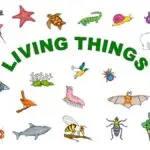
- Pictures of various plants and animals.
- Sample specimens of leaves, flowers, insects, or small animals (if available and safe).
- A classification table or diagram.
Rationale for the Lesson
This lesson helps pupils understand the natural order and relationships among living things. It enables them to organize and make sense of the vast diversity of life around them, which is important for studying biology and understanding ecosystems.
Prerequisite/Previous Knowledge
Pupils are expected to have prior knowledge of the characteristics of living things and examples of various plants and animals from their immediate environment.
Lesson Content/Board Summary
CLASSIFICATION OF LIVING THINGS
Meaning of Classification
Classification is the process of arranging living organisms into groups and categories based on their similarities and differences. This systematic arrangement helps in the study and identification of organisms.
Reasons for Classifying Living Things
The following are reasons why living things are classified:
- To identify and name organisms easily.
- To study the relationships between different organisms.
- To understand the evolutionary history of organisms.
- To organize the vast number of organisms into manageable groups.
- To avoid confusion and duplication in naming organisms.
Criteria Used in Classification
The following are some criteria used in classifying living things:
- Morphological features: Observable external structures like body shape, type of limbs, presence of feathers, scales, or fur.
- Anatomical features: Internal structures like skeletal system, circulatory system, and digestive system.
- Physiological features: How organisms function, such as their mode of nutrition (autotrophic or heterotrophic), respiration, and reproduction.
- Genetic features: Similarities in DNA and RNA sequences.
- Ecological features: Habitat, role in the environment, and feeding habits.
Examples of Grouped Organisms
Organisms are grouped into hierarchical categories. For example, animals can be grouped into vertebrates (those with backbones, e.g., fish, birds, mammals) and invertebrates (those without backbones, e.g., insects, worms). Plants can be grouped into flowering and non-flowering plants, or into monocotyledons and dicotyledons based on their seed structure.
Teaching Methods/Instructional Techniques
Discussion, Lecture, Demonstration, Question and Answer, Visual Aids
Instructional Procedures
Step 1: Introduction
Time: 5 minutes
Teaching Skill: Set Induction
Teacher’s Activity: The teacher greets the pupils and asks them to name different types of plants and animals they know. The teacher then asks why it is important to group similar items together (e.g., books in a library, clothes in a wardrobe). This leads to the idea of classifying living things.
Pupils’ Activity: Pupils respond by naming various organisms and contributing ideas on the importance of grouping.
Learning Point: Pupils recall prior knowledge and are introduced to the concept of classification.
Step 2: Meaning of Classification
Time: 7 minutes
Teaching Skill: Explanation/Definition
Teacher’s Activity: The teacher explains the meaning of classification as the systematic arrangement of organisms into groups based on similarities and differences. The teacher writes the definition on the board.
Pupils’ Activity: Pupils listen attentively, ask questions for clarity, and write down the definition in their notebooks.
Learning Point: Pupils learn the definition of classification.
Step 3: Reasons for Classification
Time: 7 minutes
Teaching Skill: Explanation/Listing
Teacher’s Activity: The teacher discusses and lists the reasons for classifying living things, such as ease of identification, studying relationships, understanding evolution, and managing diversity. The teacher encourages pupils to suggest reasons.
Pupils’ Activity: Pupils listen, contribute ideas, and note down the reasons for classification.
Learning Point: Pupils understand why classification is necessary.
Step 4: Criteria Used in Classification
Time: 7 minutes
Teaching Skill: Elaboration/Illustration
Teacher’s Activity: The teacher explains the different criteria used in classification, such as morphological, anatomical, physiological, and genetic features, providing simple examples for each. The teacher uses charts and pictures to illustrate.
Pupils’ Activity: Pupils observe the charts, listen to the explanations, and identify various criteria with examples.
Learning Point: Pupils learn the bases for classifying organisms.
Step 5: Examples of Grouped Organisms
Time: 7 minutes
Teaching Skill: Demonstration/Application
Teacher’s Activity: Using the instructional materials (pictures, specimens), the teacher demonstrates how organisms can be broadly grouped based on simple observable features (e.g., plants vs. animals, presence/absence of backbone, type of leaves).
Pupils’ Activity: Pupils actively observe the examples and participate in simple grouping suggestions.
Learning Point: Pupils see practical applications of classification criteria.
Step 6: Activity/Practical (Grouping)
Time: 5 minutes
Teaching Skill: Practical/Collaboration
Teacher’s Activity: The teacher divides pupils into small groups and provides each group with a set of pictures or simple specimens. The teacher instructs them to group the organisms based on observable features and to be ready to justify their groupings.
Pupils’ Activity: Pupils work in groups to classify the provided organisms and prepare to present their justifications.
Learning Point: Pupils apply learned criteria to classify organisms and develop teamwork skills.
Step 7: Evaluation/Review
Time: 5 minutes
Teaching Skill: Questioning/Assessment
Teacher’s Activity: The teacher evaluates the learning by asking the following questions:
- Define classification of living things.
- State three reasons why living things are classified.
- Mention two criteria used in the classification of organisms.
- Give an example of how plants or animals can be broadly grouped.
Pupils’ Activity: Pupils answer orally and in writing.
Learning Point: Pupils demonstrate understanding of the lesson.
Step 8: Conclusion
Time: 2 minutes
Teaching Skill: Summarization
Teacher’s Activity: The teacher summarizes the key points of the lesson, reiterating the meaning, reasons, and criteria for classification. The teacher then assigns homework: “List five organisms in your environment and state one observable feature you would use to classify each.”
Pupils’ Activity: Pupils listen to the summary and copy the homework assignment.
Learning Point: Pupils consolidate their learning and prepare for further study.
Lesson Keywords
- Classification – The process of arranging organisms into groups based on similarities and differences.
- Organism – Any individual living thing.
- Taxonomy – The science of classifying organisms.
- Criteria – Standards or principles used for judging or classifying.
- Morphology – The study of the form and structure of organisms.
Differentiation
For pupils who grasp concepts quickly, the teacher can ask them to explain the difference between artificial and natural classification systems. For pupils needing more support, the teacher can provide simpler examples and guide them more closely during grouping activities, focusing on one or two clear criteria.
Note for teachers using this lesson plan
Encourage pupils to bring pictures or specimens of local organisms to class for the next lesson to enhance practical engagement. Emphasize the importance of observation skills in classification. Ensure all safety precautions are taken if live specimens are used.



Community Join the conversation Open discussion +