

Class: Junior Secondary School 1 (JSS 1 / JS1)
Term: 3rd Term
Week: 7
Age: 12 years
Duration: 45 minutes
Subject: Pre-Vocational Studies
Curriculum Theme: Agricultural Science
Previous Lesson: Family Needs Goals and Standards, 1, Meaning and Types of Family Needs and Wants.
Topic: AGRICULTURAL PESTS
Subject Matter: Definition of pests
Specific Objectives
By the end of the lesson, pupils should be able to:
Cognitive Domain:
- Define agricultural pests.
Affective Domain:
- Appreciate the importance of identifying pests in agriculture.
Psychomotor Domain:
- Identify common examples of agricultural pests from pictures.
Social Domain:
- Discuss the impact of pests on crop yield with peers.
Reference Materials
The following resources were used in planning this lesson:
- 9 Years Basic Education Curriculum
- State Unified Scheme of Work
- Pre-Vocational Studies for Junior Secondary Schools 1 Textbook
Instructional Materials
The teacher will teach this lesson with the aid of:
- Pictures or charts of common agricultural pests (e.g., grasshoppers, weevils, birds, rodents).
- Whiteboard/chalkboard and markers/chalk.
Rationale for the Lesson
Understanding agricultural pests helps pupils recognize organisms that damage crops and livestock. This knowledge is important for protecting agricultural produce and ensuring food security in the community.
Prerequisite/Previous Knowledge
Pupils are familiar with different types of crops and may have observed various animals and insects in their surroundings or on farms.
Lesson Content/Board Summary
AGRICULTURAL PESTS
Definition of Agricultural Pests
Agricultural pests are organisms that cause harm or damage to crops, livestock, or stored agricultural products. They reduce the quantity and quality of farm produce, leading to economic losses for farmers.
Types of Agricultural Pests
Agricultural pests can be broadly classified into different types based on their characteristics:
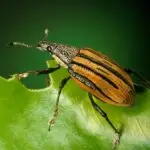
- Insect Pests: These are small invertebrates with six legs, such as grasshoppers, aphids, weevils, and caterpillars. They damage crops by eating leaves, sucking sap, or boring into stems and fruits.
- Vertebrate Pests: These are animals with backbones, including birds (e.g., weaver birds), rodents (e.g., rats, mice), and other mammals (e.g., monkeys). They eat crops, seeds, or stored produce.
- Weeds: These are unwanted plants that grow among cultivated crops and compete with them for sunlight, water, and nutrients.
Definition and Effects of Agricultural Pests
An agricultural pest is an organism that damages crops, livestock, stored produce or farm structures enough to cause unacceptable loss. Insects, rodents, birds, mites, nematodes and disease vectors can be pests in particular situations.
Correct identification comes before control because not every insect is harmful. Integrated pest management combines monitoring, prevention, cultural, mechanical and biological methods, with pesticides used carefully when justified.
Teaching Methods/Instructional Techniques
Discussion, Lecture, Demonstration, Question and Answer, Visual Aids
Instructional Procedures
Step 1: Introduction
Time: 5 minutes
Teaching Skill: Set Induction
Teacher’s Activity: The teacher greets the pupils and briefly reviews the previous lesson on types of crops. The teacher then asks pupils to mention anything they know that destroys crops on the farm.
Pupils’ Activity: Pupils respond to the greetings and share their ideas on things that destroy crops.
Learning Point: Pupils connect the new lesson to their prior knowledge about farming and crop protection.
Step 2: Explanation of Agricultural Pests
Time: 8 minutes
Teaching Skill: Explanation/Definition
Teacher’s Activity: The teacher defines agricultural pests as organisms that cause harm to crops, livestock, or stored farm produce. The teacher explains that pests lead to reduced yield and economic losses.
Pupils’ Activity: Pupils listen attentively, ask questions for clarification, and copy the definition into their notes.
Learning Point: Pupils understand the basic definition of agricultural pests.
Step 3: Discussion on Types of Agricultural Pests
Time: 8 minutes
Teaching Skill: Discussion/Classification
Teacher’s Activity: The teacher leads a discussion on different categories of agricultural pests, such as insect pests, vertebrate pests, and weeds. The teacher explains the general characteristics of each type.
Pupils’ Activity: Pupils participate in the discussion, contributing their knowledge and asking questions about the different types of pests.
Learning Point: Pupils identify and understand the broad categories of agricultural pests.
Step 4: Examples of Insect Pests
Time: 7 minutes
Teaching Skill: Illustration/Demonstration
Teacher’s Activity: The teacher shows pictures of common insect pests like grasshoppers, weevils, and aphids. The teacher explains how each of these insects damages crops.
Pupils’ Activity: Pupils observe the pictures, identify the pests, and note down the examples and their modes of damage.
Learning Point: Pupils learn specific examples of insect pests and their impact on crops.
Step 5: Examples of Vertebrate Pests
Time: 7 minutes
Teaching Skill: Illustration/Demonstration
Teacher’s Activity: The teacher shows pictures of common vertebrate pests such as birds (e.g., weaver birds) and rodents (e.g., rats, mice). The teacher explains how these animals damage crops and stored produce.
Pupils’ Activity: Pupils observe the pictures, identify the pests, and note down the examples and their impact.
Learning Point: Pupils learn specific examples of vertebrate pests and their impact on agriculture.
Step 6: Importance of Identifying Pests
Time: 5 minutes
Teaching Skill: Explanation
Teacher’s Activity: The teacher explains the importance of early identification of pests for effective control and prevention of significant crop loss. The teacher emphasizes that knowing the pest helps in choosing the right control method.
Pupils’ Activity: Pupils listen and discuss why identifying pests is important, relating it to protecting farm produce.
Learning Point: Pupils understand the significance of accurately identifying agricultural pests.
Step 7: Evaluation/Review
Time: 5 minutes
Teaching Skill: Questioning/Assessment
Teacher’s Activity: The teacher evaluates the learning by asking the following questions:
- What are agricultural pests?
- Mention two types of agricultural pests.
- Give two examples of insect pests.
- State one importance of identifying pests.
Pupils’ Activity: Pupils answer orally and in writing.
Learning Point: Pupils demonstrate understanding of the lesson.
Step 8: Conclusion
Time: 5 minutes
Teaching Skill: Summarization
Teacher’s Activity: The teacher summarizes the key points of the lesson, reiterating the definition of pests, their types, and examples. The teacher then gives homework, asking pupils to research two more examples of agricultural pests common in their locality.
Pupils’ Activity: Pupils listen to the summary and copy down the homework.
Learning Point: Key concepts are reinforced, and pupils are encouraged to conduct further research.
Home Task: List four lesson examples connected with AGRICULTURAL PESTS and add one correct use, step or safety rule.
Lesson Keywords
- Pests – Organisms that harm crops or livestock.
- Agricultural – Relating to farming or agriculture.
- Crops – Plants grown by farmers for food or other uses.
- Insects – Small animals with six legs, often pests.
- Rodents – Mammals like rats and mice that can be pests.
- Vertebrate – Animals with a backbone.
Differentiation
For struggling learners, the teacher will provide simpler definitions and focus on identifying pests from clear visual aids. Advanced learners will be encouraged to research specific control methods for different types of pests and present their findings to the class.
Note for teachers using this lesson plan
Encourage pupils to share their observations of pests from their homes or local farms. Use local examples of pests where possible to make the lesson more relatable. Emphasize the economic impact of pests on farmers and the importance of pest management.

Community Join the conversation Open discussion +