

Class: Primary 4
Term: 3rd Term
Week: 11
Age: 9 years
Duration: 45 minutes
Subject: Yoruba
Curriculum Theme: Nigerian Languages
Previous Lesson: Isori Oro, Oro Ise, Itumo and Ipa Rẹ in Gbolohun.
Topic: OǸKÀ YORÙBÁ (Yoruba Numerals)
Subject Matter: Ka àádójọ dé igba (Counting from 150 to 200), Kíka oǹkà láti àádójọ dé igba (Reading numerals from 150 to 200), Àlàyé kíkún nípa oǹkà (Detailed explanation of numerals), Àròpò àti àyọkúrò oǹkà (Addition and subtraction of numerals), Fojú sí bí a ti ń ṣe àròpò àti àyọkúrò (Focus on how to do addition and subtraction).
Specific Objectives
By the end of the lesson, pupils should be able to:
Cognitive Domain:
- Recite Yoruba numerals from 150 (àádójọ) to 200 (igba).
- Identify Yoruba numerals from 150 to 200 when seen.
- Explain the formation of some Yoruba numerals in the given range.
- Solve simple addition problems using Yoruba numerals.
- Solve simple subtraction problems using Yoruba numerals.
Affective Domain:
- Appreciate the importance of Yoruba numerals in daily life.
- Show interest in learning and using the Yoruba language for calculations.
Psychomotor Domain:
- Write Yoruba numerals from 150 to 200 correctly.
- Perform addition and subtraction operations using Yoruba numerals.
Social Domain:
- Participate actively in group counting and calculation activities.
Reference Materials
The following resources were used in planning this lesson:
- 9 Years Basic Education Curriculum for Yoruba Language.
- State Unified Scheme of Work for Primary 4 Yoruba Language.
- Iwe Ede Yoruba fun Ile-eko Alakobere 4.
Instructional Materials
The teacher will teach this lesson with the aid of:
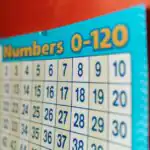
- Chart showing Yoruba numerals from 150 to 200.
- Yoruba number cards (kaadi onka).
- Exercise books (ìwé ìṣe).
- Writing board and chalk (pátákó ìkòwé).
Rationale for the Lesson
This lesson helps pupils to understand and use Yoruba numerals beyond 100, which is important for daily communication and transactions in Yoruba communities. It also enables them to perform basic arithmetic operations in their native language, strengthening their mathematical and linguistic skills.
Prerequisite/Previous Knowledge
Pupils can count and identify Yoruba numerals from 1 to 100 and have a basic understanding of addition and subtraction in English.
Lesson Content/Board Summary
OǸKÀ YORÙBÁ (Yoruba Numerals)
Kíka Oǹkà Láti Àádójọ (150) Dé Igba (200)
Yoruba numerals are counted in multiples of twenty (ogun) and sometimes tens (ẹwàà) or fives (àádó). Understanding the patterns helps in counting larger numbers.
The following are Yoruba numerals from 150 to 200:
- 150 – Àádójọ (àádó-méjèejèe + ogun = 7 x 20 + 10 = 150)
- 151 – Àádójọ òkan
- …
- 155 – Àádójọ àárùn
- …
- 160 – Ééjìdínlógùn (ééjì-dín-ní-ògún = 200 – 40 = 160) or Ògún-méjọ (8 x 20 = 160, but this is less common for 160)
- 161 – Ééjìdínlógùn òkan
- …
- 170 – Ééjìdínlógùn mẹ́wàà (160 + 10) or Àádójóójì (àádó-méjò + ogun = 8 x 20 + 10 = 170)
- …
- 180 – Ògún-mésàn-án (9 x 20 = 180)
- …
- 190 – Ògún-mésàn-án mẹ́wàà (180 + 10) or Àádójóósàn-án (àádó-mésàn-án + ogun = 9 x 20 + 10 = 190)
- …
- 200 – Igba (10 x 20)
Àlàyé Nípa Ìdàgbásókè Oǹkà (Explanation of Number Formation)
Yoruba numerals are formed using a vigesimal (base-20) system. This means numbers are often expressed in relation to multiples of twenty. For example, ‘àádójọ’ (150) is often understood as ‘àádó-méjèejèe’ (seven twenties) minus ten, or more accurately as ‘àádó-méjèejèe’ (meaning “half to 150” or “ten short of 160” but typically used as 150) or ‘àádó-méjèejèe + ogun’ (7 x 20 + 10). ‘Igba’ is simply ten twenties (10 x 20 = 200).
Àròpò Oǹkà (Addition of Numerals)
Àròpò means to add or combine numbers. It is performed by joining two or more numbers together to get a total. The symbol for addition is ‘+’.
The following are examples of addition:
- Àádójọ (150) + Méwàà (10) = Àádójọ mẹ́wàà (160)
- Ééjìdínlógùn (160) + Mẹ́ẹ́dógún (15) = Ògún-méjọ àádó (175)
- Ògún-mésàn-án (180) + Ogbè (20) = Igba (200)
Àyọkúrò Oǹkà (Subtraction of Numerals)
Àyọkúrò means to subtract or take away a number from another. It is performed by finding the difference between two numbers. The symbol for subtraction is ‘-‘.
The following are examples of subtraction:
- Igba (200) – Ogbè (20) = Ògún-mésàn-án (180)
- Àádójọ (150) – Méẹ́dógún (15) = Àádójọ àárùn (135)
- Ééjìdínlógùn (160) – Àádó (10) = Àádójọ (150)
Teaching Methods/Instructional Techniques
Discussion, Lecture, Demonstration, Question and Answer, Visual Aids
Instructional Procedures
Step 1: Introduction
Time: 5 minutes
Teaching Skill: Set Induction
Teacher’s Activity: The teacher greets the pupils, checks their previous knowledge by asking them to count Yoruba numerals from 1 to 100, and introduces the topic for the day: OǸKÀ YORÙBÁ (Yoruba Numerals) from 150 to 200, including addition and subtraction.
Pupils’ Activity: Pupils respond to greetings, count numbers as requested, and listen attentively to the introduction.
Learning Point: Pupils recall previous knowledge and are prepared for the new lesson.
Step 2: Presentation of Numerals 150-200
Time: 10 minutes
Teaching Skill: Explanation/Demonstration
Teacher’s Activity: The teacher displays the Yoruba numeral chart (kaadi onka) and reads out the numerals from 150 (àádójọ) to 200 (igba) clearly, pronouncing each number correctly. The teacher then guides the pupils to repeat after him/her several times.
Pupils’ Activity: Pupils observe the chart, listen to the teacher, and repeat the Yoruba numerals after the teacher in unison and individually.
Learning Point: Pupils learn to recite and pronounce Yoruba numerals from 150 to 200.
Step 3: Explanation of Number Formation
Time: 8 minutes
Teaching Skill: Explanation/Analysis
Teacher’s Activity: The teacher explains the formation patterns of some key Yoruba numerals within the range, such as 150 (àádójọ), 160 (ééjìdínlógùn), 180 (ògún-mésàn-án), and 200 (igba), relating them to the base-20 system. The teacher encourages pupils to ask questions.
Pupils’ Activity: Pupils listen to the explanation, try to understand the number formation, and ask questions for clarification.
Learning Point: Pupils understand how some Yoruba numerals are formed.
Step 4: Practice Reading and Writing Numerals
Time: 7 minutes
Teaching Skill: Guided Practice
Teacher’s Activity: The teacher writes various Yoruba numerals from 150 to 200 on the board and asks pupils to read them. The teacher also dictates some numerals for pupils to write in their exercise books.
Pupils’ Activity: Pupils read the numbers written on the board and write the dictated numbers in their exercise books.
Learning Point: Pupils practice reading and writing Yoruba numerals correctly.
Step 5: Introduction to Addition of Numerals (Àròpò Oǹkà)
Time: 5 minutes
Teaching Skill: Demonstration/Explanation
Teacher’s Activity: The teacher explains the concept of ‘àròpò oǹkà’ (addition of numerals) and demonstrates simple addition problems using Yoruba numerals on the board, showing both the Yoruba words and their English equivalents. For example, “Àádójọ + Méwàà = Àádójọ mẹ́wàà (150 + 10 = 160)”.
Pupils’ Activity: Pupils listen to the explanation and observe the examples of addition problems.
Learning Point: Pupils understand the concept and process of addition using Yoruba numerals.
Step 6: Introduction to Subtraction of Numerals (Àyọkúrò Oǹkà)
Time: 5 minutes
Teaching Skill: Demonstration/Explanation
Teacher’s Activity: The teacher explains the concept of ‘àyọkúrò oǹkà’ (subtraction of numerals) and demonstrates simple subtraction problems using Yoruba numerals on the board, similar to addition. For example, “Igba – Ogbè = Ògún-mésàn-án (200 – 20 = 180)”.
Pupils’ Activity: Pupils listen to the explanation and observe the examples of subtraction problems.
Learning Point: Pupils understand the concept and process of subtraction using Yoruba numerals.
Step 7: Evaluation/Review
Time: 5 minutes
Teaching Skill: Questioning/Assessment
Teacher’s Activity: The teacher evaluates the learning by asking the following questions:
- Define ‘àròpò oǹkà’ and ‘àyọkúrò oǹkà’.
- State the Yoruba numeral for 150 and 200.
- Write the Yoruba numerals for 175 and 190.
- Solve: Àádójọ (150) + Méédógún (15) = ?
- Solve: Igba (200) – Ogbè (20) = ?
Pupils’ Activity: Pupils answer orally and in writing.
Learning Point: Pupils demonstrate understanding of the lesson.
Step 8: Conclusion
Time: 5 minutes
Teaching Skill: Summarization
Teacher’s Activity: The teacher summarizes the lesson by reiterating the importance of knowing Yoruba numerals and basic arithmetic. The teacher then assigns homework: “Write Yoruba numerals from 150 to 200 and solve two addition and two subtraction problems using Yoruba numerals.”
Pupils’ Activity: Pupils listen to the summary and copy the homework assignment.
Learning Point: Pupils consolidate their learning and apply it in practice.
Lesson Keywords
- Oǹkà – Numerals/Numbers
- Àádójọ – One hundred and fifty (150)
- Igba – Two hundred (200)
- Àròpò – Addition
- Àyọkúrò – Subtraction
- Ogun – Twenty (20)
Differentiation
For struggling learners, the teacher will provide extra one-on-one guidance, use more visual aids, and give simpler counting and calculation exercises. Advanced learners will be challenged with more complex calculations involving three or more numbers and asked to explain the number formation patterns in detail.
Note for teachers using this lesson plan
Ensure clear pronunciation of Yoruba numerals. Encourage active participation from all pupils. Use real-life examples to make the lesson relatable, such as counting money or items in Yoruba. Emphasize the patterns in Yoruba number formation to aid understanding.
Community Join the conversation Open discussion +