

Class: Senior Secondary School 2 (SS2 / SSS2)
Term: Second Term
Week: 10
Age: 16 years
Duration: 45 minutes
Subject: Agricultural Science
Curriculum Theme: Soil Science
Previous Lesson: Nutrient Availability: Meaning and Factors Influencing Availability.
Topic: Methods of replenishing plant nutrients in the soil
Subject Matter: Meaning of replenishing nutrients (restoring soil fertility), methods of replenishing plant nutrients (rotational cropping, organic manuring, inorganic manuring, fallowing, liming, cover cropping)
Specific Objectives
By the end of the lesson, pupils should be able to:
Cognitive Domain:
- Define soil fertility replenishment.
- List at least five methods of replenishing plant nutrients in the soil.
- Explain each method of replenishing plant nutrients.
Affective Domain:
- Appreciate the importance of maintaining soil fertility for good crop yield.
- Develop interest in sustainable agricultural practices.
Psychomotor Domain:
- Demonstrate the correct application of inorganic fertilizers to field crops.
- Properly handle and store organic and inorganic fertilizers.
Social Domain:
- Collaborate effectively with peers during practical activities.
Reference Materials
The following resources were used in planning this lesson:
- Senior Secondary Schools Education Curriculum
- State Unified Scheme of Work
- Agricultural Science for Senior Secondary Schools by P.N. Okafor et al.
- https://www.waeconline.org.ng/e-learning/Agricultural/agric.html
- https://www.youtube.com/watch?v=example_soil_fertility
Instructional Materials
The teacher will teach this lesson with the aid of:
- Organic manure samples
- Fertilizer bags (e.g., NPK, Urea)
- Measuring tools (e.g., measuring cup, scale)
- Small field plot with crops (if available)
Rationale for the Lesson
This lesson helps pupils understand how to maintain and improve soil fertility, which is important for healthy crop growth and food production. Knowing these methods enables pupils to contribute to sustainable agriculture and better manage farmlands.
Prerequisite/Previous Knowledge
Pupils should have prior knowledge of soil components, types of plant nutrients, and the importance of soil for plant growth.
Lesson Content/Board Summary
Methods of Replenishing Plant Nutrients in the Soil
Meaning of Replenishing Plant Nutrients
Replenishing plant nutrients in the soil refers to the process of restoring or adding back essential mineral elements that plants extract from the soil. This is done to maintain or improve soil fertility for continuous and healthy crop production.
Methods of Replenishing Plant Nutrients
The following are common methods used to replenish plant nutrients in the soil:
- Rotational Cropping: This involves growing different types of crops in the same field in a planned sequence. For example, planting legumes (like groundnut or beans) after cereal crops (like maize) helps to fix nitrogen in the soil, thereby enriching its nutrient content.
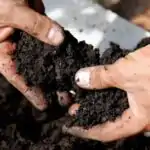
- Organic Manuring: This is the addition of organic matter to the soil, such as farmyard manure, compost, green manure, and crop residues. Organic manure improves soil structure, water retention, and slowly releases nutrients as it decomposes.
- Inorganic Manuring (Fertilizers): This involves applying commercially produced chemical compounds (fertilizers) that contain specific plant nutrients like Nitrogen (N), Phosphorus (P), and Potassium (K). Fertilizers provide nutrients in readily available forms, boosting crop growth quickly. Examples include Urea (rich in N), Superphosphate (rich in P), and NPK compounds.
- Fallowing: This is the practice of leaving agricultural land uncultivated for a period (e.g., one or more growing seasons). During this period, the soil naturally regains its fertility as organic matter accumulates and nutrients are released from weathering rocks, without being depleted by crops.
- Liming: This is the application of calcium-containing materials (like agricultural lime, CaCO₃) to acidic soils. Liming raises the soil pH, making essential nutrients more available to plants, improving soil structure, and promoting beneficial microbial activity.
- Cover Cropping: This involves planting crops specifically to cover the soil rather than for harvest. Cover crops protect the soil from erosion, suppress weeds, add organic matter, and some (like legumes) fix nitrogen, enriching the soil with nutrients.
Teaching Methods/Instructional Techniques
Discussion, Lecture, Demonstration, Question and Answer, Visual Aids
Instructional Procedures
Step 1: Introduction
Time: 5 minutes
Teaching Skill: Set Induction
Teacher’s Activity: The teacher greets the pupils and asks them to recall what they learned about soil nutrients and their importance for plants. The teacher then introduces the topic: “Methods of replenishing plant nutrients in the soil.”
Pupils’ Activity: Pupils respond to the questions and listen attentively to the introduction.
Learning Point: Pupils recall previous knowledge and are introduced to the new topic.
Step 2: Meaning of Replenishing Nutrients
Time: 7 minutes
Teaching Skill: Explanation/Definition
Teacher’s Activity: The teacher explains the meaning of “replenishing plant nutrients” as restoring soil fertility and asks pupils to define it in their own words.
Pupils’ Activity: Pupils listen, ask questions for clarity, and attempt to define the term.
Learning Point: Pupils understand the concept of replenishing soil nutrients.
Step 3: Rotational Cropping and Fallowing
Time: 7 minutes
Teaching Skill: Explanation/Discussion
Teacher’s Activity: The teacher explains rotational cropping and fallowing as methods of replenishing nutrients, providing examples for each.
Pupils’ Activity: Pupils listen, take notes, and contribute to the discussion by sharing simple examples from their local environment.
Learning Point: Pupils learn about crop rotation and fallowing as methods for soil nutrient replenishment.
Step 4: Organic and Inorganic Manuring
Time: 7 minutes
Teaching Skill: Demonstration/Explanation
Teacher’s Activity: The teacher explains organic and inorganic manuring, showing samples of organic manure (e.g., compost) and fertilizer bags (e.g., NPK, Urea). The teacher discusses their benefits and application.
Pupils’ Activity: Pupils observe the samples, ask questions about their uses, and identify the types of manure.
Learning Point: Pupils understand the role and difference between organic and inorganic manuring.
Step 5: Liming and Cover Cropping
Time: 7 minutes
Teaching Skill: Explanation
Teacher’s Activity: The teacher explains liming as a method to correct soil acidity and improve nutrient availability, and also explains cover cropping as a way to protect and enrich the soil.
Pupils’ Activity: Pupils listen, take notes, and state the importance of these methods.
Learning Point: Pupils learn about liming and cover cropping for soil fertility management.
Step 6: Practical Demonstration/Application
Time: 7 minutes
Teaching Skill: Demonstration/Practical Application
Teacher’s Activity: The teacher demonstrates how to correctly apply inorganic fertilizers to field crops (if a field plot is available) or describes the process, emphasizing correct dosage, timing, and safety.
Pupils’ Activity: Pupils observe the demonstration carefully and ask questions about the application techniques and safety measures.
Learning Point: Pupils gain practical insight into fertilizer application.
Step 7: Evaluation/Review
Time: 5 minutes
Teaching Skill: Questioning/Assessment
Teacher’s Activity: The teacher evaluates the learning by asking the following questions:
- What does it mean to replenish plant nutrients in the soil?
- List three methods of replenishing plant nutrients.
- Explain how rotational cropping helps in restoring soil fertility.
- Mention two benefits of using organic manure.
Pupils’ Activity: Pupils answer orally and in writing.
Learning Point: Pupils demonstrate understanding of the lesson.
Step 8: Conclusion
Time: 2 minutes
Teaching Skill: Summarization
Teacher’s Activity: The teacher summarizes the key methods of replenishing plant nutrients and emphasizes the importance of these practices for sustainable agriculture. The teacher then gives homework.
Pupils’ Activity: Pupils listen to the summary and copy the homework.
Learning Point: Pupils consolidate their understanding of the lesson.
Lesson Keywords
- Soil fertility – The ability of soil to support plant growth by providing essential nutrients.
- Replenishment – The process of restoring or adding back something that has been used up.
- Rotational cropping – Growing different crops in sequence on the same land.
- Organic manure – Decomposed plant and animal materials used to enrich soil.
- Inorganic manure – Manufactured chemical substances that provide plant nutrients.
- Fallowing – Leaving agricultural land uncultivated for a period to restore fertility.
- Liming – Applying calcium compounds to raise soil pH and improve nutrient availability.
- Cover cropping – Planting crops to cover the soil, protecting it and adding nutrients.
Differentiation
For pupils who grasp concepts quickly, the teacher can ask them to research local examples of these methods. For those needing more support, the teacher will provide simplified explanations and visual aids, allowing them to focus on identifying and defining key terms.
Note for teachers using this lesson plan
Teachers should ensure they have actual samples of organic manure and fertilizer bags for demonstration. If a field plot is unavailable, a detailed description or video demonstration of fertilizer application should be used. Emphasize safety precautions when handling chemicals. Encourage pupils to relate the methods to agricultural practices in their communities.


Community Join the conversation Open discussion +