

Class: Primary 6
Term: 2nd Term
Subject: Basic Science And Technology
Curriculum Theme: Physical And Health Education
Previous Lesson: Meaning And Types Of Ball Games
Topic: Rules And Regulations Of Football And Table Tennis
Content/Learning Area: Rules and regulations of football and table tennis.
Time Allocation: 40 minutes
performance Objectives
By the end of the lesson, pupils should be able to:
- Cognitive Domain: Explain five rules and regulations of football and table tennis.
- Affective Domain: Appreciate the importance of rules in promoting fairness in sports.
- Psychomotor Domain: Demonstrate correct movements or techniques following specific rules in football and table tennis.
- Social Domain: Cooperate with peers during discussions on sports rules and regulations.
Reference Materials
The following resources were used in planning this lesson:
- 9–Years Basic Education Curriculum Abuja
- Educational Resource Center Scheme of Work
- NAPPS National Unified Scheme of Work
- Online details from: Wikipedia – Laws of the Game (association football)
- relevant Textbooks
Instructional Materials
To deliver this lesson, the teacher will use the following materials:
- A football and table tennis racket
- Chart showing the rules of football and table tennis
- Whistle
- Video clips or diagrams of football and table tennis gameplay
Rationale for the Lesson
Understanding the rules and regulations of sports like football and table tennis helps pupils develop discipline, teamwork, and respect for others, which are valuable in everyday life.
Prerequisite/Previous Knowledge
Pupils have played football and table tennis and are familiar with basic gameplay but may not fully understand the rules and regulations guiding these sports.
Lesson content
Rules And Regulations Of Football And Table Tennis
Rules and Regulations are guidelines that ensure fairness and safety in sports. Without rules,games would be chaotic and unfair.
rules and Regulations of Football:
Football rules ensure fair play, safety, and enjoyment of the game.
The following are some rules and regulations of football:
- A match consists of two halves of 45 minutes each.
- The ball must stay within the boundaries of the field.
- A goal is scored when the entire ball crosses the goal line.
- Players are not allowed to use their hands (except the goalkeeper within the penalty area).
- Fouls, such as tripping or pushing, result in free kicks or penalties.
- Offside rule: A player must not be in an offside position when the ball is played to them.
- Corner kicks are awarded to the attacking team when the defending team plays the ball out of bounds over their own goal line.
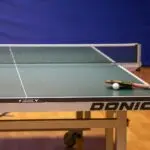
Rules and Regulations of Table Tennis:
Table tennis rules ensure fair play, proper serving, and scoring.
The following are some rules and regulations of table tennis:
- matches are played to 11 points (with a two-point lead required to win).
- Players serve two consecutive serves before switching.
- The ball must bounce on both sides of the table during a serve.
- Players lose a point if they fail to return the ball properly.
- Touching the table during play is not allowed.
- The serve must be tossed at least 6 inches into the air.
- The ball must be struck behind the end line during a serve.
Teaching Methods
To deliver this lesson, the teacher will adopt the following methods: Discussion, Demonstration, Guided Practice, Interactive Lecture, Questioning.
Instructional Procedures
To deliver this lesson, the teacher will adopt the following steps:
Step 1: Introduction (Set Induction)
Time: 5 mins
Teaching Skill: Set induction
Teacher’s Activity: Asks pupils about their favorite sports and why rules are crucial.
Pupils’ Activity: Respond with examples of sports they know.
Step 2: Description of Football and Table Tennis rules
Time: 10 mins
Teaching Skill: Explanation
Teacher’s Activity: Explains five rules each for football and table tennis.
Pupils’ Activity: Listen attentively and ask questions.
Step 3: Demonstration of Techniques
Time: 8 mins
Teaching Skill: Guided Practice
Teacher’s Activity: Demonstrates the correct techniques,e.g., serving in table tennis.
Pupils’ Activity: Practice techniques and observe.
Step 4: Note-Taking
Time: 5 mins
Teaching skill: Interactive Lecture
Teacher’s Activity: Guides pupils to copy short notes on rules and regulations.
Pupils’ Activity: Copy notes into their books.
Step 5: evaluation/Review
Time: 5 mins
Teaching Skill: Questioning
Teacher’s Activity: Asks pupils questions to assess understanding of rules.
pupils’ Activity: Answer questions on the rules of the games.
Objective-aligned checks:
- Explain five rules and regulations of football and table tennis.
- Demonstrate correct movements or techniques following specific rules in football and table tennis.
Step 6: Conclusion
Time: 5 mins
Teaching Skill: Summary
Teacher’s Activity: Summarizes the rules and their purpose in games.
Pupils’ Activity: Share what they learned in the lesson.
Lesson Keywords
- Football – A team sport played with a ball, involving two teams of 11 players each.
- Table tennis – A sport played with rackets and a ball on a table divided by a net.
- Rules – Guidelines that govern how a game is played.
- Regulations – Official rules that ensure fairness and safety in sports.
- Fouls – Actions that violate the rules of a sport.
Lesson Evaluation
To evaluate the learning, the teacher asks pupils to:
- List two rules and regulations of football.
- Mention three rules of table tennis.
- Why are rules important in sports?
- Demonstrate a proper serve in table tennis.
- Explain what happens if a player trips another in football.
Assignment/homework
- Research and write down three additional rules for either football or table tennis.
- Explain in your own words why following rules is important in sports and in life.
Differentiation
- For slower learners: Provide one-on-one guidance for pupils who struggle with physical demonstrations.
- For advanced learners: Allow advanced pupils to assist peers in practical activities.
- For visual/auditory/kinesthetic learners: use video clips and diagrams to cater to visual learners, verbal explanations for auditory learners, and practical demonstrations for kinesthetic learners.
Note for Teachers
Ensure pupils understand the importance of rules by emphasizing their role in promoting fairness and fun. Use engaging demonstrations to keep the class active. Happy teaching!



Community Join the conversation Open discussion +