

Class: Primary 6
Term: 2nd Term
Subject: Basic Science and Technology
Curriculum Theme: Physical And Health Education
Previous Lesson:
Topic: Meaning And Types of Ball Games
Content/Learning Area: Meaning and types of Ball Games: Football, Tennis, Volleyball, Basketball, hockey, Handball, and Basketball.
Time Allocation: 40 minutes
performance Objectives
By the end of the lesson, pupils should be able to:
- Cognitive Domain: Define ball games and identify at least five types of ball games.
- Affective Domain: Express interest and excitement in playing ball games.
- Psychomotor Domain: Demonstrate the physical movements involved in a simple ball game like passing.
- Social Domain: work collaboratively with peers to identify and discuss the benefits of ball games.
Reference Materials
The following resources were used in planning this lesson:
- 9 – Years Basic Education Curriculum
- Abuja Educational resource Centre Scheme of Work
- NAPPS National Unified Scheme of Work
- Online data from Wikipedia – List of ball games
- Relevant textbooks.
Instructional Materials
To deliver this lesson, the teacher will use the following materials:
- A variety of balls (football, basketball, volleyball, tennis ball, hockey ball).
- Charts showing different ball games.
- A whistle.
- A marker and whiteboard.
Rationale for the Lesson
Understanding ball games enhances pupils’ physical fitness, teamwork, and coordination skills, which are essential for their holistic growth.
prerequisite/Previous Knowledge
Pupils have participated in simple physical activities and are familiar with some ball games like football and basketball.
Lesson Content
Meaning And Types Of Ball Games
Ball games are sports or recreational activities that involve the use of a ball as the primary equipment. These games are played either individually or in teams.
Ball games often include running, throwing, catching, or kicking the ball, and thay help improve physical fitness, coordination, and teamwork.
Examples of Ball Games
Ball games are sports or recreational activities that involve the use of a ball. Examples are:
- Football: A game played between two teams using a spherical ball.
- Basketball: Involves shooting a ball through a hoop.
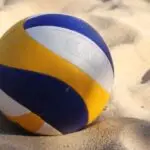
- Volleyball: Players hit a ball over a net to score points.
- Tennis: played with a racket to hit a ball over a net.
- Hockey: A game played by striking a ball into the opponent’s goal using a hockey stick.
- Handball: Players pass and throw the ball to score goals.
- Cricket: Involves hitting the ball with a bat.
- Baseball: Players hit the ball and run to bases.
- Rugby: Played by carrying,passing,or kicking the ball to score points.
- golf: Involves hitting a ball into a series of holes on a course.
Teaching Methods
To deliver this lesson, the teacher will adopt the following methods: Question and answer, Lecture, Guided discussion, demonstration, group activity, Pair work, Individual task, Oral questioning, Recap.
Instructional Procedures
to deliver this lesson, the teacher will adopt the following steps:
Step 1: Introduction
Time: 5 mins
Teaching Skill: Set Induction
Teacher’s Activity: Asks pupils to mention ball games they know.
Pupils’ Activity: Respond with examples of ball games.
Step 2: Description of Ball Games
Time: 10 mins
Teaching Skill: Explanation
Teacher’s Activity: Explains the meaning and types of ball games.
Pupils’ Activity: listen and ask questions.
Step 3: demonstration of balls
Time: 8 mins
Teaching Skill: Demonstration
Teacher’s Activity: Shows pupils the various balls and their uses.
Pupils’ Activity: observe and participate.
Step 4: practice Passing
Time: 8 mins
Teaching Skill: Guided Practice
Teacher’s Activity: Guides pupils to pass a ball among themselves.Pupils’ Activity: Practice passing the ball.
Step 5: Note-Taking
Time: 5 mins
Teaching skill: Discussion
Teacher’s Activity: Guides pupils to write the key points in their notebooks.
Pupils’ Activity: Copy notes into their books.
Step 6: Evaluation/Review
Time: 3 mins
Teaching Skill: assessment
Teacher’s Activity: Asks pupils to list five ball games.
Pupils’ Activity: Answer the teacher’s questions.
Objective-aligned checks:
- Define ball games and identify at least five types of ball games.
- Demonstrate the physical movements involved in a simple ball game like passing.
- work collaboratively with peers to identify and discuss the benefits of ball games.
Step 7: conclusion
Time: 1 min
Teaching skill: Summary
Teacher’s Activity: Recaps the lesson and emphasizes teamwork in ball games.
Pupils’ Activity: Listen attentively.
Lesson Keywords
- Ball Game – A sport or recreational activity involving a ball.
- Football – A team sport played with a spherical ball.
- Basketball – A game where players shoot a ball through a hoop.
- Volleyball – A sport where players hit a ball over a net.
- Tennis – A game played with a racket and a ball over a net.
- Hockey – A sport played with sticks to hit a ball into a goal.
- Handball – A team sport where players pass and throw a ball to score.
Lesson Evaluation
To evaluate the learning, the teacher asks pupils to:
- Define ball games.
- List two examples of ball games.
- Mention three benefits of playing ball games.
- Identify the ball used in basketball.
Assignment/Homework
- List five different types of ball games not mentioned in class.
- Write a short paragraph on the importance of teamwork in ball games.
- Draw and label the equipment used in one ball game of your choice.
Differentiation
- For slower learners: Provide simplified definitions and focus on fewer examples.
- For advanced learners: Encourage research on the history and rules of different ball games.
- For visual/auditory/kinesthetic learners: Use visual aids, verbal explanations, and hands-on activities to cater to different learning styles.
Note for teachers
Encourage active participation during demonstrations and ensure pupils understand the relevance of ball games. Promote teamwork during group activities. Happy teaching!

Community Join the conversation Open discussion +