

Class: Primary 6
Term: Third Term
Subject: Physical & Health Education
curriculum Theme: Physical & Health Education
Previous Lesson: Meaning and Importance of Vision
Topic: Personal and Environmental Health
Content/Learning Area: Structure of the tooth; Dental problems; Prevention
Time Allocation: 40 Minutes
Performance Objectives
By the end of the lesson, pupils should be able to:
- Cognitive Domain: describe the structure of a tooth.
- Affective domain: Appreciate the importance of maintaining good dental hygiene.
- Psychomotor Domain: Demonstrate proper tooth brushing techniques.
- Social Domain: Collaborate with peers to identify dental problems and their prevention.
Reference Materials
- 9 Years Basic Education Curriculum
- Abuja Educational Resource Center Scheme of work
- NAPPS National Unified Scheme of Work
- Macmillan Champion physical and Health Education book 6
- Evans Physical and Health Education Book 6
Instructional Materials
To deliver this lesson, the teacher will use the following materials: a chart showing the structure of a tooth, a toothbrush, toothpaste, and a model of teeth.
Rationale for the Lesson
Understanding tooth structure, dental problems, and prevention is crucial for maintaining good oral hygiene and overall health.
Prerequisite/Previous Knowledge
Pupils have prior knowledge of personal hygiene practices.
Lesson Content
Personal and Environmental Health
Structure of the Tooth
The tooth is made up of the following parts:
- Enamel – The hard, outer covering of the tooth.
- Dentin – The layer beneath the enamel, which is softer.
- Pulp – The inner part of the tooth containing nerves and blood vessels.
- Cementum – A layer that covers the root of the tooth.
- Root – The part of the tooth that anchors it to the jawbone.
- Crown – The visible part of the tooth above the gum line.
- Neck – The part of the tooth between the crown and the root.
- Periodontal Ligament – Tissue that helps hold the tooth in place.
Dental Problems
Common dental problems include:
- Tooth Decay (Cavities) – Damage to the tooth enamel caused by bacteria.
- Gum Disease (Gingivitis) – Inflammation of the gums.
- Bad Breath (Halitosis) – Unpleasant odor from the mouth.
- Tooth Sensitivity – Pain or discomfort when teeth are exposed to hot, cold, or sweet substances.
- Toothache – Pain in or around a tooth.
- Impacted Tooth – A tooth that is blocked from erupting fully.
- Tooth Abscess – A pocket of pus caused by a bacterial infection.
- Teeth Grinding (Bruxism) – Clenching or grinding teeth, often during sleep.
Prevention
Preventive measures for dental problems include:
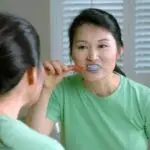
- Brushing teeth at least twice a day with fluoride toothpaste.
- Flossing daily to remove plaque and food particles.
- Regular dental check-ups and cleanings.
- Eating a balanced diet low in sugar.
- Avoiding tobacco products.
- Using mouthwash to kill bacteria.
- drinking plenty of water to keep the mouth hydrated.
- Replacing your toothbrush every three months.
Teaching Methods
To deliver this lesson, the teacher will adopt the following methods: Explanation, Exhibition, discussion, Question and Answer.
Instructional Procedures
To deliver this lesson, the teacher will adopt the following steps:
Step 1: Introduction
Time: 5 minutes
Teaching Skill: Set Induction
Teacher’s Activity: The teacher reviews the previous lesson on personal hygiene and introduces the topic of dental health by asking pupils about their tooth care routines.
Pupils’ Activity: Pupils respond to the teacher’s questions and share their experiences with tooth care.
Step 2: Tooth Structure Explanation
Time: 10 minutes
Teaching Skill: Explanation
Teacher’s Activity: The teacher explains the structure of a tooth using a chart, pointing out and describing each part.
Pupils’ Activity: Pupils observe the chart and listen attentively to the teacher’s explanation, asking clarifying questions.
step 3: Dental Problems discussion
Time: 10 minutes
Teaching Skill: Discussion
Teacher’s Activity: The teacher leads a discussion on common dental problems,their causes,and symptoms.
Pupils’ Activity: Pupils participate in the discussion by sharing their knowledge and experiences related to dental problems.
Step 4: Prevention Demonstration
Time: 10 minutes
Teaching Skill: Demonstration
Teacher’s Activity: The teacher demonstrates proper tooth brushing techniques using a toothbrush and a model of teeth.
Pupils’ Activity: pupils observe the demonstration and practice the techniques under the teacher’s guidance.
Step 5: Note-Taking
Time: 3 minutes
Teaching Skill: Summarization
Teacher’s Activity: The teacher guides pupils to summarize the key points of the lesson in their notebooks.Pupils’ Activity: Pupils write down the key points in their notebooks.
Step 6: Evaluation/Review
Time: 2 minutes
Teaching Skill: Assessment
Teacher’s Activity: The teacher asks questions to assess pupils’ understanding of the lesson.
Pupils’ Activity: Pupils answer the teacher’s questions.
Objective-aligned checks:
- describe the structure of a tooth.
- Demonstrate proper tooth brushing techniques.
- Collaborate with peers to identify dental problems and their prevention.
Step 7: Conclusion
Time: 2 minutes
Teaching Skill: Closure
Teacher’s Activity: The teacher summarizes the lesson and emphasizes the importance of maintaining good dental hygiene.Pupils’ Activity: Pupils listen to the teacher’s summary and ask any remaining questions.
Lesson Keywords
- Enamel – The hard, outer covering of the tooth.
- Dentin – The layer beneath the enamel.
- Pulp – The inner part of the tooth containing nerves and blood vessels.
- Cavities – Damage to the tooth enamel caused by bacteria.
- Gingivitis – Inflammation of the gums.
- Halitosis – Bad breath.
- Fluoride – A mineral that helps prevent tooth decay.
- Plaque – A sticky film of bacteria that forms on teeth.
Lesson Evaluation
To evaluate the learning, the teacher asks pupils to:
- Label the parts of a tooth on a diagram.
- List three common dental problems.
- Describe two ways to prevent dental problems.
Assignment/Homework
- Research and write about the importance of regular dental check-ups.
- Practice proper tooth brushing techniques at home.
- List five foods that are good for dental health and five foods that are bad for dental health.
Differentiation
- For slower learners: Provide simplified diagrams and one-on-one assistance with tooth brushing techniques.
- For advanced learners: Encourage them to research different types of toothpaste and their benefits.
- For visual/auditory/kinesthetic learners: Use visual aids, verbal explanations, and hands-on activities to cater to different learning styles.
Note for Teachers
Ensure that pupils understand the importance of regular dental check-ups and proper tooth brushing techniques. Emphasize the role of diet in maintaining good dental health.


Community Join the conversation Open discussion +