

Class: Primary 6
Term: 2nd Term
Subject: Basic Science And Technology
Curriculum Theme: Physical And Health Education
Previous Lesson: Importance And Methods Of Playing Indigenous Games
Topic: Skills And Materials In Indigenous games
Content/Learning Area: Skills of indigenous games, Materials used for the game
Time Allocation: 40 minutes
Performance Objectives
By the end of the lesson, pupils should be able to:
- cognitive Domain: Define indigenous games and mention five skills used in playing them.
- Affective Domain: Appreciate the role of indigenous games in cultural heritage.
- Psychomotor Domain: Demonstrate at least two skills used in indigenous games.
- Social Domain: Work in teams to identify and name indigenous games and their materials.
Reference Materials
the following resources where used in planning this lesson:
- 9 – Years Basic Education curriculum
- Abuja Educational Resource Center Scheme of Work
- NAPPS National Unified Scheme of Work
- Online Details from: Kakakii – Traditional games
- Relevant Textbooks
Instructional Materials
To deliver this lesson, the teacher will use the following materials:
- Pictures and videos of indigenous games
- Real-life materials used for playing indigenous games (e.g., sticks, seeds, pebbles, ropes, etc.)
- A chalkboard and chalk
Rationale for the Lesson
Indigenous games are part of our cultural heritage and help in physical and mental growth. Understanding the skills and materials used in these games will help pupils appreciate their importance and actively engage in them.
Prerequisite/Previous Knowledge
Pupils have played some indigenous games at home or in school and are familiar with basic game rules.
Lesson Content
Skills And Materials In Indigenous Games
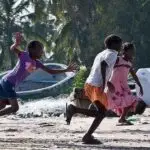
Indigenous games are traditional games played by people of a particular community.These games help develop physical strength, teamwork, and strategic thinking.
Skills in Indigenous Games
Skills are abilities or techniques needed to perform a task effectively. In indigenous games, various skills are utilized to enhance performance and enjoyment.
The following are skills used in indigenous games:
- Throwing and catching – Used in games like Ayo and stone throwing.
- Jumping and dodging – Used in games like Boju-Boju (hide and seek) and Tinko.
- Balancing – Used in Suwe (hopscotch) where players hop on one leg.
- running and chasing – Common in Catcher and Boju-Boju.
- Kicking and striking – Used in games like Kokowa (traditional wrestling).
- Aiming and accuracy – Essential in games like target practice with stones or sticks.
- Coordination – Combining different movements smoothly, as seen in skipping games.
Materials Used in Indigenous Games
Materials are the items or objects needed to play a game.Indigenous games often utilize locally available materials, making them accessible and culturally relevant.
These include:
- Pebbles or seeds – Used for ayo game.
- Ropes – Used for skipping games.
- Sticks – Used in games like Kokowa and Tinko.
- Leaves or stones – Used for marking spaces in Suwe.
- Chalk or sand – Used to draw game patterns on the ground.
- Gourds or calabashes – Sometimes used as targets or musical instruments in certain games.
- Fabric or cloth – Used to make balls or for blindfolding in games like hide-and-seek variations.
Teaching Methods
To deliver this lesson, the teacher will adopt the following methods: Discussion, presentation, Visual Aids, practical, Questioning, Explanation.
Instructional Procedures
To deliver this lesson, the teacher will adopt the following steps:
Step 1: Introduction
Time: 5 mins
Teaching Skill: Set Induction
Teacher’s Activity: Asks pupils if they have played any traditional games before and lists a few examples.
Pupils’ Activity: Pupils respond and mention games they have played.
Step 2: Explanation of Skills
Time: 10 mins
Teaching Skill: Explanation
Teacher’s Activity: Explains the different skills used in indigenous games and demonstrates some.
Pupils’ Activity: Pupils observe and identify games that require those skills.
Step 3: explanation of Materials
Time: 10 mins
Teaching Skill: Visual Learning
Teacher’s Activity: Shows real-life materials used for indigenous games and explains their uses.
Pupils’ Activity: Pupils identify and touch the materials while discussing their uses.
Step 4: Demonstration and Practice
Time: 5 mins
Teaching Skill: Practical
Teacher’s Activity: Guides pupils in practicing two skills (e.g., hopping for Suwe, throwing for Ayo).
Pupils’ Activity: Pupils take turns demonstrating the skills.
Step 5: Note-Taking
Time: 5 mins
Teaching Skill: Lecture
Teacher’s activity: Writes key points on the board for pupils to copy.
Pupils’ Activity: Pupils copy the notes into their notebooks.
Step 6: Evaluation/Review
Time: 3 mins
Teaching Skill: Questioning
Teacher’s Activity: Asks pupils questions to check their understanding of skills and materials in indigenous games.
Pupils’ Activity: Pupils answer questions and give examples.
Objective-aligned checks:
- Define indigenous games and mention five skills used in playing them.
- Demonstrate at least two skills used in indigenous games.
- Work in teams to identify and name indigenous games and their materials.
Step 7: Conclusion
Time: 2 mins
Teaching Skill: Summary
Teacher’s Activity: Summarizes the lesson and emphasizes the importance of indigenous games.
Pupils’ Activity: Pupils listen and ask final questions.
Lesson keywords
- Indigenous Games – Traditional games played by a particular community.
- Skills – Abilities used in playing games.
- Materials – Items used for playing games.
- Ayo – A popular indigenous game played with seeds or pebbles.
- Suwe – A hopscotch game played with marked spaces.
Lesson Evaluation
To evaluate the learning, the teacher asks pupils to:
- Define indigenous games.
- mention two skills used in playing indigenous games.
- List five materials used in indigenous games.
- Give one example of a game that involves throwing and catching.
- Demonstrate a skill used in playing Suwe or Ayo.
assignment/Homework
- List three indigenous games played in your community.
- Describe the materials used in each game.
- Explain the skills needed to play one of the games effectively.
Differentiation
- For slower learners: The teacher will provide step-by-step demonstrations and allow pupils to practice skills with guidance.
- For advanced learners: Pupils will be asked to demonstrate additional indigenous games and explain their rules.
- For visual/auditory/kinesthetic learners: Use visual aids like pictures and videos, verbal explanations, and hands-on activities to cater to different learning styles.
Note for Teachers
Encourage pupils to participate actively and relate the lesson to their experiences.Using real-life materials makes the lesson more engaging and practical. if possible, organize an outdoor session for pupils to play one of the indigenous games discussed. Happy teaching!
Community Join the conversation Open discussion +