

Class: Primary Three
Term: Second Term
subject: Basic Science and Technology
Curriculum theme: Physical & Health Education
Previous Lesson: Meaning And Components Of Physical Fitness
Topic: Indigenous and Modern Indoor Games
Content/Learning Area: Defining indigenous and modern indoor games, listing examples of indigenous and modern indoor games, Expressing gratitude for indigenous games, Recognizing the importance of physical activity
Time Allocation: 40 minutes
Performance Objectives
By the end of the lesson, pupils should be able to:
- Cognitive domain:
1. Define indigenous and modern indoor games.
2. List examples of indigenous and modern indoor games.
- Affective Domain:
1. Show gratitude for the cultural significance of indigenous indoor games.
- Psychomotor domain:
1. Participate actively in indoor games.
- Social Domain:
1. Work cooperatively with peers during games.
Reference materials
- 9 – Years Basic Education Curriculum
- Abuja Educational Resource Center scheme of Work
- NAPPS National Unified Scheme of Work
- Online Details
- Relevant Textbooks
Instructional Materials
To deliver this lesson, the teacher will use the following materials:
- Whiteboard or chart
- Markers or chalk
- Pictures of various indoor games
Rationale for the Lesson
understanding indigenous and modern indoor games helps pupils appreciate cultural heritage and the importance of physical activity for health. This knowledge fosters a sense of cultural identity and promotes healthy habits.
Prerequisite/Previous Knowledge
The teacher will start by asking pupils what games they play at home or during break time. This will lead into a discussion about different types of games, setting the stage for the lesson on indigenous and modern indoor games.
Lesson Content
Indigenous and Modern Indoor games
Indoor games are activities played inside. Indigenous indoor games are customary games passed down through generations,while modern indoor games are newer activities.
What are Indigenous Indoor Games?
these are traditional games played for many years within a culture, passed down through generations. They are part of a community’s heritage.
The following are examples of indigenous indoor games:
- Ayo (Mancala): A strategy board game using seeds or stones.
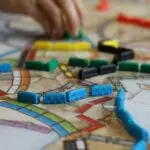
- Ludo: A classic board game involving strategy and chance.
- Damii (Checkers): A checkerboard game of strategy and tactics.
- Abe (Marbles): A game of shooting marbles, developing hand-eye coordination.
- Kokonma (Tic tac Toe): A simple strategic game developing thinking skills.
- Okwe: A traditional Igbo game played with seeds or stones in carved wooden boards.
- Ncho: A strategy game popular in Northern Nigeria, similar to checkers.
What are Modern Indoor Games?
Modern indoor games are recent inventions,played for fun and recreation.
These include:
- Table Tennis: A fast-paced racket sport.
- Chess: A strategic board game developing thinking skills.
- Badminton: A racquet sport played indoors.
- Connect Four: A two-player connection game.
- Jenga: A game of skill, developing hand-eye coordination and problem-solving skills.
- Scrabble: A word game that enhances vocabulary and spelling skills.
- Monopoly: A board game that teaches financial literacy and strategic thinking.
Teaching Methods
To deliver this lesson, the teacher will adopt the following methods: Discussion, Description, Question and Answer.
instructional Procedures
To deliver this lesson, the teacher will adopt the following steps:
Step 1: Introduction
Time: 5 minutes
Teaching Skill: Set Induction
Teacher’s Activity: Ask pupils about games they play.
Pupils’ Activity: Share their experiences with games.
Step 2: Explanation of Key Concepts
Time: 10 minutes
Teaching Skill: explanation
Teacher’s Activity: Define indigenous and modern indoor games, giving examples.Pupils’ Activity: Listen attentively and ask clarifying questions.
Step 3: Demonstration/Guided Practice
time: 10 minutes
Teaching Skill: Demonstration
Teacher’s Activity: Show pictures of different games and explain their rules.
pupils’ Activity: Observe and participate in discussions.
Step 4: Self-Reliant Practice
Time: 5 minutes
Teaching Skill: Guided Practice
Teacher’s Activity: Facilitate a short game session.
Pupils’ Activity: Play a chosen game.
Step 5: Note-Taking
time: 5 minutes
Teaching Skill: Note-Taking
Teacher’s Activity: Guide pupils in summarizing key points.
Pupils’ Activity: Write down crucial information.
Step 6: Evaluation/Review
Time: 5 minutes
Teaching Skill: Questioning
Teacher’s Activity: Ask evaluation questions.
Pupils’ Activity: Answer the questions.
Objective-aligned checks:
- Define indigenous and modern indoor games.
- List examples of indigenous and modern indoor games.
- Show gratitude for the cultural significance of indigenous indoor games.
Step 7: Conclusion
Time: 5 minutes
Teaching Skill: Summarizing
Teacher’s Activity: Summarize the key points and encourage pupils to continue playing and exploring different indoor games.
Pupils’ Activity: Listen attentively and ask any remaining questions.
Lesson Keywords
- Indigenous Games – Traditional games passed down through generations.
- Modern Games – Recently invented games for fun and recreation.
- Indoor Games – Activities played inside a building.
- Ayo (Mancala) – A strategy board game using seeds or stones.
- Ludo – A classic board game involving strategy and chance.
Lesson Evaluation
To evaluate the learning, the teacher asks pupils to:
- What are indigenous indoor games?
- Name two indigenous indoor games.
- What are modern indoor games?
- Name two modern indoor games.
- Why is playing indoor games critically important?
Assignment/Homework
- list three indigenous indoor games played in your community.
- Describe the rules of one modern indoor game you enjoy playing.
- Explain the importance of playing indoor games for physical and mental health.
Differentiation
- for slower learners: provide one-on-one assistance and simplified instructions.
- For advanced learners: Encourage them to research and present additional examples of indigenous and modern indoor games.
- For visual/auditory/kinesthetic learners: Use visual aids, verbal explanations, and hands-on activities to cater to different learning styles.
Note for Teachers
Encourage pupils to share their personal experiences with different games to make the lesson more engaging and relevant. Emphasize the cultural significance of indigenous games and the importance of preserving them.
Community Join the conversation Open discussion +