

Class: Senior Secondary School 2 (SS2 / SSS2)
Term: First Term
Week: 11
Age: 16 years
Duration: 45 minutes
Subject: Biology
Curriculum Theme: Environmental Studies
Previous Lesson: Ecological Management: Adaptation and Association.
Topic: POLLUTION
Subject Matter: Atmospheric pollution nature names and sources of air pollution, effect of air and noise pollutants, water and soil pollution types composition and side effects
Specific Objectives
By the end of the lesson, pupils should be able to:
Cognitive Domain:
- Define pollution and identify its major types.
- State the sources of air, noise, water, and soil pollution.
- Describe the effects of different types of pollution on living organisms and the environment.
Affective Domain:
- Appreciate the importance of maintaining a clean and healthy environment.
- Develop a sense of responsibility towards preventing pollution.
- Show concern for the impact of human activities on the environment.
Psychomotor Domain:
- Classify various pollutants based on their sources and nature.
- Suggest practical ways to control and reduce different forms of pollution.
- Draw simple diagrams illustrating sources or effects of pollution.
Social Domain:
- Discuss with peers the impact of pollution on community health.
- Collaborate in identifying local pollution problems and proposing solutions.
Reference Materials
The following resources were used in planning this lesson:
- Senior Secondary Schools Education Curriculum
- State Unified Scheme of Work
- Modern Biology for Senior Secondary Schools
- Environmental Protection Agency websites (e.g., NESREA)
Instructional Materials
The teacher will teach this lesson with the aid of:
- Textbook
- Posters showing polluted environments
- Charts illustrating sources and effects of pollution
- Pictures of industrial waste and its impact
Rationale for the Lesson
This lesson helps pupils understand the various ways the environment is contaminated and the harmful effects of these contaminants. It enables pupils to recognize pollution sources in their surroundings and encourages them to participate in environmental protection efforts.
Prerequisite/Previous Knowledge
Pupils have prior knowledge of the environment, living organisms, and basic environmental sanitation practices.
Lesson Content/Board Summary
POLLUTION
Definition of Pollution
Pollution is the introduction of harmful substances or products into the environment, causing adverse changes. These substances, known as pollutants, can be natural or man-made.
Types of Pollution
Pollution can be broadly classified into:
- Atmospheric (Air) Pollution
- Noise Pollution
- Water Pollution
- Soil Pollution
Atmospheric (Air) Pollution
Air pollution is the presence of harmful substances in the atmosphere that can cause damage to living organisms and the environment.
The following are sources of air pollution:
- Industrial emissions (e.g., sulfur dioxide, nitrogen oxides, carbon monoxide from factories)
- Vehicular emissions (e.g., carbon monoxide, lead, unburnt hydrocarbons from cars)
- Burning of fossil fuels (coal, oil, gas)
- Bush burning and deforestation
- Dust from construction sites and unpaved roads
- Volcanic eruptions (natural source)
The following are effects of air pollution:
- Respiratory diseases (e.g., asthma, bronchitis)
- Acid rain, which damages buildings, vegetation, and aquatic life
- Global warming and climate change
- Smog formation, reducing visibility
- Damage to crops and forests
Noise Pollution
Noise pollution is excessive or unwanted sound that can disrupt human or animal life.
The following are sources of noise pollution:
- Industrial machinery and factories
- Vehicles (cars, motorcycles, airplanes, trains)
- Loud music from loudspeakers
- Construction activities (e.g., drilling, hammering)
- Generators and household appliances
The following are effects of noise pollution:
- Hearing loss and impairment
- Stress, anxiety, and sleep disturbances
- High blood pressure and cardiovascular problems
- Disruption of animal communication and migration patterns
Water Pollution
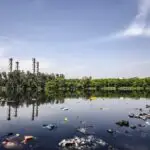
Water pollution is the contamination of water bodies (lakes, rivers, oceans, groundwater) by harmful substances, making the water unsafe for use.
The following are sources of water pollution:
- Industrial waste discharge (heavy metals, toxic chemicals)
- Domestic sewage (untreated wastewater from homes)
- Agricultural runoff (pesticides, herbicides, fertilizers)
- Oil spills from tankers and offshore drilling
- Improper disposal of refuse and plastics
- Erosion and sedimentation
The following are effects of water pollution:
- Spread of waterborne diseases (e.g., cholera, typhoid, dysentery)
- Death of aquatic organisms
- Eutrophication, leading to algal blooms and oxygen depletion
- Contamination of drinking water sources
- Damage to ecosystems and biodiversity
Soil Pollution
Soil pollution is the presence of harmful chemical substances or other alterations in the soil that negatively affect plant growth, human health, and the ecosystem.
The following are sources of soil pollution:
- Excessive use of chemical fertilizers and pesticides
- Industrial waste disposal (e.g., heavy metals, toxic sludge)
- Improper disposal of solid waste (plastics, e-waste)
- Oil and fuel spills
- Mining activities and industrial fallout
- Leaching from landfills
The following are effects of soil pollution:
- Reduced soil fertility and crop yield
- Contamination of groundwater through leaching
- Bioaccumulation of toxins in the food chain
- Loss of soil biodiversity (microorganisms, insects)
- Desertification and land degradation
Control Measures for Pollution
To reduce pollution, measures such as proper waste disposal, recycling, use of cleaner energy sources, industrial effluent treatment, noise barriers, and public awareness campaigns are important.
Teaching Methods/Instructional Techniques
Discussion, Lecture, Demonstration, Question and Answer, Visual Aids
Instructional Procedures
Step 1: Introduction
Time: 5 minutes
Teaching Skill: Set Induction
Teacher’s Activity: The teacher asks pupils to recall what they understand by the environment and then asks them to mention some human activities that affect the environment.
Pupils’ Activity: Pupils respond by mentioning activities like farming, industrialization, and waste disposal.
Learning Point: Pupils connect human activities to environmental changes.
Step 2: Atmospheric Pollution
Time: 10 minutes
Teaching Skill: Explanation/Illustration
Teacher’s Activity: The teacher explains the concept of atmospheric pollution, discusses its nature, names, sources (e.g., industries, vehicles, burning), and the effects of air pollutants. The teacher uses charts and posters.
Pupils’ Activity: Pupils observe the charts, listen attentively, ask questions, and contribute examples of air pollution from their surroundings.
Learning Point: Pupils understand what air pollution is, its sources, and its harmful effects.
Step 3: Noise Pollution
Time: 5 minutes
Teaching Skill: Explanation
Teacher’s Activity: The teacher defines noise pollution, identifies its common sources (e.g., generators, loud music, traffic), and explains its effects on human health.
Pupils’ Activity: Pupils listen, contribute examples of noise pollution they experience, and discuss its impacts.
Learning Point: Pupils learn about noise pollution, its causes, and its health implications.
Step 4: Water Pollution
Time: 10 minutes
Teaching Skill: Explanation/Discussion
Teacher’s Activity: The teacher explains water pollution, its types, composition, and side effects. The teacher highlights sources like industrial waste, domestic sewage, and agricultural run-off, showing relevant pictures.
Pupils’ Activity: Pupils observe pictures, listen, and discuss the impact of water pollution on communities and aquatic life.
Learning Point: Pupils comprehend the causes and widespread effects of water pollution.
Step 5: Soil Pollution
Time: 5 minutes
Teaching Skill: Explanation
Teacher’s Activity: The teacher explains soil pollution, its sources (e.g., pesticides, industrial waste, solid refuse), and its side effects on soil fertility and food safety.
Pupils’ Activity: Pupils listen, take notes, and ask questions regarding soil contamination.
Learning Point: Pupils understand how soil becomes polluted and its consequences.
Step 6: Control Measures for Pollution
Time: 5 minutes
Teaching Skill: Brainstorming/Discussion
Teacher’s Activity: The teacher leads a discussion on various ways pollution can be controlled and prevented, drawing from pupil observations and suggestions.
Pupils’ Activity: Pupils suggest and discuss practical solutions for reducing different types of pollution.
Learning Point: Pupils identify and understand methods for pollution control.
Step 7: Evaluation/Review
Time: 5 minutes
Teaching Skill: Questioning/Assessment
Teacher’s Activity: The teacher evaluates the learning by asking the following questions:
- Define pollution.
- List three types of pollution.
- State two sources of air pollution and two sources of water pollution.
- Mention two effects of noise pollution on humans.
Pupils’ Activity: Pupils answer orally and in writing.
Learning Point: Pupils demonstrate understanding of the lesson.
Step 8: Conclusion
Time: 2 minutes
Teaching Skill: Summarization
Teacher’s Activity: The teacher summarizes the main points of the lesson and assigns homework: “Suggest five ways individuals can contribute to reducing pollution in their communities.”
Pupils’ Activity: Pupils listen, copy the homework, and prepare for the next lesson.
Learning Point: Pupils consolidate their understanding and apply knowledge to real-world scenarios.
Lesson Keywords
- Pollution – The introduction of harmful substances into the environment.
- Pollutants – Harmful substances that cause pollution.
- Atmospheric pollution – Contamination of the air by harmful substances.
- Noise pollution – Excessive or unwanted sound.
- Water pollution – Contamination of water bodies.
- Soil pollution – Contamination of the soil.
Differentiation
For pupils who grasp concepts quickly, the teacher can challenge them to research specific pollution case studies in Nigeria. For pupils needing more support, the teacher can provide simplified diagrams and focus on fewer examples for each pollution type.
Note for teachers using this lesson plan
Teachers should encourage pupils to relate the lesson content to their local environment, discussing specific pollution issues in their communities. Practical examples and visual aids are important for effective learning. Emphasize the role of individual actions in pollution control.

Community Join the conversation Open discussion +