

Class: Primary One
Term: Second Term
Subject: basic Science and Technology
Curriculum Theme: Basic Science
Previous Lesson: Meaning of simple machines
Topic: Movement
Content/Learning Area: Defining movement, Demonstrating locomotor movement techniques
Time Allocation: 40 minutes
Performance Objectives
By the end of the lesson, pupils should be able to:
- Cognitive Domain:
1. Define movement.
2. Identify different types of locomotor movements.
3. Explain the differences between various locomotor movements (e.g., walking vs.running).
- Affective Domain:
1.Appreciate the importance of movement for health and well-being.
2. Participate actively in movement activities.
- Psychomotor Domain:
1. Demonstrate various locomotor movements (walking, running, jumping, hopping, crawling, skipping).
- Social Domain:
1. Cooperate with peers during movement activities.
Reference Materials
- 9 – Years Basic Education Curriculum
- Abuja Educational Resource center Scheme of Work
- NAPPS National Unified Scheme of work
- Relevant Textbooks
Instructional Materials
To deliver this lesson, the teacher will use the following materials:
- Whiteboard or chart paper
- Markers or crayons
- Pictures or videos showing different types of movement
- Sufficient space for pupils to move around
Rationale for the lesson
Understanding movement is essential to physical development and overall well-being. this lesson lays the groundwork for future lessons on more complex physical activities and promotes healthy habits.
Prerequisite/Previous Knowledge
The teacher will start by asking pupils what they did before coming to school, prompting them to describe their movements. The teacher will then introduce the topic of “Movement” and ask pupils what they think it means.
Lesson Content
What is Movement?
Movement is when something changes its position or place. It can be simple, like walking or running, or more complex, like dancing or playing sports.
Techniques In locomotor Movement
Locomotor movement
Locomotor movements are movements that take you from one place to another. Examples are:
- Walking: Walking is a basic movement where we move our legs rhythmically, taking steps one after another. Our feet push off the ground to move us forward.
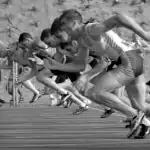
- Running: Running is faster walking with longer steps and higher lifts of our feet. We use more energy and momentum.
- Jumping: Jumping involves pushing off the ground with both feet and landing on both feet. We can jump in different directions.
- Hopping: Hopping is like jumping, but using only one foot to push off and land on the same foot.
- Crawling: Crawling uses our hands and knees to move along the ground. It helps develop motor skills.
- Skipping: Skipping combines hopping and stepping; we hop on one foot, then step with the other, and repeat.
- galloping: Galloping is a rhythmic movement pattern where one foot leads, and the other follows, often seen in animals like horses.
- Leaping: Leaping involves a longer, more forceful jump, often used to clear obstacles or cover greater distances.
These movements help us explore and play.
Teaching Methods
To deliver this lesson, the teacher will adopt the following methods: Discussion,Exhibition,Practical Activities
Instructional procedures
To deliver this lesson,the teacher will adopt the following steps:
Step 1: Introduction
Time: 5 minutes
Teaching Skill: set Induction
Teacher’s Activity: Engage pupils with questions about their movements before school.introduce the topic of “movement”.
Pupils’ Activity: Respond to teacher’s questions, listen attentively.
Step 2: Clarification of key concepts
Time: 10 minutes
Teaching Skill: Explanation
Teacher’s Activity: Define movement and explain locomotor movements.
Pupils’ Activity: Listen attentively, ask clarifying questions.
step 3: Demonstration/Guided Practice
Time: 15 minutes
Teaching Skill: Demonstration
Teacher’s Activity: Demonstrate each locomotor movement (walking, running, jumping, hopping, crawling, skipping). Guide pupils in practicing each movement.
Pupils’ Activity: Observe the teacher’s demonstration, practice each movement under guidance.
Step 4: Autonomous Practice
Time: 5 minutes
Teaching Skill: Monitoring
Teacher’s Activity: Allow pupils to practice the movements independently, providing feedback and support.
Pupils’ Activity: Practice the movements independently.
Step 5: Note-Taking
Time: 2 minutes
teaching Skill: Note-Taking
Teacher’s Activity: Guide pupils in taking notes on the key concepts and movements learned.
Pupils’ Activity: Take notes.
Step 6: Evaluation/Review
Time: 3 minutes
Teaching Skill: Questioning
Teacher’s Activity: Ask review questions to assess understanding.
Pupils’ Activity: Answer review questions.
Objective-aligned checks:
- Define movement.
- Identify different types of locomotor movements.
- Explain the differences between various locomotor movements (e.
Step 7: Conclusion
Time: 2 minutes
Teaching Skill: Summarization
Teacher’s Activity: Summarize the key concepts of movement and locomotor movements, emphasizing the importance of physical activity. Praise pupils for their participation and encourage them to continue practicing these movements.Pupils’ activity: Listen to the summary and respond positively.
Lesson Keywords
- movement – Changing position or place.
- Locomotor Movement – Movement that takes you from one place to another.
- Walking – Moving legs rhythmically, taking steps.
- Running – Faster walking with longer steps.
- Jumping – Pushing off the ground with both feet.
- Hopping – Jumping on one foot.
- Crawling – Moving on hands and knees.
- Skipping – Hopping and stepping alternatively.
Lesson Evaluation
To evaluate the learning, the teacher asks pupils to:
- What is movement?
- Give three examples of locomotor movements.
- How is walking different from running?
- What are some benefits of locomotor movements?
- Can you name animals that use different types of locomotor movements?
Assignment/Homework
- Practice the different locomotor movements at home.
- Draw pictures of yourself doing each locomotor movement.
- Ask your parents or guardians to help you identify other types of movements you do every day.
differentiation
- For slower learners: provide one-on-one assistance and break down the movements into smaller steps.
- For advanced learners: Encourage them to create their own movement sequences.
- For visual/auditory/kinesthetic learners: Use pictures, verbal cues, and hands-on activities to cater to different learning styles.
Note for teachers
Ensure sufficient space for pupils to move around safely. Provide clear demonstrations and encourage active participation. Adjust the pace of the lesson based on pupils’ needs and abilities.



Community Join the conversation Open discussion +