Class: Primary One
Term: Third Term
Subject: Basic Science and Technology
Curriculum Theme: Basic Science
Previous Lesson:
Topic: Swimming
Content/Learning Area: The Concept of Swimming, Preliminary Skills in Swimming
Time Allocation: 40 minutes
Performance Objectives
By the end of the lesson, pupils should be able to:
- Cognitive Domain:
1.Explain the concept of swimming.
2. List four preliminary swimming skills.
- Affective Domain:
1. Show an interest in learning to swim.
2. Demonstrate respect for water safety rules.
- Psychomotor Domain:
1. perform preliminary swimming skills (e.g., floating, kicking).
- Social Domain:
1. Cooperate with peers during swimming activities.
Reference materials
- 9 – Years Basic Education Curriculum
- Abuja Educational Resource Center Scheme of Work
- NAPPS National Unified Scheme of Work
- Relevant Textbooks
Instructional Materials
To deliver this lesson, the teacher will use the following materials:
- Whiteboard or chart
- Markers or chalk
- Pictures or videos of swimming
Rationale for the Lesson
Understanding swimming is crucial for water safety and provides a valuable life skill. This lesson lays the foundation for future physical education lessons and promotes healthy habits.
Prerequisite/Previous Knowledge
Pupils have prior experiance with water, such as playing in pools, rivers, or the sea.
Lesson Content
the Concept of Swimming
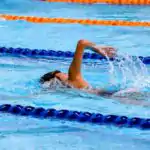
Swimming involves moving through water using your arms and legs. It is a fun way to exercise and stay cool.
what is swimming?
Swimming is moving through water using your arms and legs. It’s a fun way to exercise and stay cool.
the Goal of Swimming
The goal is to move through the water and stay afloat, using arms, legs, and breathing techniques.
Preliminary Skills in swimming
Learning to swim involves several key skills:
The following are preliminary skills in swimming:
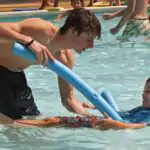
- Floating: Staying on top of the water.
- Kicking Legs: Using your legs to move in the water.
- Water Comfort: Feeling safe and relaxed in the water.
- Breathing: Holding your breath and coming up for air.
- Arm Movements: Using your arms to swim.
- Basic Strokes: Simple swimming moves.
- Safety Skills: Knowing how to stay safe around water.
- Jumping and Diving: Entering the water safely.
- Water Entry Techniques: Safe ways to enter the water.
- Introduction to Breaststroke and Butterfly: More advanced swimming styles.
Teaching Methods
To deliver this lesson, the teacher will adopt the following methods: Discussion, Demonstration, Question and answer.
Instructional Procedures
To deliver this lesson, the teacher will adopt the following steps:
Step 1: Introduction (Set Induction)
Time: 5 minutes
Teaching Skill: Questioning
Teacher’s Activity: Asks pupils about their experiences with water and introduces the topic of swimming.
Pupils’ Activity: Share their experiences and listen attentively.
Step 2: Explanation of Key Concepts
Time: 10 minutes
Teaching Skill: Explaining
Teacher’s Activity: Explains the concept of swimming and its importance.
Pupils’ Activity: Listen and ask clarifying questions.
Step 3: Demonstration/Guided Practice
Time: 10 minutes
teaching Skill: demonstrating
Teacher’s Activity: Demonstrates basic swimming skills (if possible, using visuals).Pupils’ Activity: Observe and mimic the demonstrated skills.
Step 4: Autonomous Practice
Time: 5 minutes
Teaching Skill: Monitoring
Teacher’s Activity: Supervises pupils as they practice basic skills.
Pupils’ Activity: Practice basic swimming skills.
Step 5: Note-Taking
Time: 5 minutes
Teaching Skill: Guiding
Teacher’s Activity: Guides pupils in taking notes on key concepts and skills.
Pupils’ Activity: Take notes on key concepts and skills.
Step 6: Evaluation/Review
Time: 5 minutes
Teaching Skill: Questioning
Teacher’s Activity: Asks review questions to assess understanding.
Pupils’ Activity: Answer review questions.
Objective-aligned checks:
- Explain the concept of swimming.
- List four preliminary swimming skills.
- Show an interest in learning to swim.
Step 7: Conclusion
Time: 5 minutes
Teaching Skill: Summarizing
Teacher’s Activity: Summarizes the key concepts and skills learned, emphasizing the importance of water safety and encouraging continued practice.
Pupils’ Activity: Listen attentively and ask any remaining questions.
Lesson Keywords
- Swimming – Moving through water using arms and legs.
- Floating – Staying on top of the water.
- Kicking – Using legs to move in the water.
- Water Safety – Knowing how to stay safe around water.
- Breathing – Holding breath and coming up for air.
Lesson Evaluation
To evaluate the learning, the teacher asks pupils to:
- What is swimming?
- Why is learning to swim vital?
- Name three swimming skills.
- What are some water safety rules?
- what is one basic swimming stroke?
Assignment/Homework
- Ask your parents or guardians about their experiences with swimming.
- draw a picture of yourself swimming or playing in the water.
- List three water safety rules you should always follow.
Differentiation
- for slower learners: Provide one-on-one assistance and use simpler instructions.
- For advanced learners: Challenge them to practice more complex strokes.
- For visual/auditory/kinesthetic learners: Use visual aids, verbal instructions, and hands-on practice to cater to different learning styles.
Note for Teachers
Ensure a safe and supportive habitat for all pupils, especially those who might potentially be afraid of water. Emphasize the importance of water safety throughout the lesson.