

Class: Primary Five
Term: First Term
Subject: Pre-vocational Studies
curriculum Theme: Agricultural Science
Previous Lesson: Classification Of Crops, How To Grow Crops
Topic: Pre-Planting Activities
Content/Learning Area: What are Pre-Planting Activities?, Land Clearing, Tilling the Soil, Fertilizing the Soil, Marking Out the Land
Time allocation: 40 minutes
Performance Objectives
By the end of the lesson, pupils should be able to:
- Cognitive Domain:
1. Explain the meaning of pre-planting activities and list at least three pre-planting activities involved in growing crops.
2.Appreciate the importance of careful planning before planting crops.
- Affective Domain:
1. Appreciate the importance of careful planning before planting crops.
- Psychomotor Domain:
1. Demonstrate how to prepare the soil for planting.
- social Domain:
1. Work cooperatively in groups to discuss the importance of each pre-planting activity.
Reference Materials
- 9 – Years Basic Education curriculum
- abuja Educational resource Center Scheme of Work
- NAPPS National Unified Scheme of Work
- Relevant Textbooks
Instructional Materials
To deliver this lesson, the teacher will use the following materials:
- Whiteboard or chart
- Markers or chalk
- Pictures or illustrations of pre-planting activities
Rationale for the Lesson
Understanding pre-planting activities is crucial for accomplished crop cultivation. This lesson lays the foundation for future lessons on planting and harvesting, emphasizing the importance of planning and preparation in agriculture.
Prerequisite/Previous Knowledge
The teacher will begin by asking pupils what they remember from the previous lesson on How To Grow Crops. A brief review will follow, leading into a discussion about the importance of preparation before planting.
Lesson Content
What are Pre-Planting Activities?
Pre-planting activities are the crucial steps done before planting crops to ensure good growth and a plentiful harvest. Think of it like preparing the ground for a building – you need a strong foundation!
Pre-Planting Activities
Pre-planting activities are essential for preparing the land for planting crops. Thes include:
- Land Clearing: Removing weeds, bushes, and trees to create space for crops. This ensures crops have enough sunlight,water,and nutrients. It also prevents pests and diseases from harboring in the field.
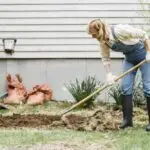
- Tilling the Soil: Loosening and turning the soil to make it easier for roots to grow and for water and nutrients to reach them. ItS like making the soil soft and fluffy. This also improves soil aeration and drainage.
- Fertilizing the soil: Adding nutrients to the soil to improve its health and fertility. This is like giving the soil a special drink to make it strong. Fertilizers can be organic (e.g.,manure,compost) or inorganic (e.g., NPK fertilizers).
- Marking Out the Land: Dividing the land into rows or plots to plant seeds or seedlings. This ensures proper spacing for growth. It also facilitates easy management practices like weeding and irrigation.
- Applying Herbicides: Using chemicals to control weeds before planting. This reduces competition for resources between crops and weeds. It is important to use herbicides safely and according to instructions.
- Soil Testing: analyzing the soil to determine its nutrient content and pH level. This helps in determining the appropriate type and amount of fertilizer to apply.It ensures efficient use of resources and prevents nutrient imbalances.
Teaching Methods
To deliver this lesson, the teacher will adopt the following methods: Discussion, Presentation, Group work
Instructional Procedures
To deliver this lesson, the teacher will adopt the following steps:
Step 1: Introduction
Time: 5 minutes
Teaching Skill: Set Induction
Teacher’s Activity: Review previous lesson, introduce the topic of pre-planting activities.Pupils’ activity: Participate in review,listen attentively to introduction.
Step 2: Description of Key Concepts
Time: 10 minutes
teaching Skill: Explaining
Teacher’s Activity: Explain the meaning and importance of pre-planting activities using examples.
Pupils’ Activity: Listen attentively, ask clarifying questions.
Step 3: Exhibition/Guided Practice
Time: 10 minutes
Teaching Skill: Guiding
Teacher’s Activity: Demonstrate each pre-planting activity using pictures or real-life examples.
Pupils’ Activity: Observe demonstration, participate in guided practice.
Step 4: Self-Reliant Practice
Time: 5 minutes
Teaching Skill: Monitoring
Teacher’s Activity: supervise pupils as they work in groups to discuss the importance of each pre-planting activity.Pupils’ Activity: Work in groups, discuss and share ideas.
Step 5: Note-Taking
Time: 5 minutes
Teaching Skill: summarizing
Teacher’s Activity: Guide pupils in taking notes on key concepts.
Pupils’ Activity: take notes,summarize key points.
Step 6: Evaluation/Review
Time: 5 minutes
Teaching Skill: Questioning
Teacher’s Activity: Ask questions to assess understanding.
Pupils’ activity: Answer questions, participate in review.
Objective-aligned checks:
- Explain the meaning of pre-planting activities and list at least three pre-planting activities involved in growing crops.
- Demonstrate how to prepare the soil for planting.
Step 7: Conclusion
time: 2 minutes
Teaching Skill: Summarizing
Teacher’s Activity: Summarize the key pre-planting activities and their importance.
Pupils’ Activity: Listen to the summary and ask any remaining questions.
Lesson Keywords
- Pre-planting activities – Activities carried out before planting crops.
- Land clearing – Removing vegetation from the land.
- Tilling – Loosening and turning the soil.
- Fertilizing – Adding nutrients to the soil.
- marking out – Dividing land into rows or plots.
lesson Evaluation
To evaluate the learning, the teacher asks pupils to:
- What are pre-planting activities?
- List three pre-planting activities involved in growing crops.
- Why is it important to till the soil before planting?
- How does fertilizing the soil help in crop growth?
- Describe the process of land clearing and its importance.
Assignment/homework
- List five pre-planting activities and explain why each is important.
- Describe the steps involved in tilling the soil.
- What are the different types of fertilizers, and how do they benefit crop growth?
Differentiation
- For slower learners: Provide one-on-one assistance and simplified explanations.
- For advanced learners: Challenge with additional research tasks or group projects.
- For visual/auditory/kinesthetic learners: Use visual aids,discussions,and hands-on activities to cater to different learning styles.
Note for Teachers
Ensure to use local examples and visual aids to enhance understanding. Encourage pupils to share their experiences with farming or gardening to make the lesson more relatable.

Community Join the conversation Open discussion +