

Class: Primary 5
Term: 2nd Term
Subject: Pre-Vocational Studies
Curriculum Theme: Agricultural Science
Previous Lesson: Chemical Control Of Crop Weeds, Pests And Diseases
Topic: Identification of Some Common Insects Pest
Content/Learning Area: beetles, Weevil, Grasshopper, Locust, Caterpillar, Termite
Time Allocation: 40 minutes
Performance Objectives
By the end of the lesson, pupils should be able to:
- Cognitive Domain: Identify at least five common insects pest.
- Affective Domain: Appreciate the importance of controlling insects pest in farming.
- Psychomotor Domain: Sketch or draw at least two common insects pest.
- Social Domain: Discuss ways of working together to control insects pest.
Reference Materials
The following resources were used in planning this lesson:
- 9–Years Basic Education Curriculum
- Abuja Educational Resource Centre Scheme of Work
- NAPPS National Unified Scheme of Work
- Online Details from: Britannica – Insect | Definition, Characteristics, Types
- Relevant Textbooks
Instructional Materials
To deliver this lesson, the teacher will employ the help of the following materials:
- Charts and flashcards with images of insect pests
- Real samples of insect pests (or models)
- Drawing materials (pencils, crayons, papers)
Rationale for the Lesson
Understanding common insect pests is essential as they significantly affect food production. Learning about these pests helps pupils appreciate their roles in agriculture and their control.
Prerequisite/Previous Knowledge
Pupils already know about harmful effects of weeds, pests, and diseases on crops from the previous lesson.
Lesson content
Identification of Some Common Insects pest
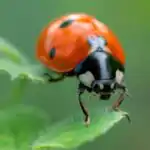
Insect pests are small animals that damage crops by feeding on them or their parts. this can lead to poor yields and food scarcity. Below are common insect pests:
The following are examples of common insect pests:
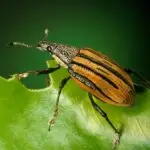
- Beetles – They bore into stored grains and crops.
- weevils – Commonly found in stored grains, causing severe damage.
- Grasshoppers – Feed on leaves,leading to loss of green foliage.
- Locusts – A type of grasshopper known for destroying entire farms.
- Caterpillars – Larvae of butterflies and moths, feed on leaves.
- Termites – Eat plant stems and roots, weakening crops.
- Aphids – Suck plant sap, causing yellowing and stunted growth.
- Mealybugs – Affect fruits, vegetables, and ornamental plants.
- Armyworms – Eat leaves and can destroy entire fields overnight.
- Whiteflies – Feed on plant sap and transmit diseases.
- Stem borers – Bore into plant stems, weakening the plant structure.
- Leaf miners – Create tunnels within leaves, reducing photosynthetic area.
Teaching Methods
To deliver this lesson, the teacher will adopt the following methods: questioning, Discussion, Description, Demonstration, Guided Inquiry, Direct Teaching, Group Work, Hands-on Activity, Oral Assessment, Reinforcement.
Instructional Procedures
To deliver this lesson, the teacher will adopt the following steps:
Step 1: Introduction
Time: 5 mins
Teaching Skill: Set Induction
Teacher’s Activity: Asks pupils what they know about pests and if they’ve seen insects in their environment.
Pupils’ Activity: Respond and share their experiences.
Step 2: identification
Time: 10 mins
Teaching Skill: explanation
Teacher’s Activity: Displays flashcards/models of common insect pests and names each.
Pupils’ Activity: Observe the images and listen attentively.
Step 3: Characteristics
Time: 8 mins
Teaching Skill: Discussion
Teacher’s Activity: Explains key characteristics of beetles, weevils, grasshoppers, and others.
Pupils’ Activity: Participate in the discussion by asking and answering questions.
Step 4: note Taking
Time: 5 mins
Teaching Skill: Lecture
Teacher’s Activity: Guides pupils to copy short notes from the board.
pupils’ Activity: Write the notes neatly in their books.
Step 5: Practical Activity
Time: 7 mins
Teaching Skill: Hands-on Activity
Teacher’s Activity: Guides pupils to draw/sketch any two insect pests of their choice.
pupils’ Activity: Draw or sketch the assigned insect pests.
step 6: Evaluation/Review
Time: 3 mins
Teaching Skill: Questioning
Teacher’s Activity: Asks questions to evaluate their understanding of the topic.
Pupils’ Activity: Answer questions orally.
Objective-aligned checks:
- Identify at least five common insects pest.
- Sketch or draw at least two common insects pest.
Step 7: Conclusion
Time: 2 mins
Teaching Skill: Recap
Teacher’s Activity: summarizes the topic and gives homework on insect pest control methods.
Pupils’ Activity: Listen and take note of homework.
Lesson Keywords
- Insect Pest – Small animals that damage crops.
- Beetles – Insects that bore into stored grains.
- Weevils – pests commonly found in stored grains.
- Grasshoppers – insects that feed on leaves.
- Locusts – Grasshoppers known for destroying farms.
- Caterpillars – Larvae of butterflies and moths that feed on leaves.
- Termites – Insects that eat plant stems and roots.
Lesson Evaluation
To evaluate the learning, the teacher asks pupils to:
- Define insect pests.
- Mention five common insect pests.
- Identify three characteristics of locusts.
- Draw a grasshopper and label its parts.
- Discuss one way to control insect pests.
Assignment/Homework
- list five methods of controlling insect pests in agriculture.
- Describe the life cycle of a common insect pest in your locality.
- Research and write about the impact of insect pests on crop yield in Nigeria.
Differentiation
- For slower learners: Provide simplified diagrams and one-on-one assistance to identify and draw insect pests.
- For advanced learners: Research and present on the economic impact of insect pests on agriculture in Nigeria.
- For visual/auditory/kinesthetic learners: Use visual aids, verbal explanations, and hands-on activities like creating insect models.
Note for Teachers
Ensure pupils are engaged with visuals or physical models of the pests to enhance their understanding.Use local examples when possible to make the lesson relatable. Happy teaching!
Community Join the conversation Open discussion +